
5 Steps to Holistic Dog Care at Home (Easy Guide for Portland Pet Owners)
- Green Acres K-9 Resort
- Feb 20
- 6 min read

Here in Boring, Oregon, we've spent years watching dogs thrive when their families take a whole-body approach to their care. At Green Acres K-9 Resort, we believe holistic dog care isn't about abandoning modern veterinary medicine: it's about complementing it with practices that address your dog's physical, mental, and emotional needs all at once.
The truth is, holistic care doesn't have to be complicated or expensive. We've seen firsthand how simple daily practices can transform a dog's quality of life. Whether you're dealing with a high-energy puppy in Damascus or a senior Lab in Gresham, these five evidence-based steps will help you create a balanced wellness routine that fits your lifestyle.
Step 1: Upgrade Your Dog's Nutrition (It's More Than Just Food)
Quality nutrition forms the foundation of everything else. Research shows that dogs fed whole-food-based diets with named protein sources show improved coat condition, energy levels, and digestive health compared to those on heavily processed foods (Freeman et al., 2013).
What we recommend starting with:
Look for complete dog foods where the first ingredient is a specific protein source like "chicken," "salmon," or "beef": not vague terms like "meat by-product." The ingredient list should be short and recognizable. We've noticed that dogs eating foods without artificial preservatives, colors, or unnecessary fillers tend to have fewer skin issues and more consistent energy throughout the day.
Don't make sudden changes, though. Transition gradually over 7-10 days by mixing increasing amounts of the new food with the old. This prevents digestive upset and helps you identify if your dog has any sensitivities.
Consider these additions (after consulting your vet):
Omega-3 fatty acids from fish oil support brain function, joint health, and skin condition
Fresh vegetables like carrots, green beans, or sweet potato provide fiber and nutrients
Bone broth (without onions or garlic) adds hydration and joint-supporting compounds
Research indicates that balanced diets rich in essential fatty acids, vitamins, and minerals significantly impact long-term health outcomes across all life stages (Laflamme et al., 2008).
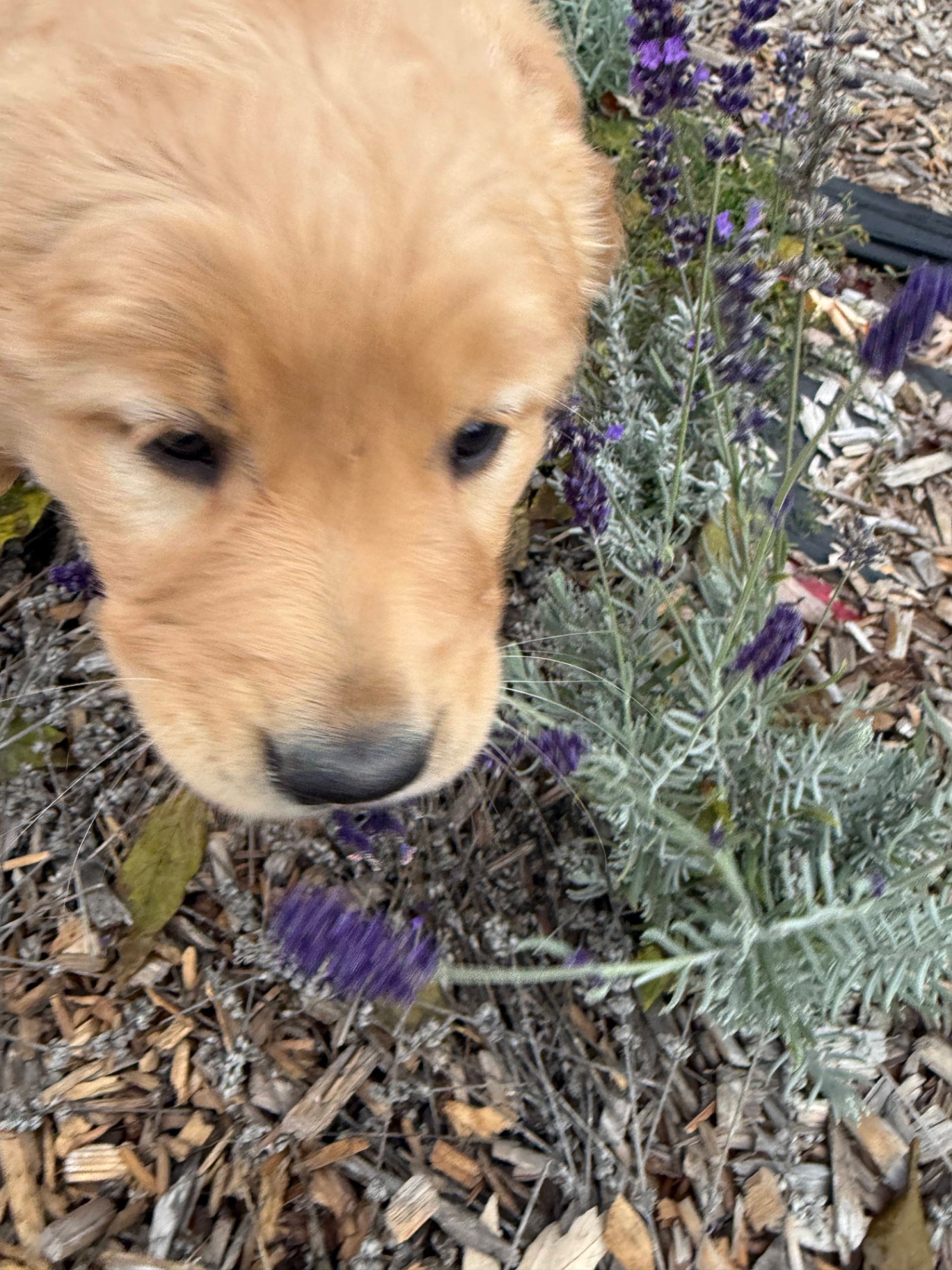
Home Integration Tip: Create a "nutrition journal" for two weeks. Note what your dog eats, their energy levels, stool consistency, and coat condition. This simple practice helps you identify patterns and make informed adjustments. We use similar tracking at the resort and it's amazing what you'll discover.
Step 2: Establish Regular Exercise & Mental Enrichment
Physical activity alone isn't enough: your dog's brain needs a workout too. Studies demonstrate that dogs receiving both physical exercise and cognitive stimulation show significantly lower stress markers and fewer behavioral problems than those receiving exercise alone (Pullen et al., 2010).
Tailor activities to your dog's life stage:
Puppies (8 weeks to 1 year): Short, supervised exploration sessions are key. Five minutes of leash walking per month of age is a good rule (so a 4-month-old gets 20 minutes). Focus on sniffing games, puzzle toys, and positive socialization experiences.
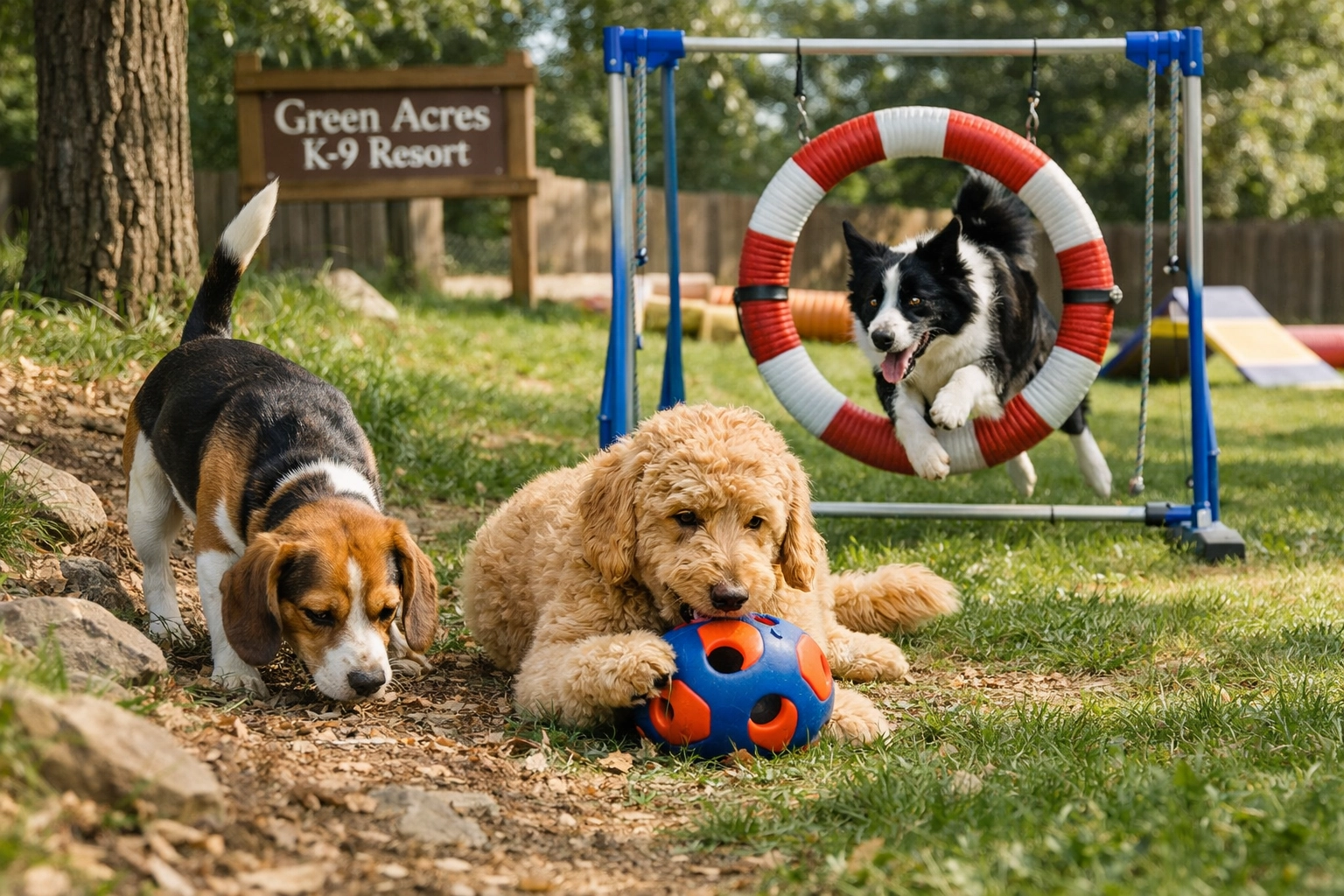
Adult Dogs (1-7 years): Aim for at least 30-60 minutes of varied activity daily. Mix it up with trail walks in the Mt. Hood National Forest, fetch sessions, or agility exercises. Mental enrichment can include scent work, training new tricks, or food-dispensing toys.
Senior Dogs (7+ years): Gentle daily walks remain essential, but watch for signs of fatigue or joint discomfort. Swimming provides excellent low-impact exercise. Even simple range-of-motion exercises: gently flexing and extending joints: support long-term mobility (Dragone et al., 2014).
The sniff factor: Let your dog sniff during walks. Research shows that sniffing activities provide significant mental stimulation and stress relief: sometimes even more than physical exercise (Duranton & Horowitz, 2019). Those "boring" walks where your dog stops every three feet? They're actually incredibly enriching.
Step 3: Create a Stress-Reducing Environment
We often overlook how our home environment affects our dogs' stress levels. Chronic stress suppresses immune function and contributes to behavioral issues (Dreschel, 2010). The good news? Small environmental changes make a big difference.
Minimize ambient stressors:
Lower TV volume, especially during news programs with shouting or sirens
Use white noise machines or dog-calming playlists during thunderstorms or fireworks
Create quiet "safe zones" where your dog can retreat (we use crates with cozy bedding)
Reduce exposure to street noise if your dog is sound-sensitive
Establish consistent routines: Dogs are creatures of habit. Feed, walk, and put your dog to bed at roughly the same times each day. Studies show that predictable routines reduce cortisol levels and increase feelings of security (Storengen & Lingaas, 2015).
At Green Acres, we maintain consistent schedules because we see how much calmer dogs become when they know what to expect. Your home should provide the same predictability.
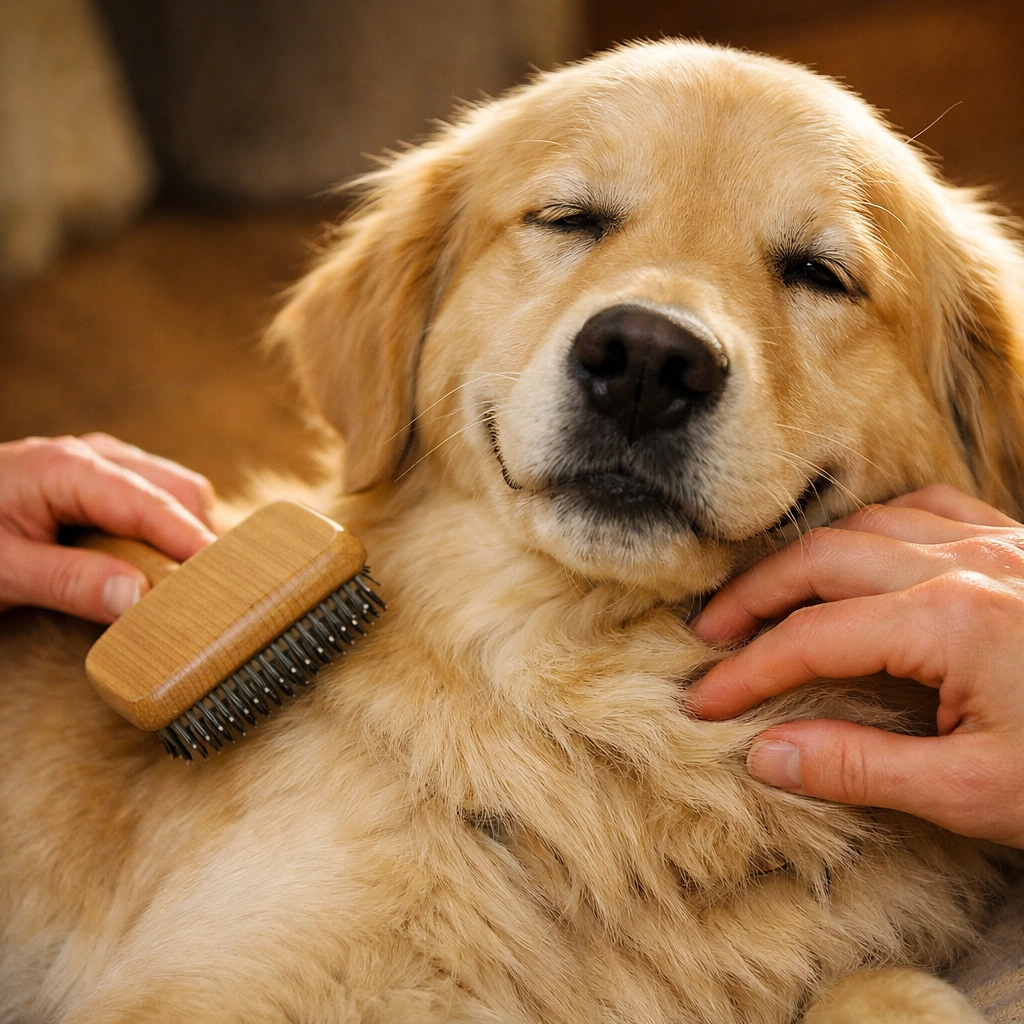
Provide quality grounding time: Regular brushing, gentle massage, and quiet companionship trigger oxytocin release: the bonding hormone: while lowering stress hormones. Even 10 minutes of belly rubs or brushing creates measurable physiological benefits (Handlin et al., 2011).

Home Integration Tip: Designate one corner of your home as your dog's "zen zone." Add a comfortable bed, a blanket that smells like you, and a white noise machine. Teach your dog that this space means relaxation time. Use it consistently, and you'll create a powerful stress-management tool.
Step 4: Use Natural Grooming & Care Practices
Holistic grooming goes beyond keeping your dog clean: it's about supporting skin health, detecting issues early, and strengthening your bond.
Weekly grooming routine:
Start with a thorough brush-through, checking for lumps, bumps, or skin changes. This early detection is crucial: we've caught everything from ticks to early tumors during routine grooming sessions at the resort.
Use gentle, naturally-derived shampoos without harsh sulfates when bathing (usually every 4-8 weeks unless your dog gets particularly dirty). Over-bathing strips natural oils that protect skin.
Natural dental care matters: Dental disease affects overall health, not just teeth. Regular brushing with dog-safe toothpaste, dental chews, and raw bones (under supervision) all contribute to oral health. Research links periodontal disease to heart, liver, and kidney problems (DeBowes et al., 1996).
Paw care: Check paw pads regularly, especially after walks on hot pavement or salted winter sidewalks here in Oregon. Trim nails every 3-4 weeks to prevent joint stress and mobility issues.
Step 5: Monitor Progress & Build a Holistic Health Team
The BEAM method: Behavior, Energy, Appetite, and Mood: provides an excellent framework for tracking your dog's wellness (Palmquist, 2016). Document these factors weekly:
Behavior: Any changes in normal routines or responses?
Energy: Appropriate for age and breed?
Appetite: Consistent interest in meals?
Mood: Generally happy and engaged?
Changes in BEAM often appear before obvious illness symptoms, giving you early warning signs.
Building your team: Start with your regular veterinarian for annual checkups, vaccinations, and emergency care: this remains non-negotiable. Holistic care complements, never replaces, conventional veterinary medicine.
Consider gradually adding qualified practitioners:
Certified canine rehabilitation therapists for mobility issues
Veterinary acupuncturists (look for IVAS certification) for pain management
Certified canine massage therapists for elderly dogs or athletes
The American Holistic Veterinary Medical Association (AHVMA.org) maintains directories of certified practitioners. Don't hesitate to ask about credentials: legitimate holistic practitioners welcome these questions.

Home Integration Tip: Create a simple weekly checklist combining BEAM monitoring with your grooming routine. Sunday evenings work great: while you're brushing your dog, mentally assess these four factors and jot down notes. Over time, you'll develop an intuitive sense of your dog's baseline and spot changes quickly.
Bringing It All Together
Holistic care isn't about perfection: it's about consistent, thoughtful practices that address your dog's whole self. Start with one or two steps that feel manageable, then build from there. We've seen dogs transform over months of small, steady improvements rather than dramatic overnight changes.
Here at Green Acres K-9 Resort, we incorporate these same holistic principles into our daycare and boarding programs. When your dog stays with us, they're getting fresh air, appropriate exercise, stress-reducing routines, and plenty of personal attention: because we believe dogs deserve care that addresses their complete well-being, not just their basic needs.
Your dog doesn't need expensive supplements or complicated protocols. They need quality nutrition, appropriate exercise, mental stimulation, low stress, and someone paying attention to the whole picture. You've got this.
Bibliography
DeBowes, L. J., Mosier, D., Logan, E., Harvey, C. E., Lowry, S., & Richardson, D. C. (1996). Association of periodontal disease and histologic lesions in multiple organs from 45 dogs. Journal of Veterinary Dentistry, 13(2), 57-60.
Dragone, L., Heinrichs, K., Rutteman, G., & Boon, G. (2014). Maintenance exercise programs in dogs with osteoarthritis: A review of the evidence. Veterinary Surgery, 43(7), 779-788.
Dreschel, N. A. (2010). The effects of fear and anxiety on health and lifespan in pet dogs. Applied Animal Behaviour Science, 125(3-4), 157-162.
Duranton, C., & Horowitz, A. (2019). Let me sniff! Nosework induces positive judgment bias in pet dogs. Applied Animal Behaviour Science, 211, 61-66.
Freeman, L. M., Chandler, M. L., Hamper, B. A., & Weeth, L. P. (2013). Current knowledge about the risks and benefits of raw meat-based diets for dogs and cats. Journal of the American Veterinary Medical Association, 243(11), 1549-1558.
Handlin, L., Hydbring-Sandberg, E., Nilsson, A., Ejdebäck, M., Jansson, A., & Uvnäs-Moberg, K. (2011). Short-term interaction between dogs and their owners: effects on oxytocin, cortisol, insulin and heart rate. Anthrozoös, 24(3), 301-315.
Laflamme, D. P., Abood, S. K., Fascetti, A. J., Fleeman, L. M., Freeman, L. M., Michel, K. E., ... & Willoughby, K. N. (2008). Pet feeding practices of dog and cat owners in the United States and Australia. Journal of the American Veterinary Medical Association, 232(5), 687-694.
Palmquist, R. (2016). Integrative medicine: A clinical approach to holistic veterinary care. In Integrative Medicine in Veterinary Practice (pp. 15-32). Wiley-Blackwell.
Pullen, A. J., Merrill, R. J., & Bradshaw, J. W. (2010). Preferences for toy types and presentations in kennel housed dogs. Applied Animal Behaviour Science, 125(3-4), 151-156.
Storengen, L. M., & Lingaas, F. (2015). Noise sensitivity in 17 dog breeds: Prevalence, breed risk and correlation with fear in other situations. Applied Animal Behaviour Science, 171, 152-160.
Comments