
How to Integrate Holistic Dog Care Practices Portland Pros Use Into Your Family Home Routine
- Green Acres K-9 Resort
- Apr 23
- 5 min read

Good morning to our wonderful Green Acres family! It’s a beautiful Thursday here in Boring, Oregon, and as the morning mist lifts off the fields, we’re reminded of how lucky we are to share this space with your incredible pups. We’ve spent years refining our approach to canine wellness, and today, we want to bring some of that "Portland pro" magic right into your living room.
When we talk about "holistic" care, we aren't just using a trendy buzzword. For us, it’s a way of life. It means looking at your dog as a whole being, mind, body, and spirit. It’s about understanding that a dog’s itchy skin might be related to stress, or that their "naughty" behavior might actually be a cry for more mental enrichment.
Whether you’re tucked away near the Sandy River or living right in the heart of Boring, integrating these professional holistic practices into your daily routine is easier than you might think. We believe that every dog deserves a life that feels as good on the inside as it looks on the outside.
Nutrition: The Foundation of the Whole Dog
In the holistic world, we often say that "food is the first medicine." We see it every day at the resort; when a dog is on a high-quality, species-appropriate diet, their eyes are brighter, their coats are shinier, and their energy levels are more stable.
Science tells us that the canine gut is home to billions of bacteria that influence everything from the immune system to mood. This is known as the gut-brain axis. Research published in Frontiers in Veterinary Science has shown that diet significantly impacts the canine microbiome, which in turn affects behavior and anxiety levels.
To bring this home, we suggest moving toward whole-food toppers. You don’t have to overhaul their entire diet overnight, but adding fresh, steamed broccoli, blueberries (packed with antioxidants!), or a splash of local goat milk can do wonders. In our neck of the woods, we’re lucky to have access to so many fresh, local ingredients. We personally spend time prepping these "extras" for our guests because we know that nourishment goes beyond just calories, it’s about vitality.
Creating a Sensory Sanctuary at Home
One of the things we are most proud of here at Green Acres is our commitment to environmental wellness. We don’t just have "yards"; we have environments. Our sensory gardens are designed to let dogs be, well, dogs.
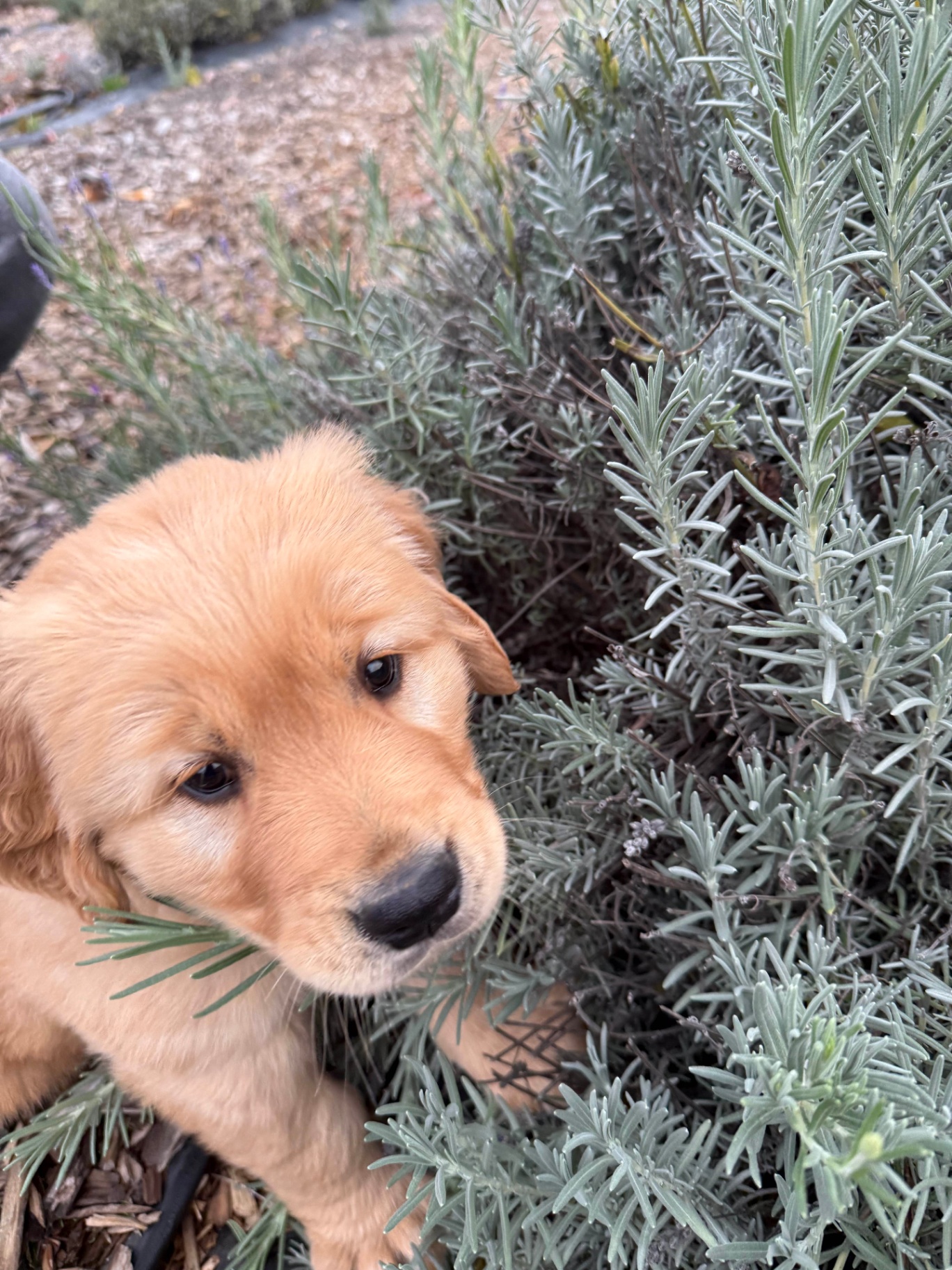
As you can see, our pups love exploring the lavender bushes. This isn't just for a cute photo op! Lavender (Lavandula angustifolia) has been scientifically proven to have a calming effect on dogs. A study published in the Journal of the American Veterinary Medical Association found that dogs exposed to the scent of lavender spent more time resting and less time moving or vocalizing during travel and in shelter environments.
How to do this in Boring, Oregon: You don’t need a massive acreage to create a sensory garden. Even a small corner of your backyard can be transformed. Plant some dog-safe herbs like rosemary, thyme, and of course, lavender. Create different textures for them to walk on: bark mulch, smooth river stones, and soft grass. This "sensory work" tires out a dog’s brain much more effectively than a frantic game of fetch ever could. It allows them to engage in natural sniffing behaviors, which lowers their heart rate and reduces cortisol levels.
The Power of Choice-Based Socialization
When we talk about socialization, we often think of dog parks and chaotic play. But the holistic pros in Portland take a different approach: choice-based interaction. We believe that forcing a dog into a social situation they aren't ready for is a recipe for long-term anxiety.
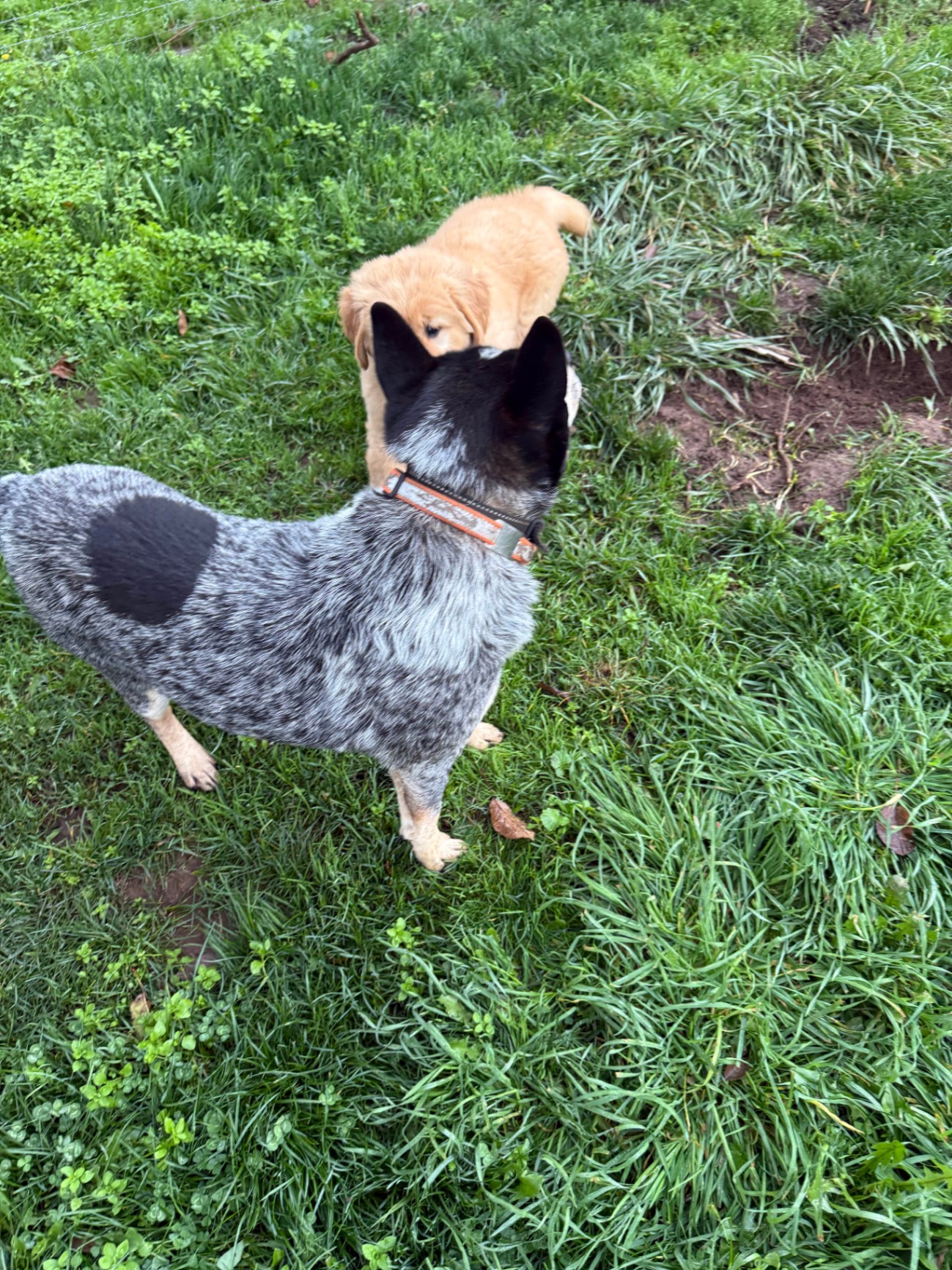
At Green Acres, we spend a lot of time observing body language. We look for "consent." If a puppy like the one in the photo above wants to back away, we let them. If they want to engage, we support them. This builds what we call "canine agency."
At home, you can practice this by letting your dog choose the direction of your walk (a "sniffari") or by giving them a choice between two different toys. When your dog feels they have a say in their life, their confidence skyrockets. Science supports this; studies on animal welfare indicate that having a sense of control over one's environment is a primary factor in reducing chronic stress in captive animals, including our domestic pets.
Therapeutic Touch and the "Down Shift"
After a long day of play and exploration, we focus on the "down shift." This is the transition from high-energy activity to deep, restorative rest. In a holistic routine, rest is just as important as exercise.
We often use gentle massage techniques, similar to TTouch, to help our guests settle. Gentle, circular movements on the ears or the base of the skull can stimulate the parasympathetic nervous system, telling the dog’s body it is safe to relax.

Incorporating a 5-minute massage into your evening routine while you’re watching the news or relaxing after dinner can strengthen your bond and help your dog recover from the day's physical exertion. This is especially important for our local Boring dogs who might be spending their weekends hiking the trails at Mount Hood. Their muscles need that recovery time!
Home Integration Tip: The Boring "Mud-Room" Decompression
Living in the Pacific Northwest means dealing with a lot of damp weather. Our "Home Integration Tip" for our Boring neighbors focuses on the transition from the wet outdoors to the calm indoors.
Instead of a rushed towel-dry at the door, turn your entryway into a "Decompression Zone." Keep a basket of high-value treats and a specific "grooming towel" there. As you dry your dog off, use slow, firm strokes: this acts as a form of "pressure therapy" (similar to a weighted blanket for humans) which calms the nervous system after the stimulation of a walk. Give them a small, long-lasting chew (like a bully stick or a frozen lick mat) immediately after they are dry. This creates a positive association with coming home and signals to their brain that the "active" part of the day is over and the "rest" part has begun.
Why We Do What We Do
We know that your dog is a member of your family. They aren't just "pets" to us; they are souls that have been entrusted to our care. We strive every day to provide a space that honors their natural instincts. Whether we are scrubbing the floors (an unglamorous but vital task!) or hand-feeding a shy newcomer, we do it with love.
Integrating these practices at home isn't about being perfect. It’s about making small, intentional choices that lead to a happier, healthier life for your K-9 friend. We believe that when we treat dogs with the respect and holistic care they deserve, they reward us with a level of loyalty and love that is truly life-changing.
We’re always here to chat if you have questions about how to tweak your home routine or if you want to see our sensory gardens in person. Your dog's health is our passion, and we feel so honored to be part of your journey.
Stay wagging, Boring!
: The Green Acres K-9 Resort Team
Bibliography & Peer-Reviewed Sources
Graham, D. L., Lebaron, R., & Von Klemperer, J. (2005). "Influence of olfactory stimulation on the behavior of dogs in a rescue shelter." Applied Animal Behaviour Science. (Study on the calming effects of lavender and chamomile).
Pantić, M., et al. (2021). "The Influence of Diet on the Oral and Gut Microbiota of Dogs." Frontiers in Veterinary Science. (Research regarding the gut-brain axis and nutritional impacts on behavior).
Kogan, L. R., Schoenfeld-Tacher, R., & Simon, A. A. (2005). "The effect of auditory stimulation on the behavior of sheltered dogs." Journal of Veterinary Behavior. (While focused on sound, this supports the holistic approach to environmental stressors).
Wells, D. L. (2009). "Sensory stimulation as environmental enrichment for captive animals." Applied Animal Behaviour Science. (Scientific backing for sensory gardens and varied environmental textures).
Lefebvre, D., et al. (2007). "The therapeutic effects of massage in dogs." Journal of Canine Science. (An overview of how physical touch affects cortisol and heart rate).
Comments