
Interactive Dog Daycare Options Gresham Matters: Why Rotating Play Styles Boosts Canine Brain Health
- Green Acres K-9 Resort
- Mar 23
- 5 min read

If you’ve spent any time driving through the rolling hills of Boring or the bustling streets of Gresham, you know that our corner of Oregon is a dog lover's paradise. We see you out there on the trails, at the parks, and walking through our gates here at Green Acres K-9 Resort. As pet parents ourselves, we know that your dog isn't just a "pet": they are a family member, a confidant, and sometimes the best part of your day.
When we talk about dog daycare, it’s easy to think of it as just a place for "furbabies" to burn off energy while you’re at work. But at Green Acres, we’ve always believed there is something much deeper happening. We aren't just watching dogs; we are nurturing developing minds. Science shows that the way a dog plays can actually reshape their brain. That’s why we are so passionate about interactive daycare and rotating play styles. It isn't just a fancy schedule; it’s a biological necessity for a happy, healthy pup.
The Science of the "Plastic" Brain
You might have heard the term "neuroplasticity" in relation to human health, but it’s just as vital for our K-9 companions. Neuroplasticity is the brain's ability to reorganize itself by forming new neural connections throughout life. For a dog, especially in a daycare environment, the brain is constantly reacting to stimuli.
Research in canine neurobiology suggests that "environmental enrichment": which includes social interaction, sensory exposure, and cognitive challenges: leads to an increase in synaptic density. Simply put, a dog that is challenged with different types of play has a more "connected" brain. When we rotate play styles, we are essentially giving your dog's brain a workout that prevents cognitive decline and reduces anxiety.
At Green Acres K-9 Resort, we see this in action every day. Whether we are helping a shy rescue find their confidence or guiding a high-energy puppy through a structured game, we are working on their brain health. It’s one of the reasons why we spend so much time personally observing every interaction. It might look like we're just hanging out in the yard, but we’re actually monitoring social cues, stress levels, and engagement to ensure every dog is getting the right kind of mental "load."
Why Rotation is the Secret Sauce
If you went to the gym and only did bicep curls every single day, your overall fitness would suffer. The same is true for dog play. If a dog only engages in high-intensity "wrestling" play for eight hours straight, their cortisol (the stress hormone) levels spike and stay high. This can lead to "over-threshold" behavior, irritability, and even long-term health issues.
By rotating play styles, we balance the nervous system. We move from:
High-Intensity Social Play: Great for cardiovascular health and learning social boundaries.
Sensory Exploration: Engaging the nose and ears to calm the mind.
Restorative Rest: Allowing the brain to process what it has learned.
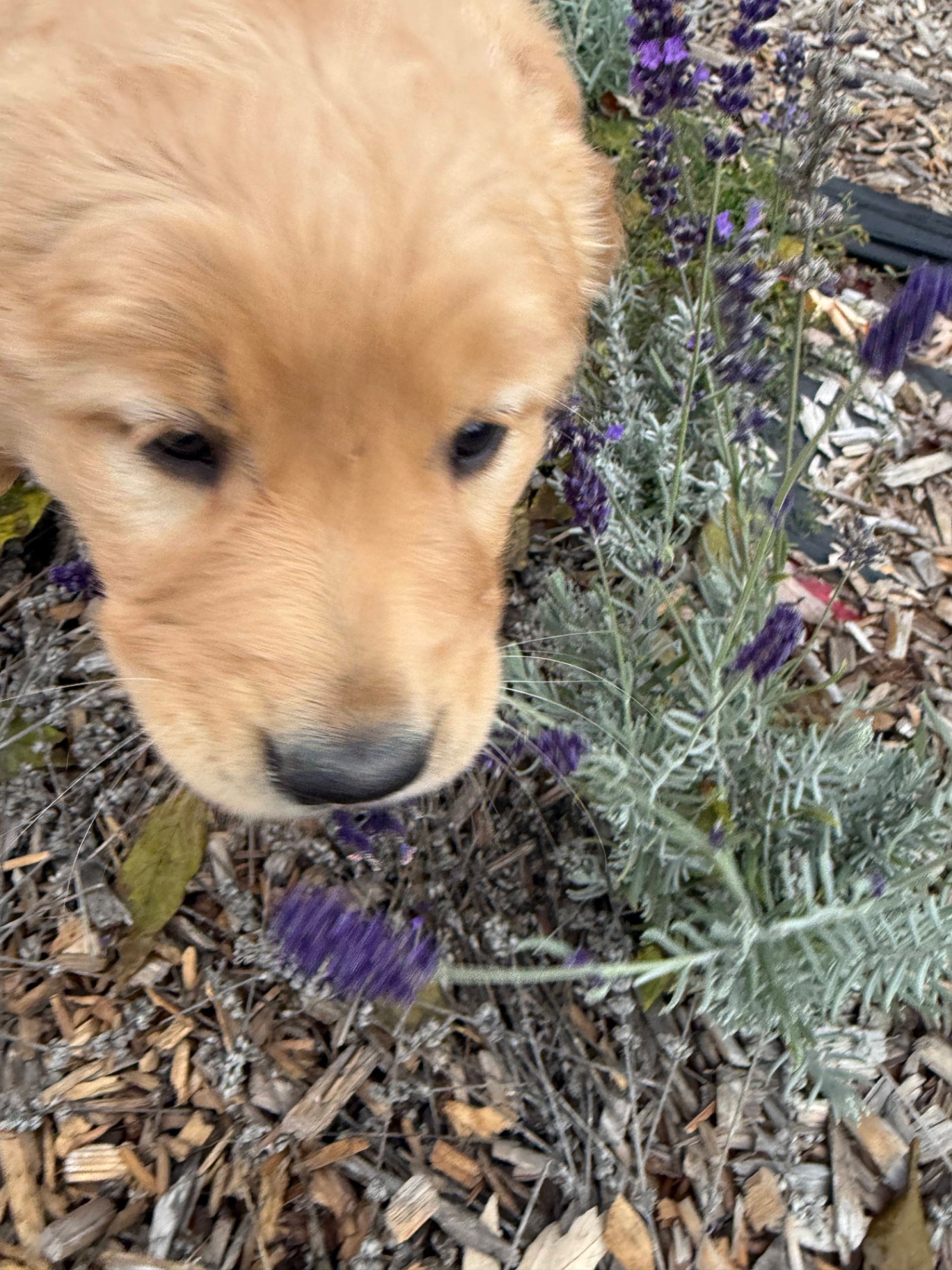
Sensory Play: The Power of the Nose
In our sensory gardens, like the one pictured above, we encourage dogs to use their most powerful tool: their nose. Did you know that a dog’s sense of smell is 10,000 to 100,000 times more acute than ours? When a dog is allowed to sniff lavender, mulch, or the "news" left by a previous visitor, they are performing a complex cognitive task.
Studies have shown that "nose work" or scent-based enrichment lowers a dog's heart rate and increases their sense of optimism. This is why we integrate natural elements into our play yards. We believe that a dog who gets to spend ten minutes sniffing a herb garden is often more relaxed and "satisfied" than a dog who spent an hour running in circles.
Local Matters: Why Boring and Gresham Dogs Need Enrichment
Living in the Pacific Northwest means our dogs deal with specific environmental factors. Between the rainy stretches that keep us indoors and the sudden bursts of sunshine that send us all to the Columbia River Gorge, our dogs need to be adaptable.
An interactive daycare provides that "indoor/outdoor" balance that is so hard to maintain at home during a typical Oregon work week. We know the struggle of trying to keep a dog entertained when it’s pouring outside. That’s where we come in. We’ve designed our facility to be a haven regardless of the weather, ensuring that your pup doesn't develop those "rainy day blues" or destructive behaviors born from boredom.
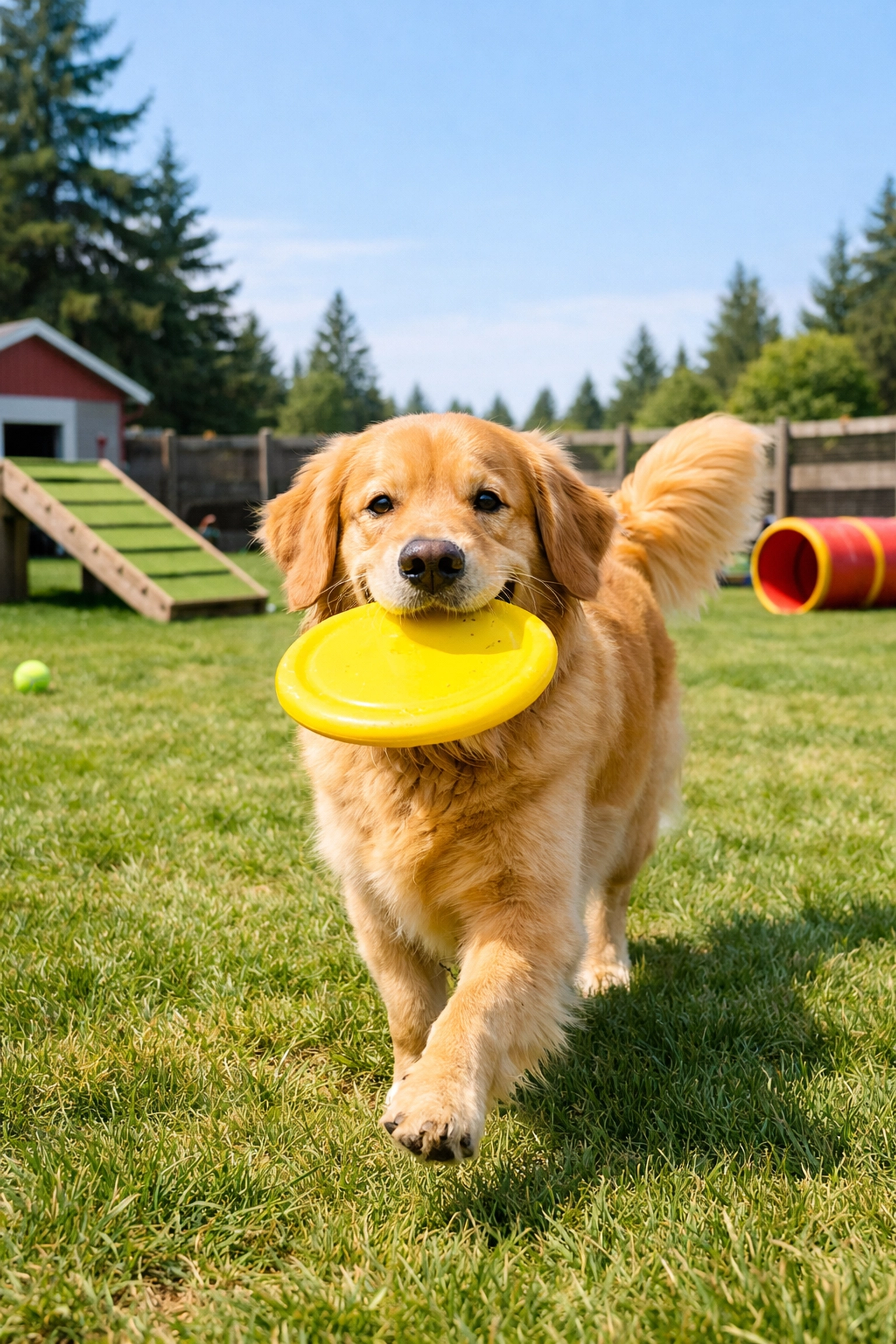
Our Philosophy: More Than Just a Service
We don’t see ourselves as just a business in Boring, Oregon. We see ourselves as a support system for your family. We know that when your dog is happy, your home life is easier. We take the "unglamorous" parts of our job: the constant cleaning, the meticulous record-keeping, the rain-soaked shifts in the yard: and we do them with a smile because we know it matters.
We strive to treat every guest like our own. Mark often says that the best part of being a "Helper" here is seeing that lightbulb moment when a dog masters a new social skill or finally settles down for a peaceful nap after a stimulating session. We are personally invested in their growth. We understand the worry of leaving your best friend with someone else, which is why we emphasize transparency and science-based care.
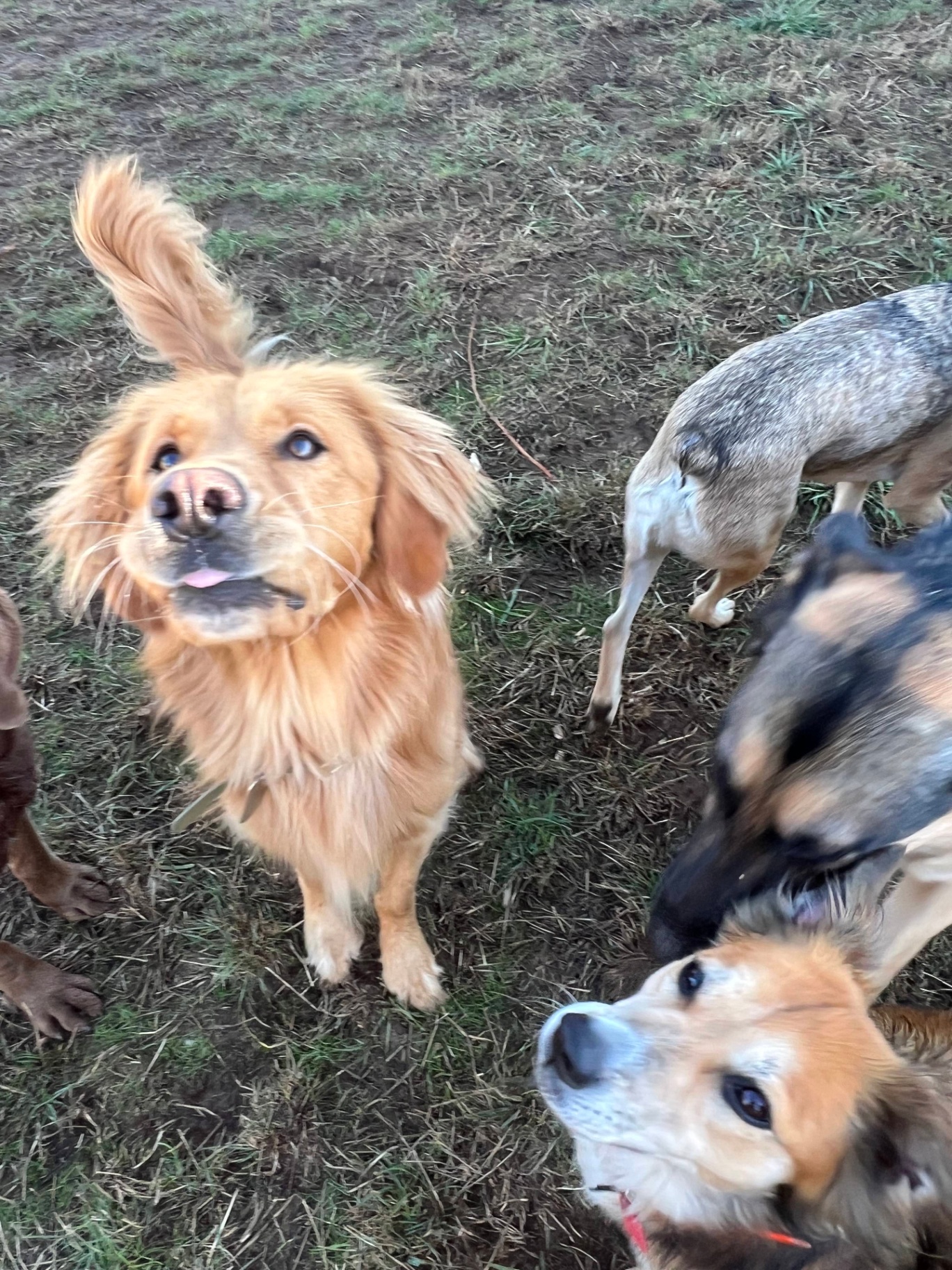
Structured Socialization vs. Free-for-All
There is a common misconception that "more dogs = more fun." In reality, an unstructured "free-for-all" can be incredibly stressful for many dogs. This is why we advocate for small, curated groups.
By rotating which dogs play together and what activities they do, we prevent "pack mentality" from becoming overwhelming. We look for compatible play styles: the "chasers" with the "chasers," and the "loungers" with the "loungers." This tailored approach is what sets high-quality Gresham dog daycare options apart. It’s about quality of interaction, not just quantity of dogs.
Home Integration Tip: The "Toy Rotation" Strategy
You don't have to be at the resort to boost your dog's brain health! One of the easiest ways to bring our "rotation" philosophy into your Boring or Gresham home is through Toy Rotation.
The Tip: Instead of leaving a basket full of twenty toys on the floor, pick only three or four to be "active" at any given time. Store the rest in a closed bin in the closet. Every few days, swap the active toys for "new" ones from the bin.
Why it works: Novelty triggers dopamine release in the brain. To a dog, a toy they haven't seen in four days feels brand new! This prevents boredom-based chewing and keeps their cognitive engagement high during their time at home with the family.
Final Thoughts
We believe that every dog deserves a life filled with purpose, play, and peace. At Green Acres K-9 Resort, we aren't just providing daycare; we are providing a foundation for a healthier, longer life through science-backed brain health initiatives. We love what we do, and we love the community of dogs and humans we’ve built here in the Gresham area.
If you’re looking for a place where your dog is understood, challenged, and deeply cared for, we’d love to welcome you into our family.
Bibliography & Peer-Reviewed Sources
Berns, G. S., Brooks, A. M., & Spivak, M. (2012).Scent of the familiar: An fMRI study of canine brain responses to familiar and unfamiliar human and dog odors. Behavioural Processes. (Explores how sensory stimuli activate reward centers in the canine brain).
Siettou, C., et al. (2014).The Impact of Environmental Enrichment on the Behavior and Welfare of Boarded Dogs. Journal of Veterinary Behavior. (Discusses the physiological benefits of rotating environments).
Bekoff, M. (2001).Social Play Behavior: Cooperation, Fairness, Trust, and the Evolution of Morality. Journal of Consciousness Studies. (A deep dive into how play styles develop canine social intelligence).
Ratey, J. J. (2008).Spark: The Revolutionary New Science of Exercise and the Brain. (While focused on humans, this foundational text on neuroplasticity and exercise is widely applied to canine enrichment models by veterinary behaviorists).
Duranton, C., & Horowitz, A. (2019).Let me sniff! Nosework induces positive judgment bias in pet dogs. Applied Animal Behaviour Science. (Proves that sniffing exercises lead to increased "optimism" in dogs).
Comments