
Why Interactive Dog Daycare Options in Gresham Will Change the Way You See Socialization
- Green Acres K-9 Resort
- Feb 25
- 7 min read

If you live out in Boring, Oregon, you already know the reality: your dog might have a big yard, a quiet road, and plenty of love… but not always a lot of practice being around other dogs and new people. And when social opportunities do pop up (a leashed greeting on a narrow trail, a vet lobby, a cousin’s dog at a family BBQ), things can get awkward fast.
That’s why we’re big believers in interactive dog daycare, the kind that goes way beyond “everyone in a yard, good luck.” When daycare is structured, supervised, and built around enrichment, it can change how your dog’s brain and behavior respond to the world. It can also change how you think about “socialization.” Not as forced meet-and-greets, but as a skill your dog learns, practices, and carries home.
We’re Green Acres K-9 Resort, and our philosophy is simple: dogs deserve a day that makes sense to their bodies and their brains. That means real movement, real rest, and real learning, plus staff who are paying attention the whole time (yes, including the unglamorous parts like breaking up muddy zoomies and wiping down water bowls… over and over).
Socialization isn’t “being friendly.” It’s being functional.
A lot of people hear “social dog” and picture a dog who loves every dog at the park. In real life, that’s not the goal, and honestly, it’s not even realistic.
Healthy socialization is:
Your dog can read basic dog body language (play bows, pauses, “I need space” signals)
Your dog can regulate excitement (start/stop play without melting down)
Your dog can tolerate proximity without needing to engage
Your dog can recover after something surprising (a bark, a new scent, a fast mover)
Science backs this up: social behavior is not a personality trait you either have or don’t have, it’s shaped by learning, repeated exposure, and outcomes. Dogs build expectations from patterns. When experiences are predictable and safe, dogs tend to become more resilient and less reactive over time.
We believe daycare should build that resilience on purpose, not by flooding dogs with chaos, but by giving them structured chances to succeed.
What “interactive daycare” actually means (and why it matters)
Interactive daycare is different from simple group play because it layers in enrichment + coaching + recovery time.
At Green Acres, we don’t just open a gate and hope for the best. We’re watching:
Who is initiating play too intensely
Who is getting overwhelmed but not speaking up
Who keeps hovering at the edges (often the shy dogs)
Who needs a break before they make a bad choice
And we pair that with activities that build better brains, not just tired bodies:
short training-style moments (like responding to name, coming away from a friend)
scent-based activities (sniffing is a natural “de-stressor” for most dogs)
puzzle-style challenges or novelty items
structured rest so stress doesn’t quietly stack all day
This matters because socialization isn’t only about contact with other dogs, it's also about learning flexibility. The more safe, guided variety a dog experiences, the more adaptable they tend to become.
The brain side: why supervised social play can change behavior
When people say daycare “helps their dog’s anxiety,” we don’t brush that off as fluff, but we also don’t treat it like magic. We treat it like biology.
Positive social experiences can influence a dog’s internal state through systems involved in:
stress regulation (like the hypothalamic–pituitary–adrenal axis)
social bonding (oxytocin pathways are implicated in dog-human bonding and social behavior)
arousal and recovery (a big deal for dogs who go from 0 to 100)
It’s not that daycare “fixes” a dog in one visit. It’s that repeated, positive, appropriately-managed interactions can teach the dog’s nervous system a new normal:
“I can be around dogs and still feel safe.”
“I can take breaks and return to play.”
“Humans step in before things go sideways.”
And those lessons generalize. That’s when owners in Boring tell us, “Walks feel easier,” or “He doesn’t lose his mind when guests come over,” or “She can finally settle after activity.”
That’s what we’re after: better recovery, better regulation, better real-life behavior.
Adult and senior dogs can still learn social skills (yes, really)
One myth we hear all the time is that socialization only matters during puppyhood. Early development does matter, but adult dogs aren’t “done cooking.” They can still learn. The difference is that adult learning often requires:
more controlled exposure
more repetition
more protection from bad experiences
That’s where interactive daycare can shine: especially for dogs who missed out early, moved homes, or had a few messy dog encounters that made them skeptical.
For seniors, we’re often working on gentle confidence and comfort. Many older dogs don’t want the rowdy crew: and they shouldn’t be forced into it. Socialization for them may look like:
parallel sniffing with a calm buddy
quiet outdoor time with space
short interactions with lots of opt-out options
We strive to meet dogs where they are. Not where a chart says they “should be.”
“But my dog doesn’t like other dogs.” That can still be a daycare success story.
Here’s a caring truth: some dogs don’t want a bunch of dog friends. That doesn’t mean they can’t benefit from daycare.
For many dogs, the real win is learning:
to coexist
to disengage
to be near other dogs without feeling trapped
to look to humans for guidance
That’s still socialization. It’s also a huge quality-of-life improvement if you ever want to:
walk through a busy trailhead
visit a vet or groomer without drama
have friends bring their dog over
travel or board confidently
We believe a “social dog” isn’t necessarily the life-of-the-party dog. A social dog is a dog who can move through the world with fewer big feelings and safer choices.
What to look for in interactive dog daycare near Gresham (especially if you’re coming from Boring)
If you’re comparing options in the Gresham area, here are science-friendly, real-world indicators that a daycare takes socialization seriously:
1) Temperament screening and thoughtful grouping
Dogs should not be thrown into one big group just because they’re the same size. Play style, arousal level, and communication matter.
2) Staff who actively interrupt “not great” play
Good daycare staff don’t wait for a fight. They redirect body slams, cornering, relentless chasing, and “one-sided fun.”
3) Built-in rest (not constant stimulation)
Chronic over-arousal can backfire and increase reactivity. Rest periods help dogs process and reset.
4) Enrichment that uses the dog’s brain
Scent work, problem-solving, and short training moments build flexibility and reduce boredom-based behaviors.
5) Clear health and vaccination standards
Respiratory disease spreads in dog-dense settings. Ask about vaccination policies, cleaning protocols, and what happens when a dog coughs or has GI issues.
We handle these details because we’re dog people and family people. We want your dog safe, and we want you to feel good dropping them off: not worried all day.
The “socialization transfer”: how daycare skills show up at home
One of our favorite parts of this work is when daycare progress starts showing up in the everyday moments that matter to families.
Interactive daycare can improve:
impulse control (less mugging at doors, fewer explosive greetings)
frustration tolerance (better “wait” skills, less leash reactivity)
communication (clearer dog signals, fewer misunderstandings)
settling (more reliable off-switch after activity)
And that settling piece? That’s huge for families in Boring juggling school pickups, remote work calls, and dinner chaos. A dog who can self-regulate makes the whole house feel calmer.
Home integration tip (practical and family-friendly): “The 10-Minute Decompression + Choice Routine”
Daycare helps dogs practice social skills, but the home environment is where those skills stick. Here’s an easy routine we recommend after any stimulating outing (daycare, busy walk, visitors).
Step 1: Quiet decompression (10 minutes)
When you get home, skip the hype. Leash on, gentle voice, minimal touching. Let your dog:
drink water
sniff the yard (or a quiet corner outside)
move slowly and reset
This reduces the chance of “spillover zoomies” turning into barking, nipping, or sibling chaos with kids.
Step 2: Offer two calm choices
Give your dog a simple either/or:
“Bed or crate?”
“Chew or lick mat?”
“Sniff towel or settle?”
Choice builds agency, and agency supports emotional stability (this is a big concept in modern animal behavior science).
Step 3: Reinforce the off-switch
When your dog lies down, calmly deliver a treat or chew to the spot without revving them up. We’re teaching: “Calm earns good stuff.”
If you’ve got kids at home, make this a family job: one child can help prepare the lick mat, another can fill the water bowl. It turns “dog management” into “family routine,” and dogs love predictable routines.
A quick note on safety, stress, and “too much daycare”
More isn’t always better. Socialization is like exercise: the dose matters.
Signs your dog may need shorter visits or more rest days:
they’re extra cranky at home after daycare
they’re suddenly more vocal or mouthy
they seem restless and can’t settle even when tired
they start avoiding the car or the front door on daycare mornings
A good daycare will help you find the right schedule for your dog: especially if they’re young, sensitive, or new to group settings. We’d rather build a dog up slowly than push too hard and lose trust.
If you’re in Boring and looking for interactive dog daycare support
A lot of our families are in that “Boring to Gresham” zone, and we get it: you want somewhere close enough to be realistic, but thoughtful enough to be worth it.
If you’re curious about how we structure group play, enrichment, and rest (and how we match dogs), you can learn more about us here: http://greenacresk9resort.com
And if you’re the kind of person who worries, “What if my dog is the weird one?”: we promise, we’ve met them all. We’ve cleaned the muddy paws, separated the over-enthusiastic huggers, coached the shy sniffers, and celebrated the tiny wins. That’s the work, and we genuinely love it.
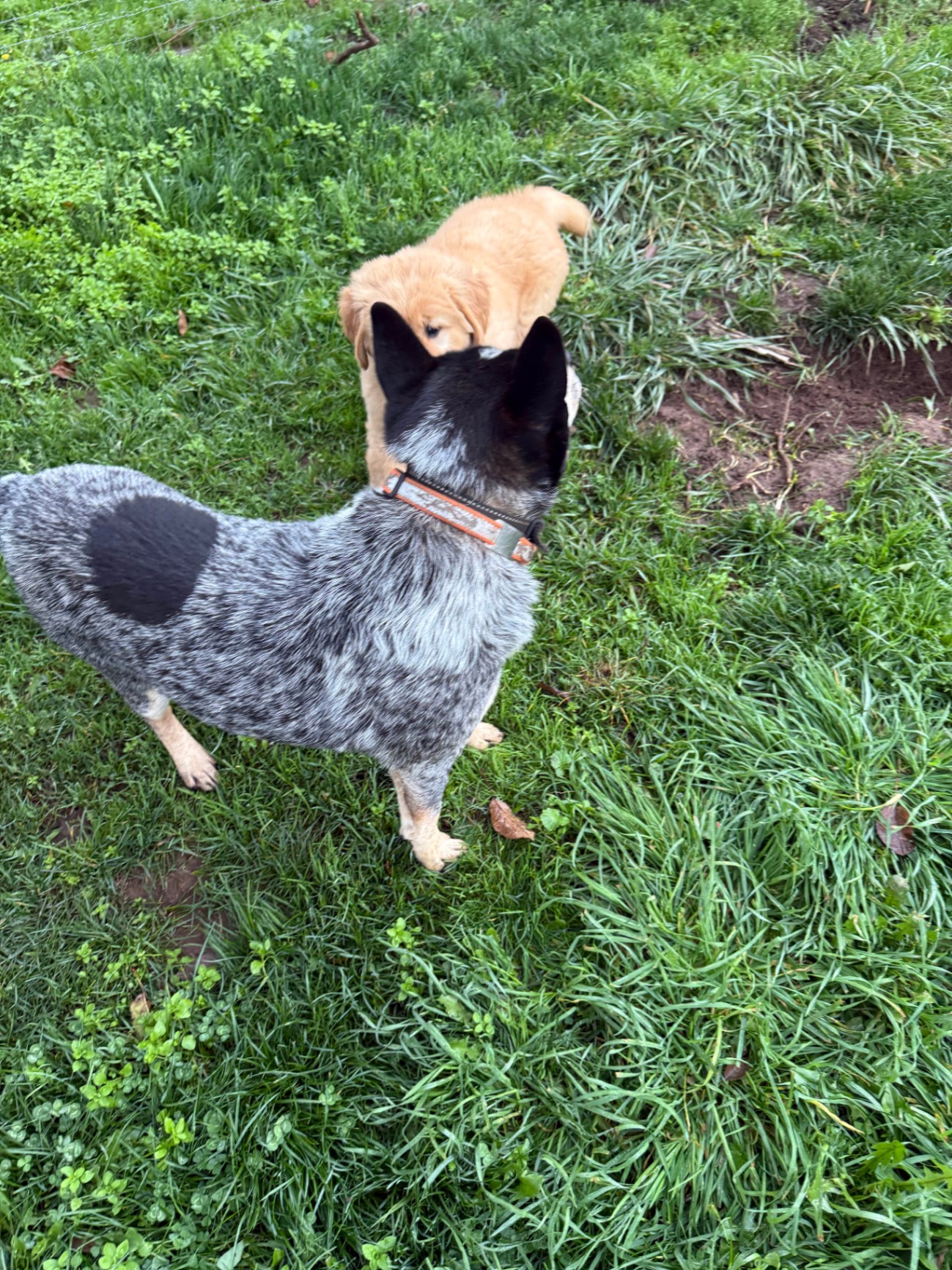
Featured real photo from our Facebook
The photo(s) included in this post are from the Green Acres K-9 Resort photo library and originally shared on our Facebook page: https://www.facebook.com/greenacresdaycare/photos/
Peer-reviewed sources (science-based bibliography)
Hennessy, M. B., Williams, M. T., Miller, D. D., Douglas, C. W., & Voith, V. L. (1998). Influence of male and female petters on plasma cortisol and behavior: Can human interaction reduce stress in the shelter dog? Applied Animal Behaviour Science, 61(1), 63–77.
Rooney, N. J., Gaines, S. A., & Bradshaw, J. W. S. (2007). Behavioural and glucocorticoid responses of dogs (Canis familiaris) to kennelling: Investigating mitigation of stress by prior habituation. Physiology & Behavior, 92(5), 847–854.
Horowitz, A. (2009). Attention to attention in domestic dog (Canis familiaris) dyadic play. Animal Cognition, 12(1), 107–118.
Marshall-Pescini, S., Cafazzo, S., Virányi, Z., & Range, F. (2017). Integrating social ecology in explanations of wolf–dog behavioral differences. Current Opinion in Behavioral Sciences, 16, 80–86.
Hepper, P. G., & Wells, D. L. (2010). The influence of environmental change on the behaviour of sheltered dogs. Applied Animal Behaviour Science, 123(1–2), 60–66.
Nagasawa, M., Mitsui, S., En, S., et al. (2015). Oxytocin-gaze positive loop and the coevolution of human-dog bonds. Science, 348(6232), 333–336.
Comments