
Dog Training Portland: The Fascinating Science Behind How Dogs Learn
- Green Acres K-9 Resort
- Feb 2
- 5 min read

When you watch your dog learn a new trick or finally master that recall command, there's a lot more happening beneath the surface than meets the eye. We're talking about genuine neurological changes, synapses firing, dopamine flooding the brain, and neural pathways being carved like trails through a forest. At Green Acres K-9 Resort, we believe understanding the science behind how dogs learn isn't just interesting, it's essential to providing the best care and training for every dog who walks through our doors.
The Foundation: Operant Conditioning 101
Let's start with the basics. Back in the 1930s, psychologist B.F. Skinner introduced the world to operant conditioning, the idea that behaviors are shaped by their consequences. In simple terms: if something good happens after a behavior, that behavior is more likely to happen again. If something unpleasant follows, the behavior decreases.
There are four quadrants to operant conditioning, but here's where modern dog training gets exciting: positive reinforcement has emerged as the clear winner. This means adding something your dog loves (treats, praise, play) immediately after they do something you want. It's not just effective, it's backed by decades of research showing it creates lasting behavioral change without the emotional baggage that comes with punishment-based methods.
We use positive reinforcement exclusively at our facility because the science is crystal clear: dogs learn faster, remember longer, and, here's the kicker, they actually enjoy the learning process.
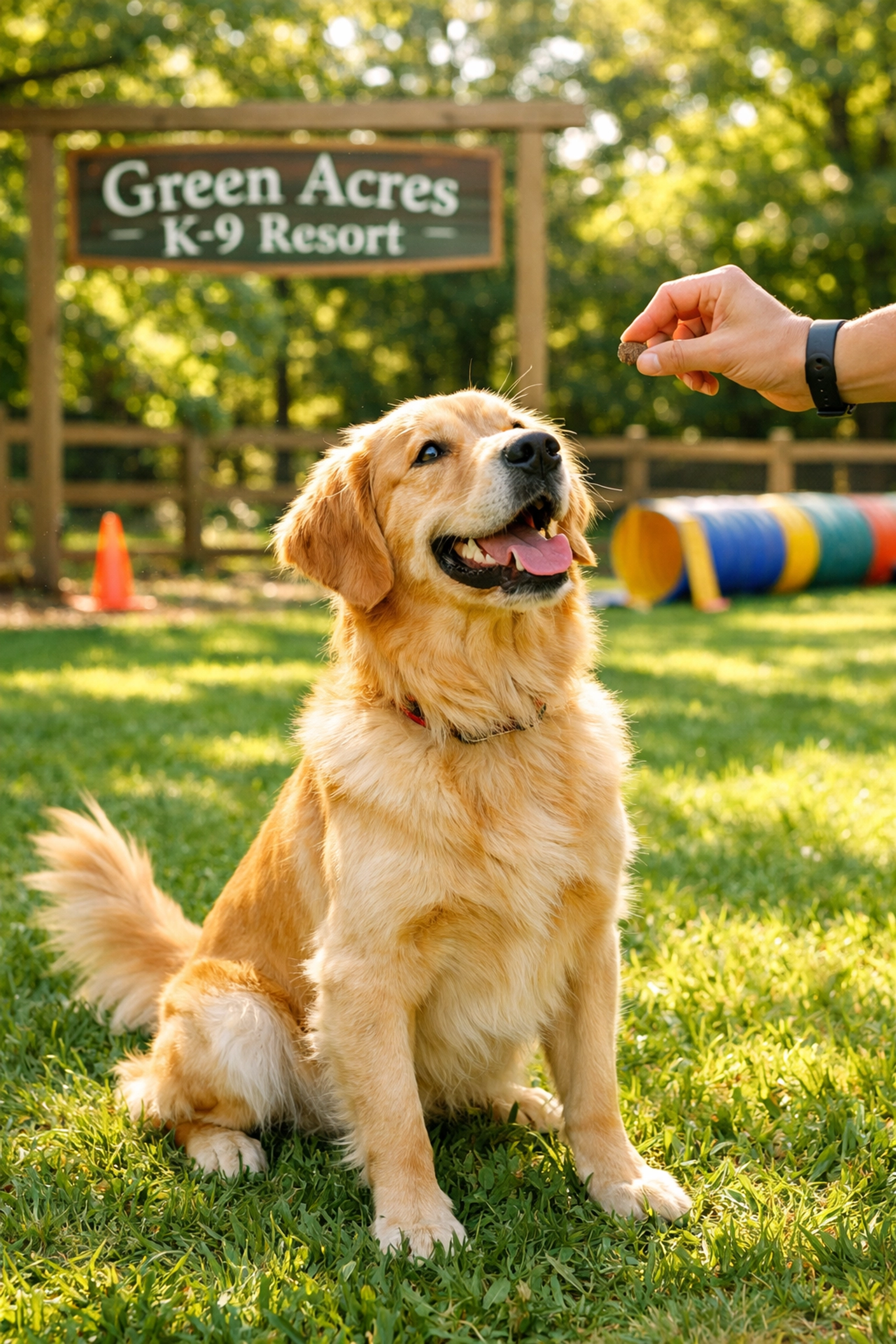
What's Happening in Your Dog's Brain?
Here's where things get fascinating. When your dog receives a reward for sitting on command, their brain releases dopamine, the "feel-good" neurotransmitter that's essentially nature's way of saying, "Do that again!" According to research published in Applied Animal Behaviour Science, positive reinforcement training creates measurable increases in dopamine activity in the prefrontal cortex and nucleus accumbens, the brain regions associated with motivation and reward processing (Berns et al., 2012).
Think of dopamine as your dog's internal cheerleader. Every time they get it right and receive that treat or enthusiastic praise, their brain stamps that memory with a big gold star. This neurochemical reward system doesn't just make training more pleasant, it actually improves cognitive retention. Dogs trained with positive methods show better long-term memory of commands compared to those trained with corrections or aversive stimuli.
The Cortisol Connection: Why Stress Matters
Now let's talk about what happens when training goes the other way. Aversive training methods, think choke chains, shock collars, or harsh verbal corrections, trigger the release of cortisol, the primary stress hormone. Multiple studies in the Journal of Veterinary Behavior have measured salivary cortisol levels in dogs during training sessions, and the results are eye-opening.
One landmark study by Vieira de Castro et al. (2020) found that dogs trained with aversive methods showed significantly elevated cortisol levels not just during training, but for hours afterward. Even more concerning, these dogs displayed stress behaviors like lip-licking, yawning, and body tension at much higher rates than dogs trained with reward-based methods. The researchers concluded that aversive training compromises both the immediate welfare and the long-term emotional state of dogs.
Here's what really struck us about this research: chronic stress doesn't just make dogs unhappy, it actually impairs their ability to learn. When cortisol floods the system, it interferes with the hippocampus, the brain structure crucial for memory formation. Essentially, a stressed dog is a dog whose brain is working against them, not with them.
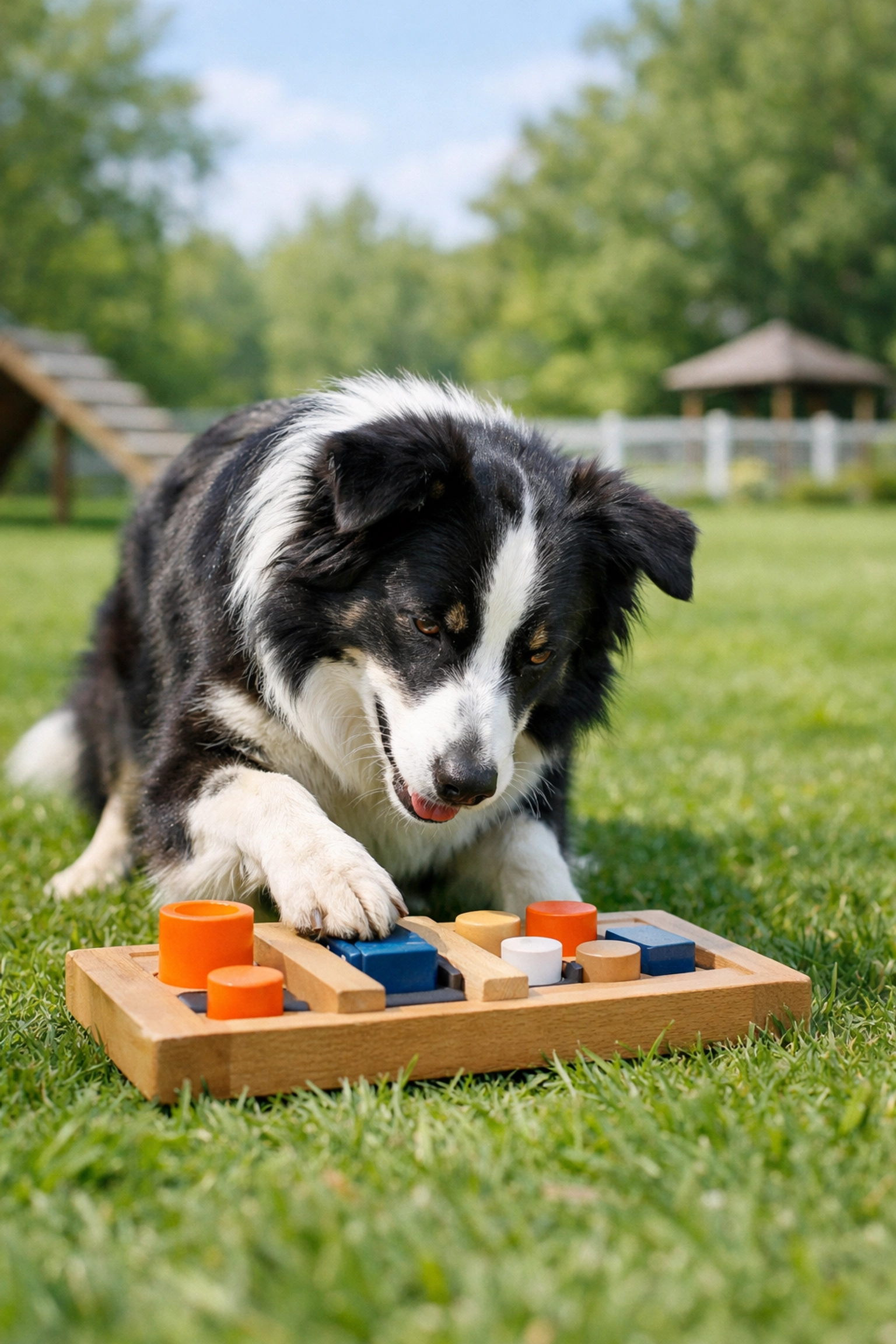
The Cognitive Benefits of Positive Training
Beyond just feeling better, dogs trained with positive reinforcement show enhanced cognitive flexibility. Research in Applied Animal Behaviour Science by Rooney and Cowan (2011) demonstrated that dogs trained with rewards were more likely to engage in problem-solving tasks and showed greater persistence when faced with challenges.
We see this every day at Green Acres. Dogs who learn through positive methods don't just obey commands, they think. They problem-solve. They offer behaviors eagerly because training has become a game they're excited to play rather than a test they're afraid to fail. That's the difference between a dog who sits because they're worried about what happens if they don't, and a dog who sits because they've learned it's a pathway to good things.
The neuroscience backs this up beautifully. Positive experiences during training strengthen the neural connections between the prefrontal cortex (responsible for decision-making) and the amygdala (the emotional processing center). This integration means dogs can think clearly even when they're excited or distracted, a crucial skill for real-world reliability.
Building Trust Through Science
There's another dimension to this that goes beyond pure learning mechanics: the relationship between you and your dog. Studies published in Hormones and Behavior have shown that positive interactions between dogs and their humans trigger oxytocin release, sometimes called the "love hormone", in both species. Training based on rewards and encouragement doesn't just teach skills; it builds a bond of trust and mutual affection.
When we work with dogs at our resort, we're not just training them to sit, stay, or come when called. We're building confidence. We're creating positive associations with learning itself. We believe every training session should leave a dog thinking, "That was fun! When can we do it again?" rather than, "I'm glad that's over."
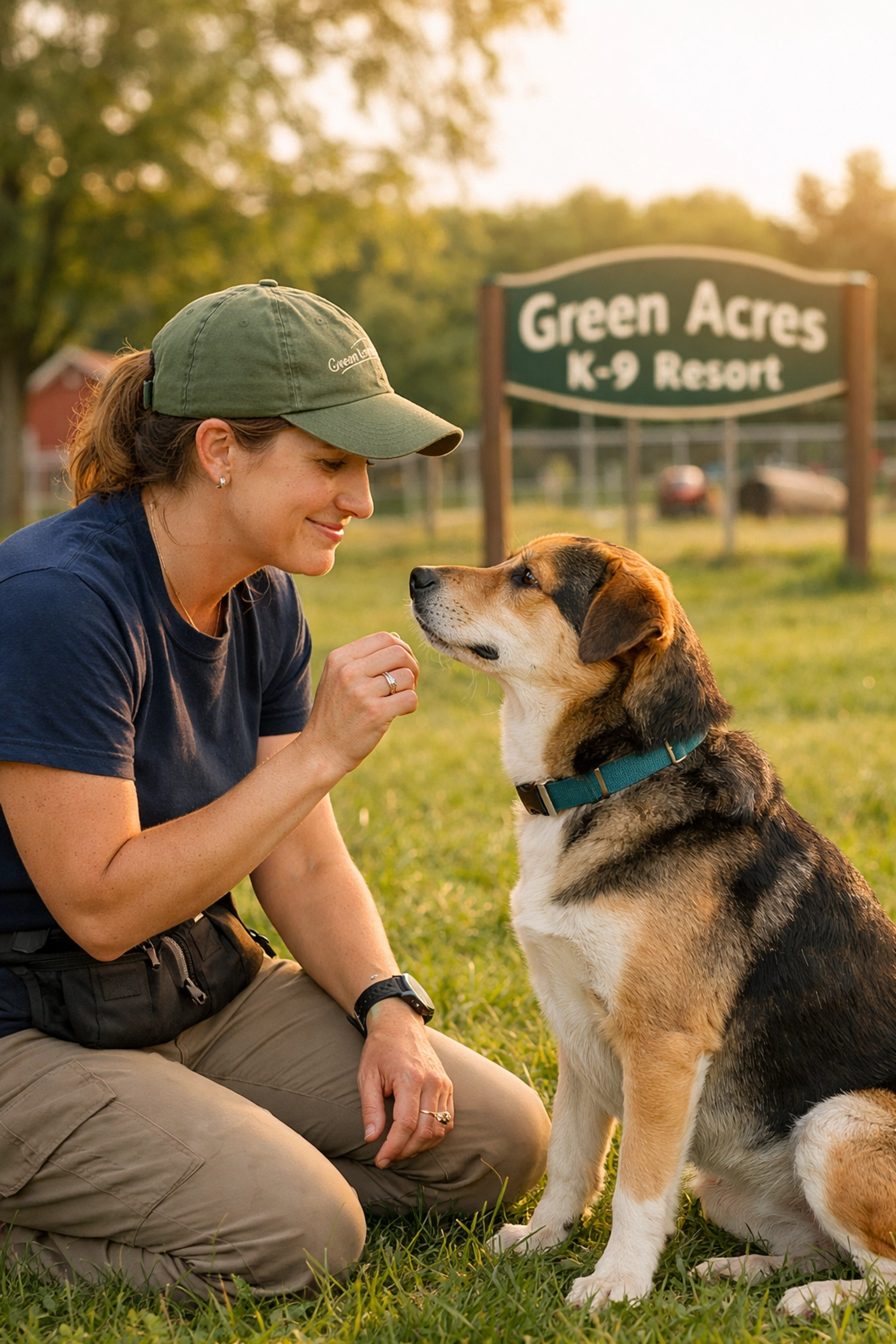
Real-World Application at Green Acres
So what does all this science look like in practice? When we conduct training sessions here, we set up the environment for success. We break behaviors into small, achievable steps. We mark the exact moment a dog gets it right with a clicker or verbal marker, then immediately follow with something they love. We keep sessions short and sweet because we know that attention spans and dopamine responses work best in focused bursts.
We also pay close attention to each dog's stress signals. If we see those cortisol-related behaviors, the yawning, the lip-licking, the whale eye, we adjust immediately. Maybe the task is too hard, the environment too distracting, or the session too long. The science has taught us that pushing through stress doesn't accelerate learning; it derails it.
Why This Matters for Portland Pet Parents
Portland is a city that values science, sustainability, and progressive approaches, so it makes sense that modern, evidence-based dog training has taken root here. When you're looking for dog training in Portland, understanding these principles helps you make informed choices about who you trust with your best friend.
The dogs we work with aren't just better trained, they're happier, more confident, and more resilient. Their owners report stronger bonds, more reliable behavior, and fewer behavioral problems down the road. That's not marketing talk; that's what the peer-reviewed research predicts, and it's what we witness every single day.
The Bottom Line
The neurobiology of learning in dogs isn't just academic theory, it's practical knowledge that transforms how we interact with our canine companions. Positive reinforcement works because it aligns with how mammalian brains are wired to learn: through reward, repetition, and positive emotional associations.
At Green Acres K-9 Resort, we don't use these methods because they're trendy or because they make us feel good (though they do). We use them because the science is overwhelming. Dopamine beats cortisol. Trust beats fear. Joy beats stress. Every time.
When you bring your dog to us for training, boarding, or daycare, you're not just getting people who love dogs, you're getting people who understand dogs at the neurological level, and who structure every interaction around what decades of research tells us actually works.
Bibliography
Berns, G. S., Brooks, A. M., & Spivak, M. (2012). Functional MRI in awake unrestrained dogs. PLoS ONE, 7(5), e38027.
Hiby, E. F., Rooney, N. J., & Bradshaw, J. W. S. (2004). Dog training methods: their use, effectiveness and interaction with behaviour and welfare. Animal Welfare, 13(1), 63-69.
Rooney, N. J., & Cowan, S. (2011). Training methods and owner–dog interactions: Links with dog behaviour and learning ability. Applied Animal Behaviour Science, 132(3-4), 169-177.
Vieira de Castro, A. C., Fuchs, D., Morello, G. M., Pastur, S., de Sousa, L., & Olsson, I. A. S. (2020). Does training method matter? Evidence for the negative impact of aversive-based methods on companion dog welfare. PLoS ONE, 15(12), e0225023.
Ziv, G. (2017). The effects of using aversive training methods in dogs: A review. Journal of Veterinary Behavior, 19, 50-60.
Comments