
Dog Walking Portland: The Science of Movement and Joint Health
- Green Acres K-9 Resort
- Feb 2
- 5 min read

Here's something that might surprise you: an estimated 66% of dogs across America suffer from poor joint health. We see it every day at Green Acres K-9 Resort, and it breaks our hearts. But here's the good news, one of the most powerful tools we have to protect our dogs' joints is also one of the simplest: a proper walk.
Not just any walk, mind you. We're talking about structured, purposeful movement that supports your dog's biomechanics, stimulates their mind, and keeps those joints healthy for years to come. Let's dig into the science behind why how we walk our dogs matters just as much as whether we walk them.
The Biomechanics Behind Every Step
When your dog takes a step, it's not just their legs moving, it's a complex symphony of muscles, tendons, ligaments, and joints all working together. According to research published in Frontiers in Veterinary Science, regular weight-bearing exercise like walking stimulates the production of synovial fluid, which acts as a natural lubricant for your dog's joints (Bergh & Budsberg, 2005).
Think of it like this: your dog's joints are like door hinges. If you never open the door, the hinges get rusty and stiff. But regular, controlled movement keeps everything well-oiled and functioning smoothly. Walking increases blood flow to joint tissues, delivers essential nutrients to cartilage, and helps remove waste products that can contribute to inflammation.
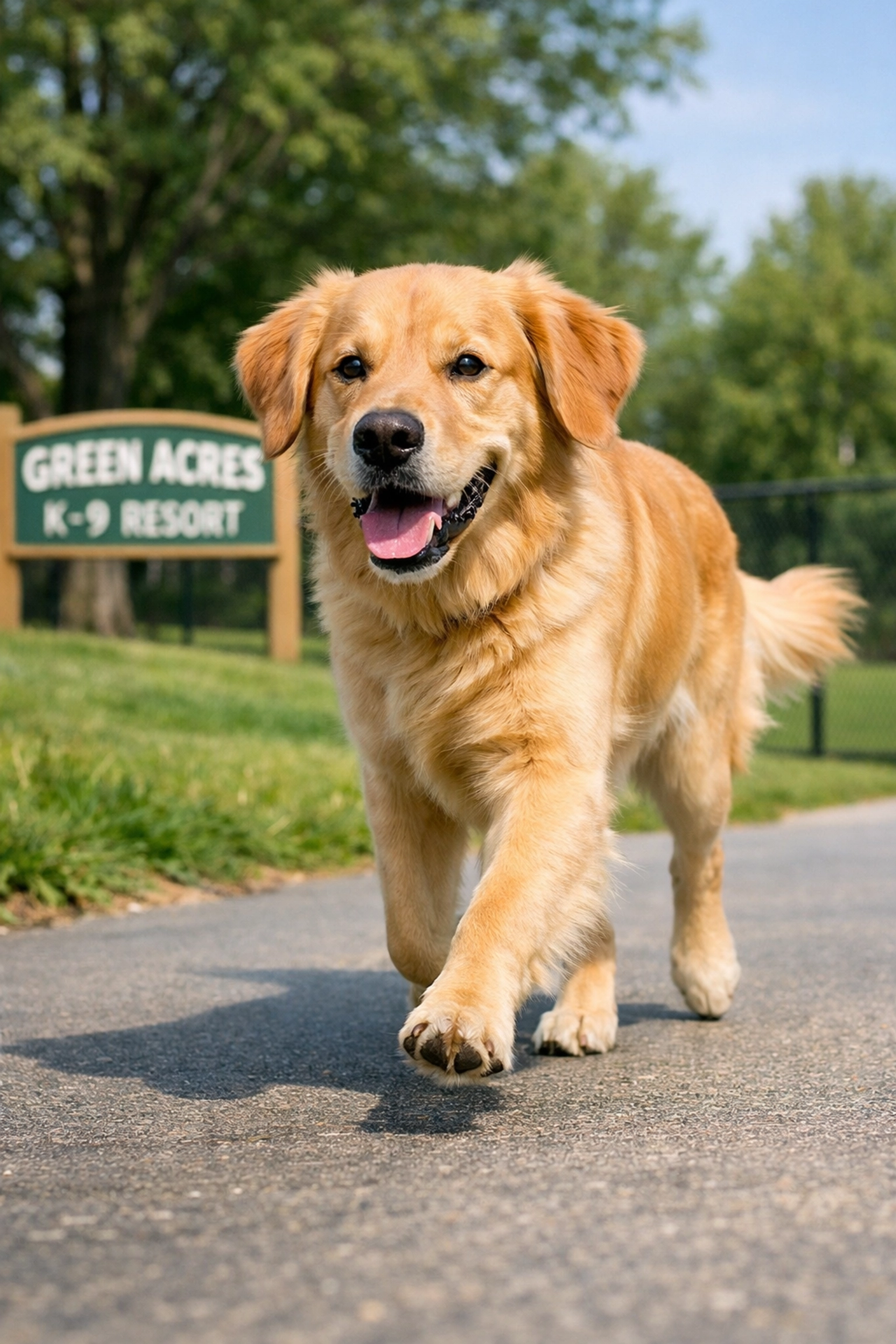
The weight-bearing aspect is crucial here. When your dog walks on solid ground with proper posture, the controlled stress on their joints actually strengthens the surrounding muscles and promotes bone density. A study in the Journal of Animal Science found that dogs engaged in regular, moderate exercise showed significantly better joint health markers compared to sedentary dogs, even as they aged (Hansen et al., 2007).
But here's where it gets interesting: the quality of the walk matters tremendously. A rushed, erratic walk where your dog is lunging and pulling puts uneven stress on joints. A controlled, structured walk where your dog maintains a steady gait? That's where the magic happens.
Structured Walking: More Than Just Exercise
We're big believers in structured walks here at Green Acres. When we take your pup out, we're not just letting them drag us around the block. We're facilitating biomechanically sound movement that protects and strengthens their musculoskeletal system.
What does "structured" mean? It means maintaining a pace that allows your dog to use their natural gait. For most dogs, that's a moderate walk where all four paws are hitting the ground in a rhythmic pattern. This regularity reduces jarring impacts on joints and distributes forces evenly across their skeletal structure.
Research from the American Academy of Orthopaedic Surgeons recommends at least 30 minutes of walking daily, five days a week, to see measurable benefits in bone, muscle, and joint health. For dogs, we've found that shorter, more frequent walks, say, 10 to 15 minutes two or three times daily, often work better than one long marathon session.
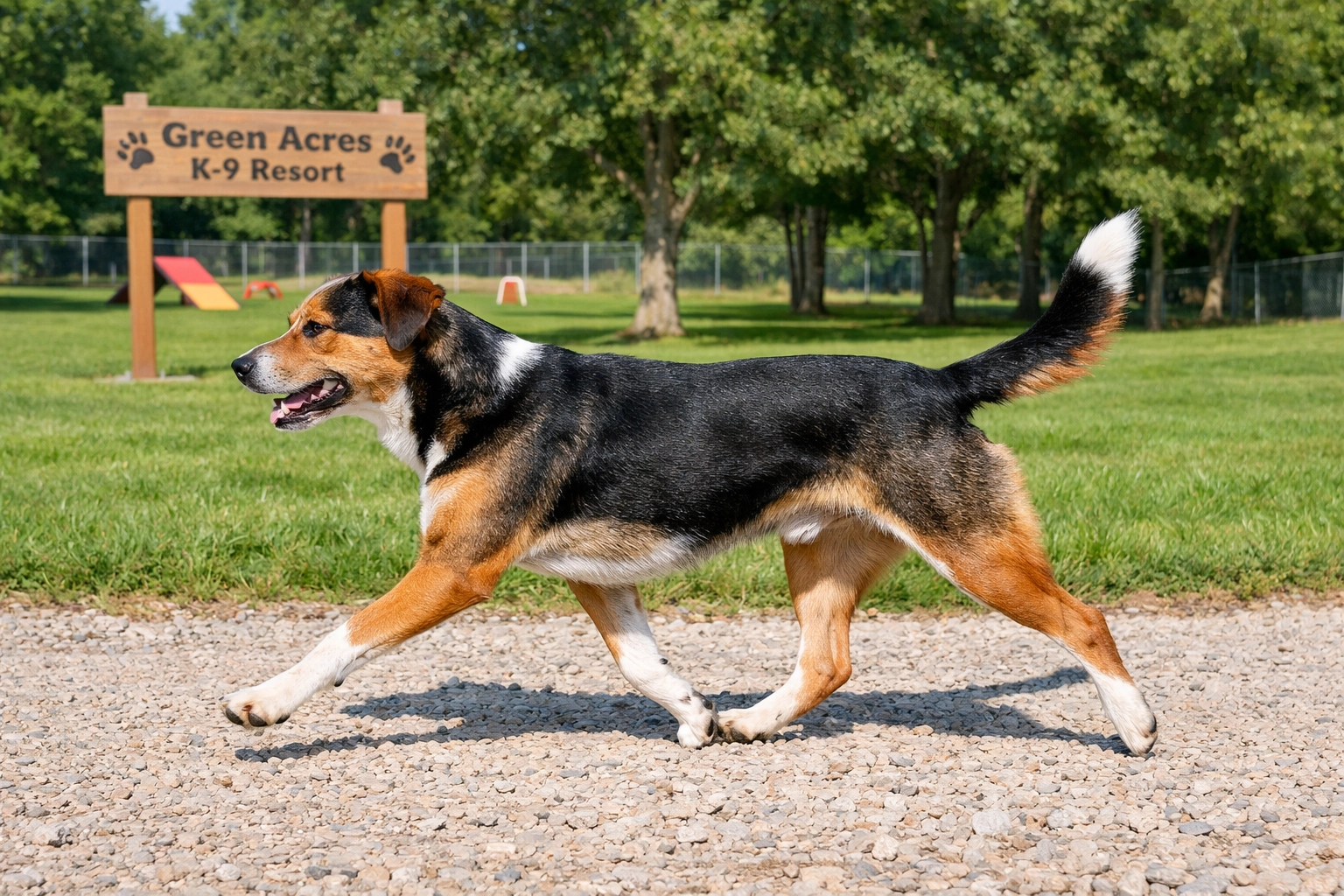
Why? Because when muscles fatigue during extended exercise, they can't support joints as effectively. Those last 10 minutes of a 60-minute walk might actually be doing more harm than good if your dog is tired and their form is breaking down. We'd rather see multiple quality walks than one exhausting slog.
The "Sniffari" Revolution: Mental Movement Matters
Now, let's talk about something that's revolutionized how we think about dog walks: the "sniffari." This concept, letting your dog sniff to their heart's content during walks, isn't just about being indulgent. It's backed by solid science.
A fascinating study published in Applied Animal Behaviour Science found that dogs who were allowed to engage in sniffing behaviors during walks showed significantly lower cortisol levels (a stress hormone) compared to dogs walked at a brisk, continuous pace (Duranton & Horowitz, 2019). Their heart rates were more stable, and they exhibited fewer stress signals like lip licking or yawning.
Here's what's happening: when your dog sniffs, they're not just gathering information, they're engaging in a cognitively demanding activity that exercises their brain. And just like physical exercise strengthens muscles, mental exercise strengthens neural pathways and reduces anxiety.
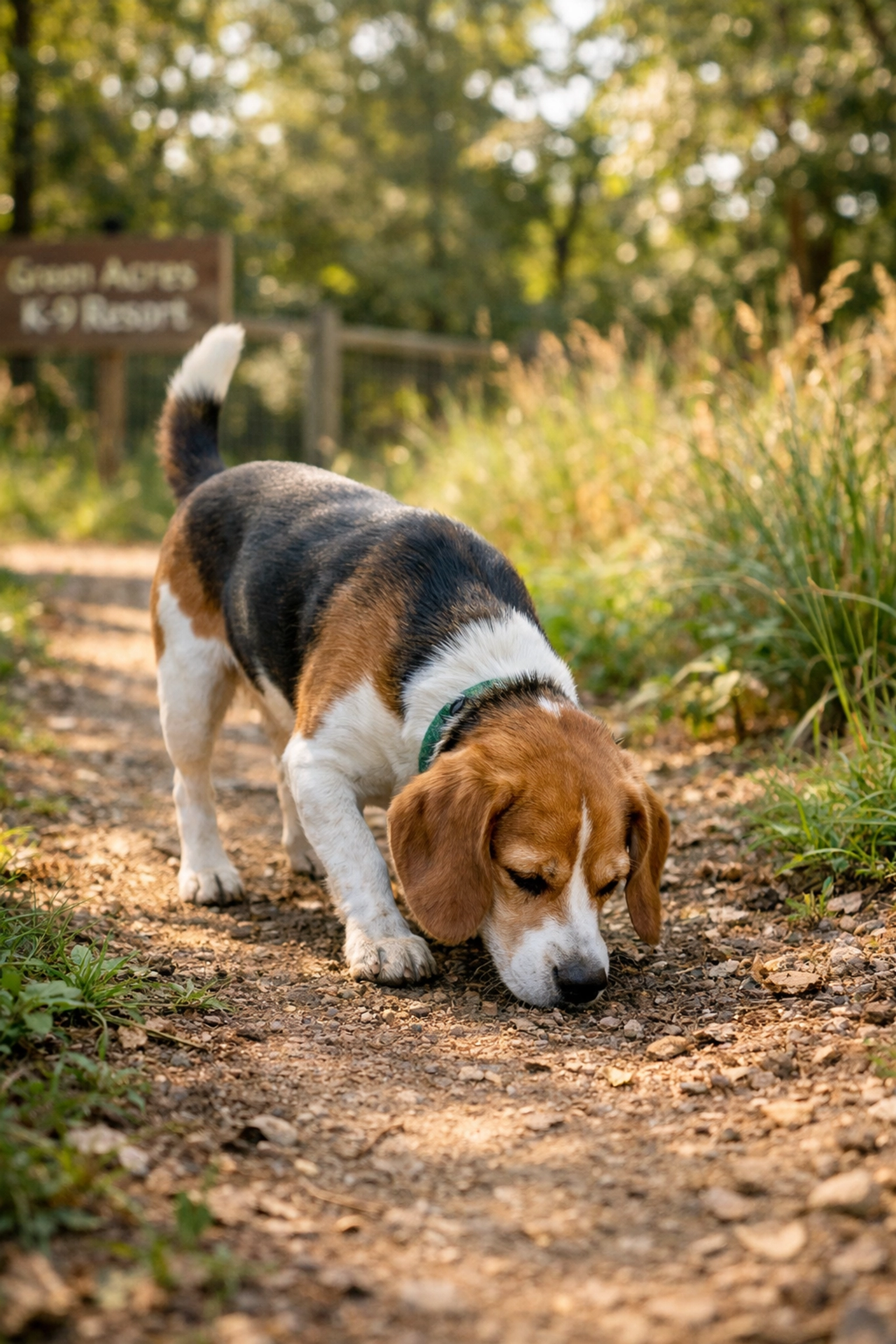
We incorporate sniffari principles into our walks at Green Acres because we've seen the results firsthand. A dog who's mentally satisfied from a good sniffing session often exhibits better impulse control, less reactivity, and yes, better physical coordination. When their brain is engaged, their body moves more purposefully.
This doesn't mean we let walks become completely aimless wandering. We strike a balance: structured movement with designated sniff breaks. Your dog gets the joint-supporting benefits of consistent forward motion, plus the cognitive enrichment of processing scent information. Best of both worlds.
Cardiovascular Health: The Other Half of the Equation
While we're focused on joints today, we can't ignore the cardiovascular benefits of regular walking. Your dog's heart is a muscle too, and it needs exercise just like their legs do.
Studies in veterinary cardiology have shown that regular, moderate-intensity exercise like walking improves cardiac output, strengthens heart muscle tissue, and enhances circulation throughout the body (Crook et al., 2006). Better circulation means better nutrient delivery to all tissues: including those joint cartilages we're trying to protect.
There's also a weight management component that directly impacts joint health. Every extra pound your dog carries puts approximately four times that pressure on their weight-bearing joints. A 10-pound overweight dog is essentially carrying 40 pounds of extra joint stress. Regular walking helps maintain healthy body weight, which in turn reduces joint strain.
Our Approach at Green Acres K-9 Resort
When you trust us with your pup's care here in Portland, we take their exercise seriously. We're not just "walking dogs": we're supporting their long-term joint health, cardiovascular function, and mental wellbeing through thoughtfully structured movement.
Our team understands that every dog is different. A young, athletic Labrador has different needs than a senior Chihuahua. We adjust pace, duration, and intensity based on each individual dog's age, fitness level, and any existing health considerations. We watch their gait, monitor their energy levels, and make sure they're moving in ways that build them up rather than break them down.
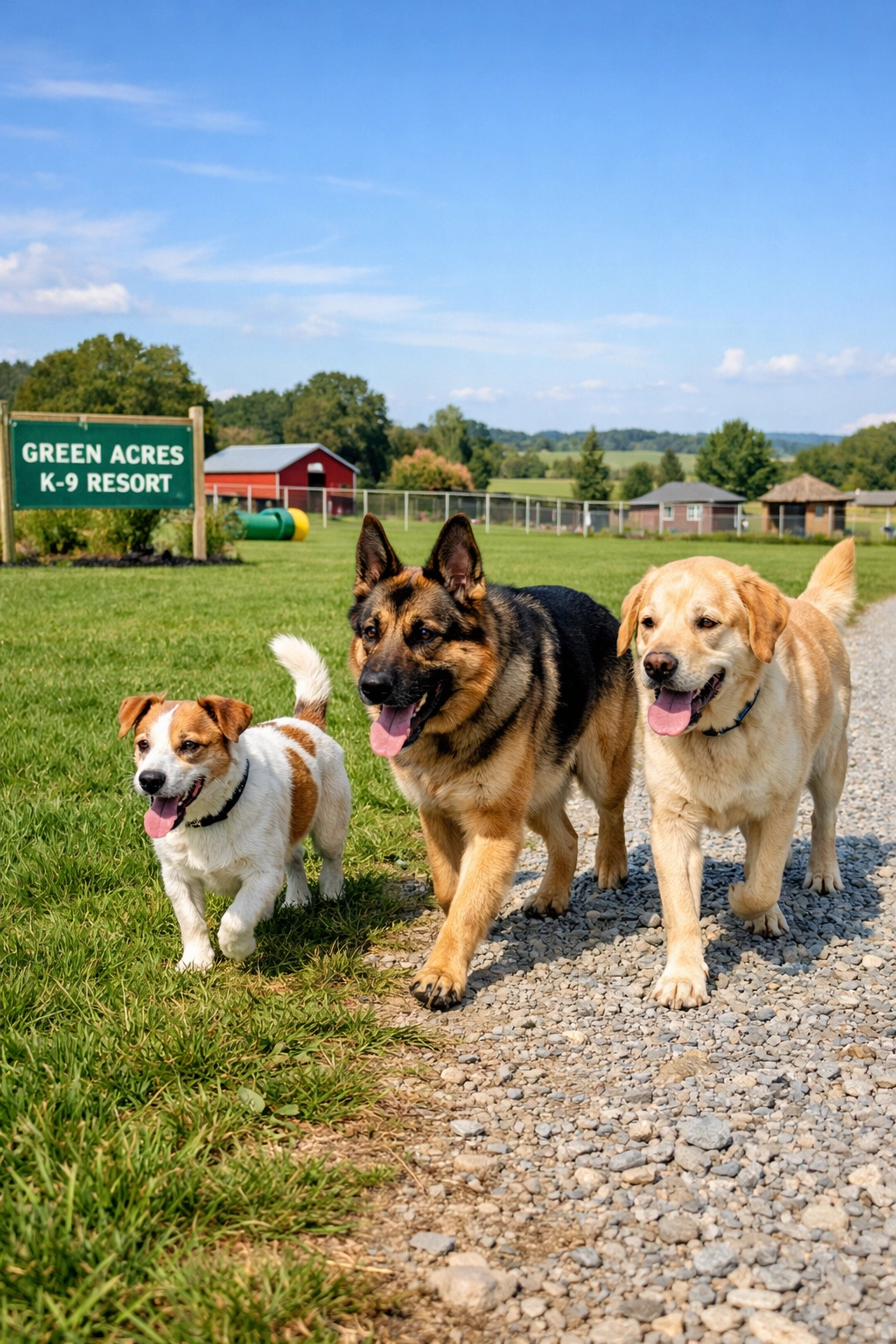
We also vary the terrain when possible. Walking on different surfaces: grass, gravel, slight inclines: engages different muscle groups and challenges your dog's proprioception (their sense of body position in space). This variety strengthens stabilizing muscles around joints and improves overall coordination.
Starting Early, Continuing for Life
One of the most important things we tell our clients is this: joint health starts early. You don't wait until your dog has arthritis to start thinking about their joints. The habits you establish when your dog is young will pay dividends throughout their entire life.
But it's never too late to start. We've seen senior dogs who've been inactive for years blossom with a consistent, gentle walking routine. Their stiffness decreases, their mood improves, and they move with more comfort and confidence. The key is consistency and appropriate intensity.
The science is clear: regular, structured walking is one of the most powerful tools we have to protect our dogs' joint health, support their cardiovascular system, and provide essential mental stimulation. It's not glamorous, and it's not complicated: but it works.
At Green Acres, we're committed to providing the kind of thoughtful, purposeful movement that keeps your pup healthy and happy for years to come. Because every walk is an investment in their future, and that's something we believe in deeply.
Bibliography
Bergh, M. S., & Budsberg, S. C. (2005). The coxib NSAIDs: potential clinical and pharmacologic importance in veterinary medicine. Journal of Veterinary Internal Medicine, 19(5), 633-643.
Crook, T. C., McGowan, C., & Pead, M. (2006). Effect of pasture exercise on bone mineral content in young Thoroughbreds. Equine Veterinary Journal, 38(S36), 552-555.
Duranton, C., & Horowitz, A. (2019). Let me sniff! Nosework induces positive judgment bias in pet dogs. Applied Animal Behaviour Science, 211, 61-66.
Hansen, B. D., Lascelles, B. D., Keene, B. W., Adams, A. K., & Thomson, A. E. (2007). Evaluation of an accelerometer for at-home monitoring of spontaneous activity in dogs. American Journal of Veterinary Research, 68(5), 468-475.
Comments