
Overnight Pet Care Portland: The Science of a Good Night's Sleep for Dogs
- Green Acres K-9 Resort
- Feb 2
- 6 min read

When you drop your pup off for overnight pet care in Portland, you're probably thinking about whether they'll miss you, if they'll eat their dinner, or how they'll handle being away from home. But here's something you might not be thinking about: whether your dog will actually get a good night's sleep.
And trust us, that matters way more than you might realize.
We've spent years studying what makes dogs truly comfortable during overnight stays, and the science behind canine sleep has completely shaped how we approach overnight care at our facility. Because it turns out, a good night's sleep isn't just about rest, it's about brain health, emotional regulation, and overall wellbeing.
How Dogs Actually Sleep: Understanding Canine Sleep Architecture
Just like humans, dogs cycle through different stages of sleep throughout the night. But their sleep architecture, the pattern and structure of their sleep cycles, works a bit differently than ours.
Dogs experience two main types of sleep: Non-Rapid Eye Movement (NREM) sleep and Rapid Eye Movement (REM) sleep. NREM sleep is that deep, restorative phase where physical recovery happens. Their muscles relax, their breathing slows, and their bodies do the important work of tissue repair and immune system maintenance.
Then there's REM sleep, the stage where dogs dream (yes, that adorable paw-twitching and soft woofing you see is real!). But REM sleep does something far more important than just creating entertaining moments for us to watch. According to research published in Scientific Reports, REM sleep plays a crucial role in memory consolidation and learning in dogs (Kis et al., 2017). During this stage, their brains are processing everything they learned during the day, filing away important information, and essentially "organizing" their mental filing cabinet.
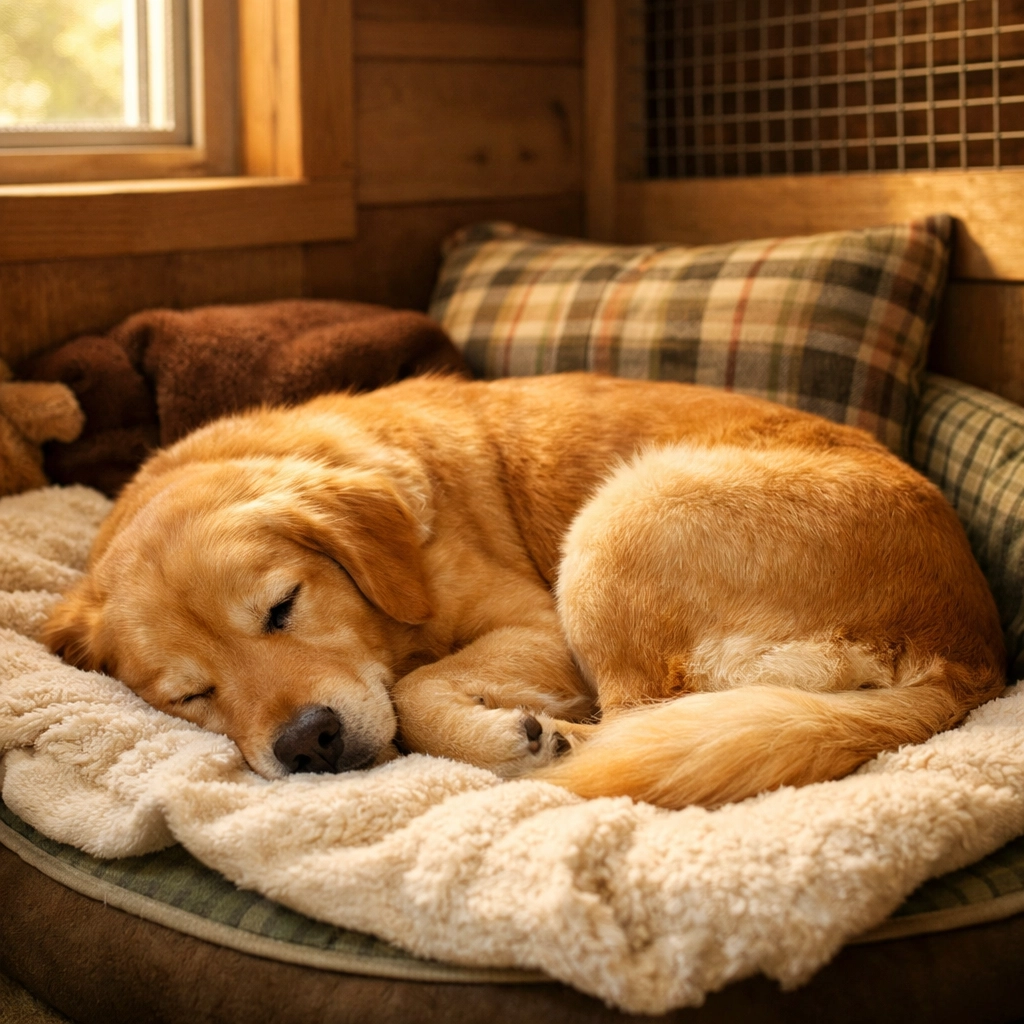
Here's the interesting part: dogs spend about 10% of their sleep time in REM, compared to humans who spend about 20-25%. But they cycle through these stages much more quickly than we do: about every 20 minutes compared to our 90-minute cycles. This means they need an environment where they can complete these cycles without constant disruption.
Why Quality Sleep Matters for Your Dog's Brain
When we talk about overnight pet care in Portland, we're not just talking about keeping your dog safe and fed until morning. We're talking about creating conditions that support their neurological health.
During deep NREM sleep, dogs' brains clear out metabolic waste products that accumulate during waking hours. Research in the Journal of Neuroscience has shown that this "brain cleaning" process is essential for cognitive function across species (Xie et al., 2013). Without adequate deep sleep, these toxins can build up, potentially affecting everything from mood to learning ability.
The REM stage is equally critical. Studies have demonstrated that dogs who experience uninterrupted REM sleep show better performance on learning tasks and improved emotional regulation. A study in Animal Cognition found that dogs deprived of adequate sleep showed decreased ability to distinguish between friendly and threatening human facial expressions: essentially, tired dogs are more likely to misread social cues (Kis et al., 2014).
We see this all the time. A dog who sleeps poorly during their first night of boarding might seem more anxious, less interested in play, or even slightly reactive to things that normally wouldn't bother them. It's not that they're being difficult: their brain literally hasn't had the chance to properly process and regulate.
The Real Cost of Sleep Deprivation in Dogs
Sleep deprivation in dogs isn't just about being cranky the next day. The behavioral effects can be significant and, frankly, a little heartbreaking to witness.
Research published in Scientific Reports found that sleep-deprived dogs showed increased stress hormone levels (cortisol), decreased ability to learn new commands, and heightened anxiety responses to novel situations (Reicher et al., 2020). They're essentially operating with diminished cognitive resources.

We've noticed that dogs experiencing poor sleep quality might:
Show increased irritability or reactivity to other dogs
Have difficulty settling or constantly pace
Display attention-seeking behaviors even when tired
Experience decreased appetite or digestive issues
Take longer to warm up to caregivers or other dogs
In our years of providing overnight care, we've learned that the environment makes an enormous difference. A noisy, chaotic, or overly stimulating space doesn't just keep dogs awake: it prevents them from achieving the deep, restorative sleep cycles their brains desperately need.
Creating the Perfect Sleep Environment
This is where the science really informs our practice. We believe that quality overnight pet care in Portland means understanding what dogs need to sleep well, and then designing every aspect of our facility around those needs.
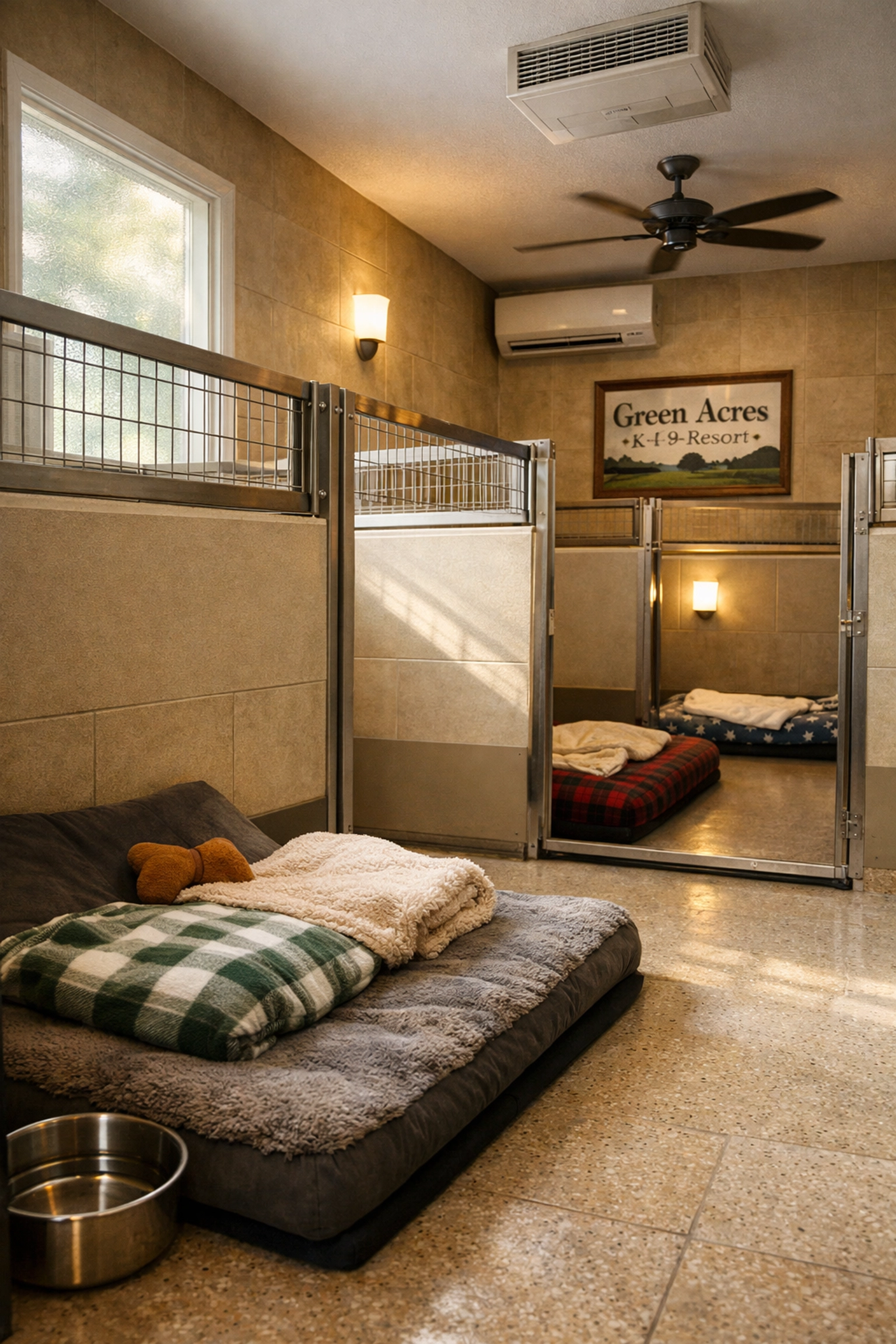
Quiet Zones Matter: Dogs have significantly better hearing than humans. What might seem like background noise to us can be genuinely disruptive to a sleeping dog. We maintain quiet hours and have designed our spaces with sound-dampening materials to create a peaceful environment conducive to deep sleep.
Comfortable Sleeping Areas: Research shows that dogs sleep better when they have a comfortable, den-like space that feels secure. We provide individual sleeping areas that allow dogs to retreat, relax, and feel safe enough to truly let their guard down and sleep deeply.
Consistent Routines: Dogs are creatures of habit, and their sleep-wake cycles benefit from consistency. We maintain predictable bedtime routines that help signal to their brains that it's time to wind down. This regularity supports their natural circadian rhythms.
Temperature Control: Studies have found that dogs, like humans, sleep better in slightly cooler environments. We carefully regulate temperature to support optimal sleep quality throughout the night.
What Happens During an Overnight Stay
When you bring your dog to us for overnight pet care, we're thinking about their entire sleep experience from the moment they arrive.
Evening activities are designed to provide appropriate physical and mental exercise: enough to promote healthy tiredness, but not so much that they're overstimulated before bed. We've found that a calm walk and some quiet bonding time works better than high-energy play right before sleep.
Throughout the night, we maintain a peaceful environment while still being available if any dog needs attention. Some dogs need a midnight potty break, others might need a reassuring word. We're here for whatever supports their rest.
Morning routines are gentle. We understand that just like humans, dogs need a few minutes to fully wake up and orient themselves. We don't rush them into activity before their brains have had a chance to transition from sleep to wakefulness.
The Long-Term Impact
Here's something that really drives home why we're so passionate about this: the quality of sleep during overnight care can actually affect how your dog experiences future boarding stays.
Research on stress and memory consolidation shows that negative experiences during vulnerable states (like sleep disruption) can create lasting anxious associations. Conversely, positive overnight experiences where dogs sleep well and wake up feeling secure help build confidence and resilience for future stays.
We've seen dogs who had poor experiences with overnight care elsewhere come to us anxious and unable to settle. With time, patience, and a focus on supporting quality sleep, these same dogs often transform into relaxed overnight guests who happily settle in for a good night's rest.
Our Commitment to Sleep Science
At Green Acres K-9 Resort, we believe that staying current with scientific research isn't optional: it's essential to providing the level of care your dog deserves. We regularly review new studies on canine sleep, stress, and wellbeing, and we adjust our practices based on what the evidence shows works best.
Because at the end of the day, when you entrust us with your dog's overnight care, you're not just looking for someone to watch them until morning. You're looking for people who understand that a good night's sleep is fundamental to their health, happiness, and quality of life.
And we take that responsibility seriously; one peaceful night's sleep at a time.
Bibliography
Kis, A., Hernádi, A., Kanizsár, O., Gácsi, M., & Topál, J. (2017). Oxytocin induces positive expectations about ambiguous stimuli (cognitive bias) in dogs. Scientific Reports, 7(1), 8107.
Kis, A., Szakadát, S., Gácsi, M., Kovács, E., Simor, P., Török, C., Gombos, F., Bódizs, R., & Topál, J. (2014). The interrelated effect of sleep and learning in dogs (Canis familiaris); an EEG and behavioural study. Animal Cognition, 17(4), 849-859.
Reicher, V., Kis, A., Simor, P., Bódizs, R., & Gombos, F. (2020). Connections between sleep and cognition in dogs (Canis familiaris). Scientific Reports, 10(1), 13928.
Xie, L., Kang, H., Xu, Q., Chen, M. J., Liao, Y., Thiyagarajan, M., O'Donnell, J., Christensen, D. J., Nicholson, C., Iliff, J. J., Takano, T., Deane, R., & Nedergaard, M. (2013). Sleep drives metabolite clearance from the adult brain. Science, 342(6156), 373-377.
Comments