
Socialization Matters: Why Interactive Dog Daycare Options in Gresham Support Your Dog’s Brain
- Green Acres K-9 Resort
- Apr 30
- 5 min read

At Green Acres K-9 Resort, we often hear from our neighbors in Boring and Gresham that they want more for their dogs than just a place to "burn off energy." While a good game of fetch is great, we believe that true wellness for our four-legged family members goes much deeper than physical exercise. As pet parents ourselves, we know that your dog isn't just a pet, they are a member of the family, and their mental health is just as important as their physical health.
When we talk about "interactive dog daycare," we aren't just using a buzzword. We are talking about a science-backed approach to canine development that prioritizes brain health through social complexity and sensory enrichment. Whether you are looking for dog daycare in Gresham or a long-term boarding solution, understanding the "why" behind socialization can help you provide the best possible life for your pup.
The Neuroscience of the "Social Brain"
To understand why socialization is so vital, we have to look under the hood, or rather, inside the skull. Dogs, like humans, are inherently social mammals. Their brains have evolved over thousands of years to thrive in community settings. When a dog interacts with another dog, their brain isn't just idling; it is firing on all cylinders.
Science tells us that social interaction stimulates neuroplasticity, the brain’s ability to form and reorganize synaptic connections, especially in response to learning or experience. In a study published in Frontiers in Psychology, researchers found that dogs living in enriched social environments showed increased cognitive flexibility compared to those in more isolated settings.
When your dog enters our play yards here in Boring, they aren't just running around. They are performing complex "social chess." They are reading subtle ear twitches, tail positions, and pheromones. This level of processing requires significant caloric "burn" from the brain, which is why many owners find their dogs are more relaxed after a day of social daycare than after a three-mile walk on a leash.
Why "Interactive" Beats "Unstructured" Play
One of the biggest misconceptions in the pet industry is that socialization just means putting a bunch of dogs in a room and letting them go wild. At Green Acres K-9 Resort, we take a different path. We believe in structured, interactive socialization.
Why does this matter for the brain? Because unstructured, high-arousal play can actually lead to "cortisol spikes", the hormone associated with stress. If a dog is constantly overwhelmed by a chaotic environment, their brain stays in a "fight or flight" mode. This doesn't build social skills; it builds anxiety.
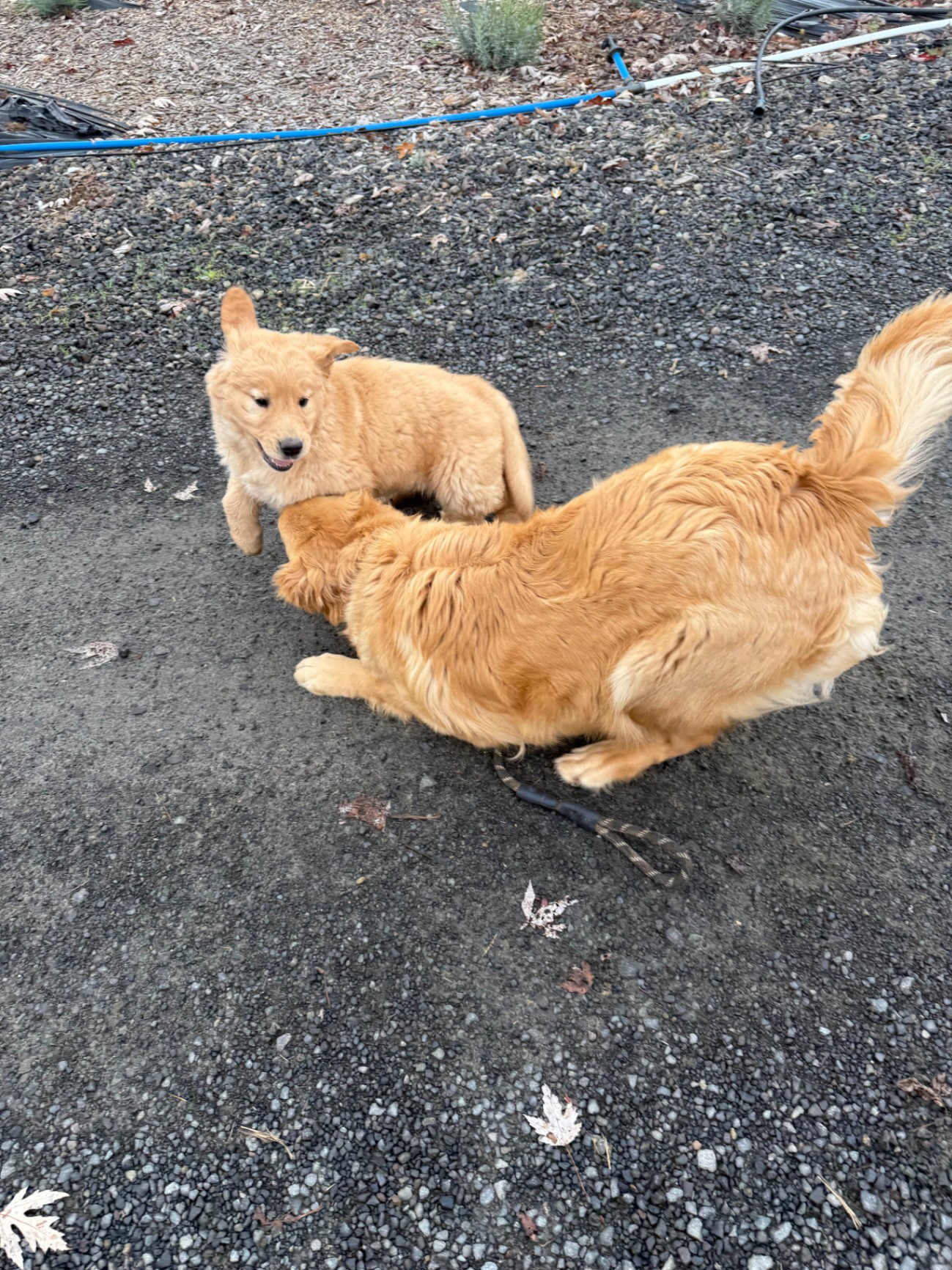
Our approach focuses on guided interactions. We facilitate behaviors like "self-handicapping" and "role-reversal." You might see a larger, more confident dog choose to lay on their back during a wrestling match with a smaller puppy. This is a high-level cognitive function! The larger dog is intentionally modifying their behavior to keep the game going and ensure their partner feels safe. This requires empathy, impulse control, and advanced communication, all of which are "brain exercises" that help your dog become a more balanced companion at home.
If you’re curious about how this fits into a holistic lifestyle for your pet, check out our guide on holistic dog care and health.
The Sensory Garden: Engaging the Olfactory System
While social interaction with other dogs is key, interaction with the environment is the other half of the brain-health equation. We are so proud of our outdoor spaces here in the Boring area, where we’ve integrated sensory elements like lavender and natural mulch.
A dog's primary way of "seeing" the world is through their nose. The olfactory bulb in a dog's brain is about 40 times larger (proportionally) than a human's. When a dog spends time in a sensory garden, they are engaging in "nose work." Research suggests that just 15 minutes of intensive sniffing and scent-tracking can be as mentally exhausting for a dog as an hour of physical walking.

By providing a natural, varied environment, we allow dogs to tap into their primal instincts. When they sniff a lavender bush or track the scent of a squirrel that passed through earlier, they are releasing dopamine, the "feel-good" neurotransmitter. This lowers heart rates and encourages a "rest and digest" state of mind, which is exactly what we want for our furry guests.
Socialization as a Preventive Health Measure
We often think of socialization as a way to "fix" behavior, but the science shows it is actually a powerful preventive measure. Chronic boredom and social isolation in dogs are linked to higher levels of oxidative stress, which can lead to premature aging and cognitive decline (similar to dementia in humans).
By keeping your dog’s brain active through regular interactive daycare, you are essentially providing them with a "longevity protocol." A socially active dog is more likely to remain curious, adaptable, and mentally sharp well into their senior years. This is why we treat every guest at Green Acres K-9 Resort like our own, we want them to live the longest, happiest lives possible.
Whether you are visiting us from Gresham for a quick grooming session or leaving your pup with us for boarding, we make sure that social and mental enrichment are part of the package.
Supporting Your Dog's Brain at Home: A Practical Tip
We know that the work we do at Green Acres is only one part of your dog's life. To help you integrate these brain-boosting benefits at home in the Boring area, we have a simple tip you can start today.
Home Integration Tip: The "Scatter Feed" Routine Instead of feeding your dog their dinner in a bowl, try a "scatter feed" in your backyard or even across your kitchen floor. By scattering their kibble, you force your dog to use their nose and brain to "hunt" for their meal. This mimics natural foraging behavior and provides 10–20 minutes of intense mental stimulation. It’s an easy way to lower their evening energy levels and reinforce the problem-solving skills they learn at daycare!
We Are Here for Your Furry Family
As a local business, we are deeply committed to the Gresham and Boring community. Our team, including our specialist IT support from North Star Tutor Team who helps keep our facility running smoothly, is dedicated to providing a safe, science-based haven for your pets. We believe that every dog deserves a life filled with friends, fresh air, and a healthy, challenged brain.
If you have questions about our philosophy or want to see our play yards in action, please contact us or check out our FAQ page. We’d love to welcome you and your K-9 pet into our resort family.
Bibliography & Peer-Reviewed Sources
Berns, G. S., Brooks, A. M., & Spivak, M. (2012). "Scent of the familiar: An fMRI study of canine brain responses to familiar and unfamiliar odors." Behavioural Processes.
Sommerville, R., et al. (2017). "Why do dogs play? Function and welfare implications of play in the domestic dog." Applied Animal Behaviour Science.
Bentosela, M., & Mustaca, A. E. (2007). "Communication between dogs (Canis familiaris) and humans." Interdisciplinaria.
Duranton, C., & Horowitz, A. (2019). "Let me sniff! Nosework and its influence on dog’s welfare." Applied Animal Behaviour Science.
Tiffani, J. H., et al. (2021). "The effects of social enrichment on the behavior of kenneled dogs." Journal of Veterinary Behavior.
Sklar, N. (2020). "Cognitive dysfunction in aging dogs: The role of environmental enrichment." Frontiers in Veterinary Science.
Comments