
The Boring Resident’s Guide to Holistic Dog Care Practices at Home
- Green Acres K-9 Resort
- Mar 1
- 6 min read

Hey there, Boring neighbors! It’s Mark Griffin here, one of the helpers over at Green Acres K-9 Resort. If you’re reading this, you probably know that being a dog owner in our beautiful corner of Oregon means dealing with a lot of happy, muddy paws and plenty of fresh air.
At the resort, we spend our days knee-deep in dog energy. Whether we're out in the yards cleaning up after a rowdy play session or sitting on the floor giving a belly rub to a nervous newcomer, we’ve learned that a dog’s well-being isn't just about a bowl of food and a quick walk. It’s about the whole picture. We call this "holistic care." Now, don't let that fancy word scare you off. For us, holistic care just means looking at the "whole" dog: their body, their mind, and their spirit: to make sure they’re living their best life possible.
We believe that every dog in Boring deserves to feel balanced and loved. That’s why we want to share some of the science-backed, holistic practices we use here that you can easily bring into your own living room (or backyard).
Nutrition: More Than Just "Dog Food"
Everything starts with what goes into the bowl. We’ve seen firsthand how a change in diet can transform a sluggish pup into a vibrant, playful companion. Science tells us that dogs, much like us, thrive on bioavailable nutrients. While commercial kibble is convenient, it’s often processed at such high heat that many natural enzymes and vitamins are lost.
In the holistic world, we talk a lot about "food therapy." This doesn't mean you have to become a five-star chef for your K-9 friend, but it does mean looking for whole-food ingredients. Studies published in the Journal of the American Veterinary Medical Association suggest that adding fresh vegetables to a dog's diet can significantly reduce the risk of certain cancers.
When we’re at the resort, we’re always mindful of what our guests are eating. We strive to educate our families on looking for named protein sources (like "deboned chicken" instead of "meat meal") and avoiding artificial preservatives. If you’re looking to start at home, try adding a little steamed broccoli or a spoonful of pureed pumpkin to their meal. It’s a small step that makes a big difference in their gut health and energy levels.
Sensory Enrichment and "Nose Work"
Have you ever noticed how your dog seems to get "stuck" sniffing a single blade of grass for three minutes? To us, it might look like they're wasting time, but to them, they're reading the morning news. A dog’s sense of smell is between 10,000 to 100,000 times more acute than ours.
Holistic care embraces this natural talent. Sensory enrichment: providing different smells, textures, and sounds: is a powerful tool for mental health. Research in Applied Animal Behaviour Science has shown that olfactory stimulation (scents) can actually lower a dog’s heart rate and reduce barking in high-stress environments.
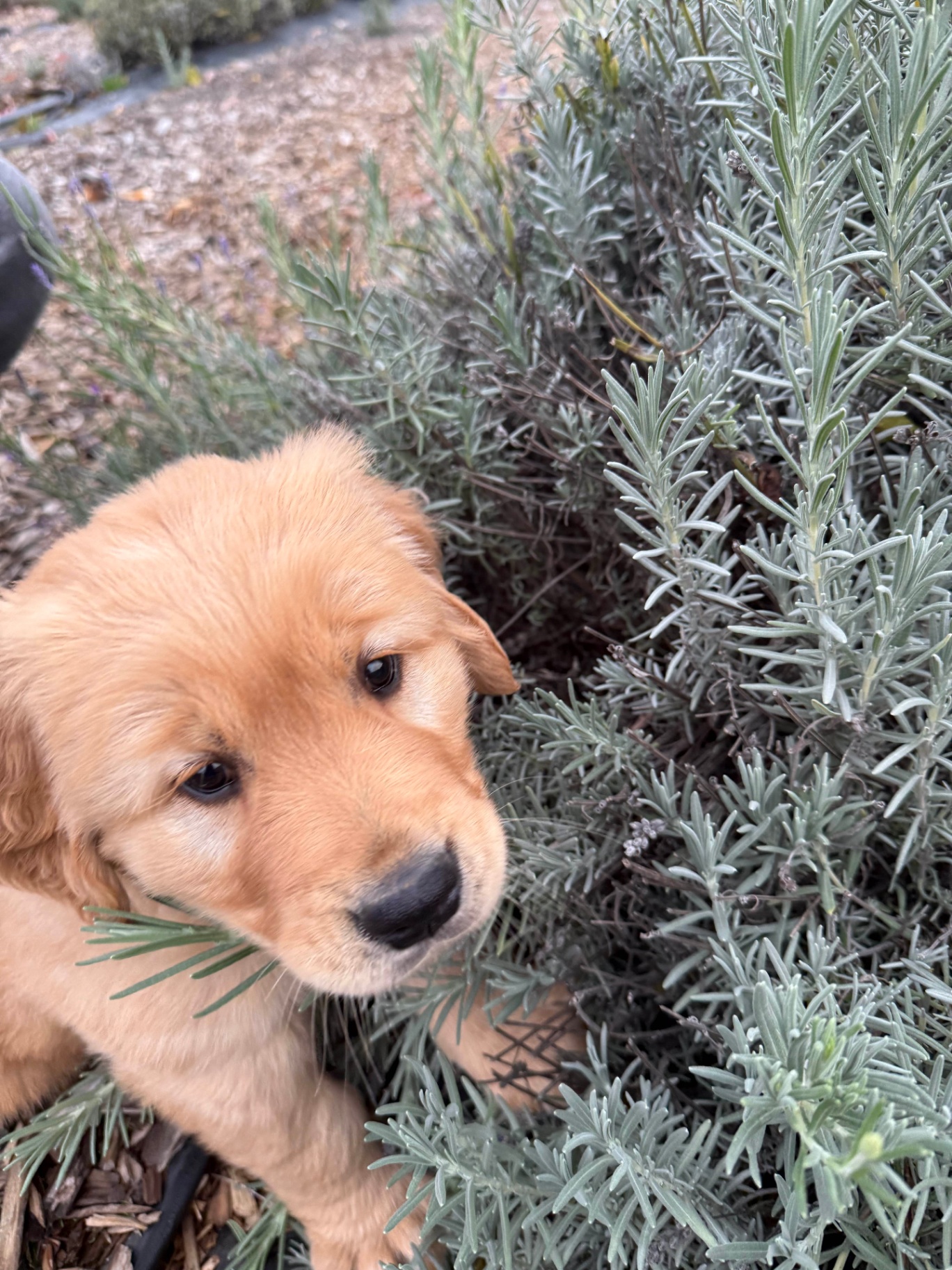
At Green Acres K-9 Resort, we love our outdoor sensory spaces. We see our pups, like the Golden Retriever in the photo above, exploring lavender and other dog-safe plants. At home in Boring, you can do this too!
Try this: Plant a "dog-friendly" corner in your garden with lavender or rosemary. Not only do these smell great to us, but they have calming properties for your dog. If you don't have a garden, "scent games" inside: like hiding treats in a rolled-up towel: can provide the same mental workout. We believe that a tired brain is just as important as a tired body.
The Power of Touch: Canine Massage
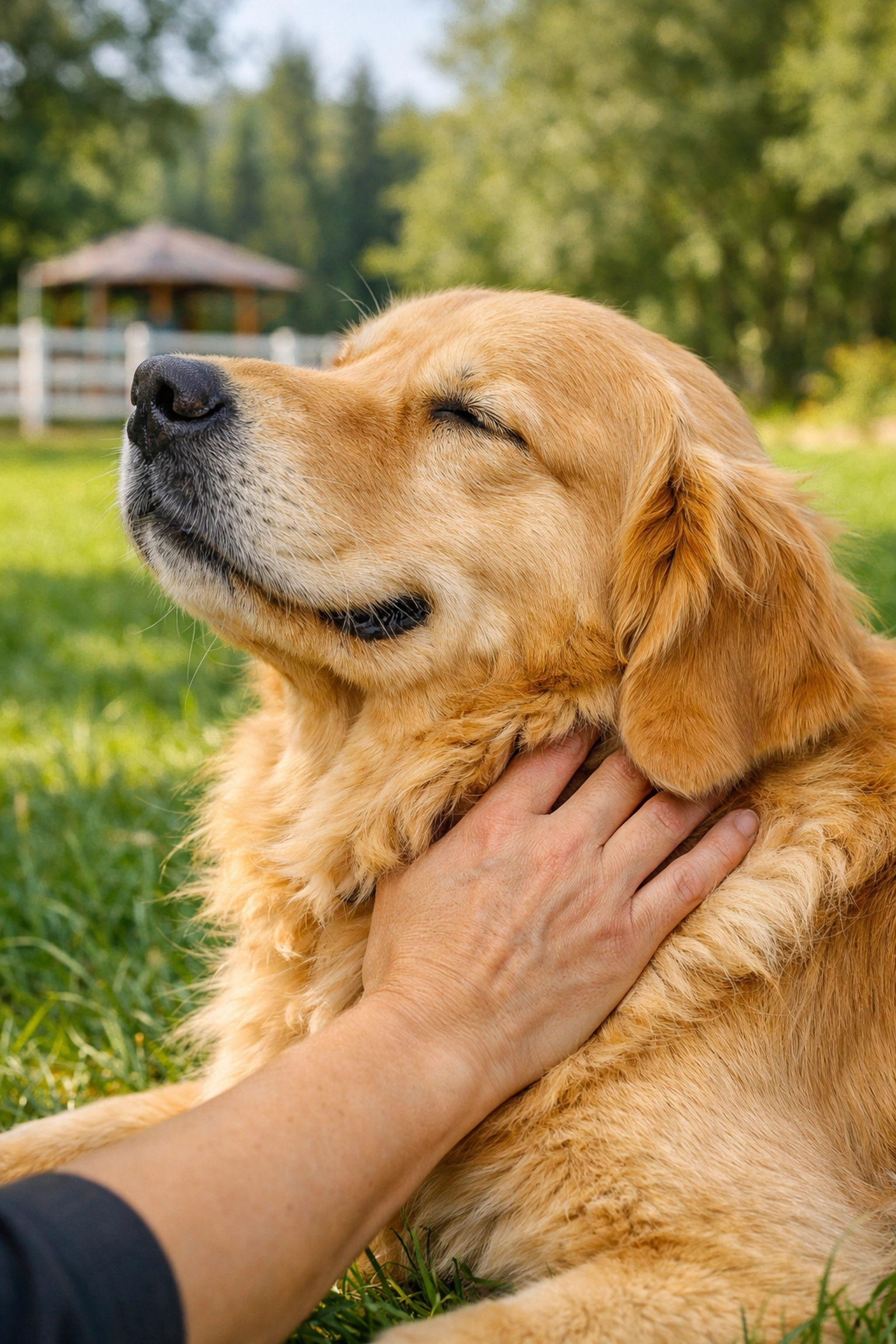
We’re big believers in the power of a good scratch behind the ears, but holistic massage goes a bit deeper. Massage isn't just a luxury; it’s a way to improve circulation, reduce muscle tension, and lower cortisol (the stress hormone) levels.
Scientific studies have indicated that positive human-dog interaction, including petting and massage, increases levels of oxytocin: the "bonding hormone": in both the dog and the human. It’s a win-win for the whole family!
When we have a dog at the resort who seems a bit stiff after a long day of play, we use slow, rhythmic strokes. You don't need to be a professional therapist to do this. Simply use the palms of your hands to gently stroke from the top of the head down to the tail, staying away from the direct spine. It helps your K-9 pet relax and reinforces the bond you share. We perform these little acts of care every day because we know that emotional security is the foundation of physical health.
Socialization as Holistic Health
We often think of socialization as just "playing with other dogs," but holistically, it’s about confidence and communication. A dog that knows how to read social cues is a dog that feels safe in its environment.
At Green Acres, we take socialization seriously. We monitor every interaction to ensure that play stays healthy and positive. When dogs socialize, they’re exercising their minds and their bodies simultaneously. This leads to better sleep, better digestion, and a more even-tempered pet at home.
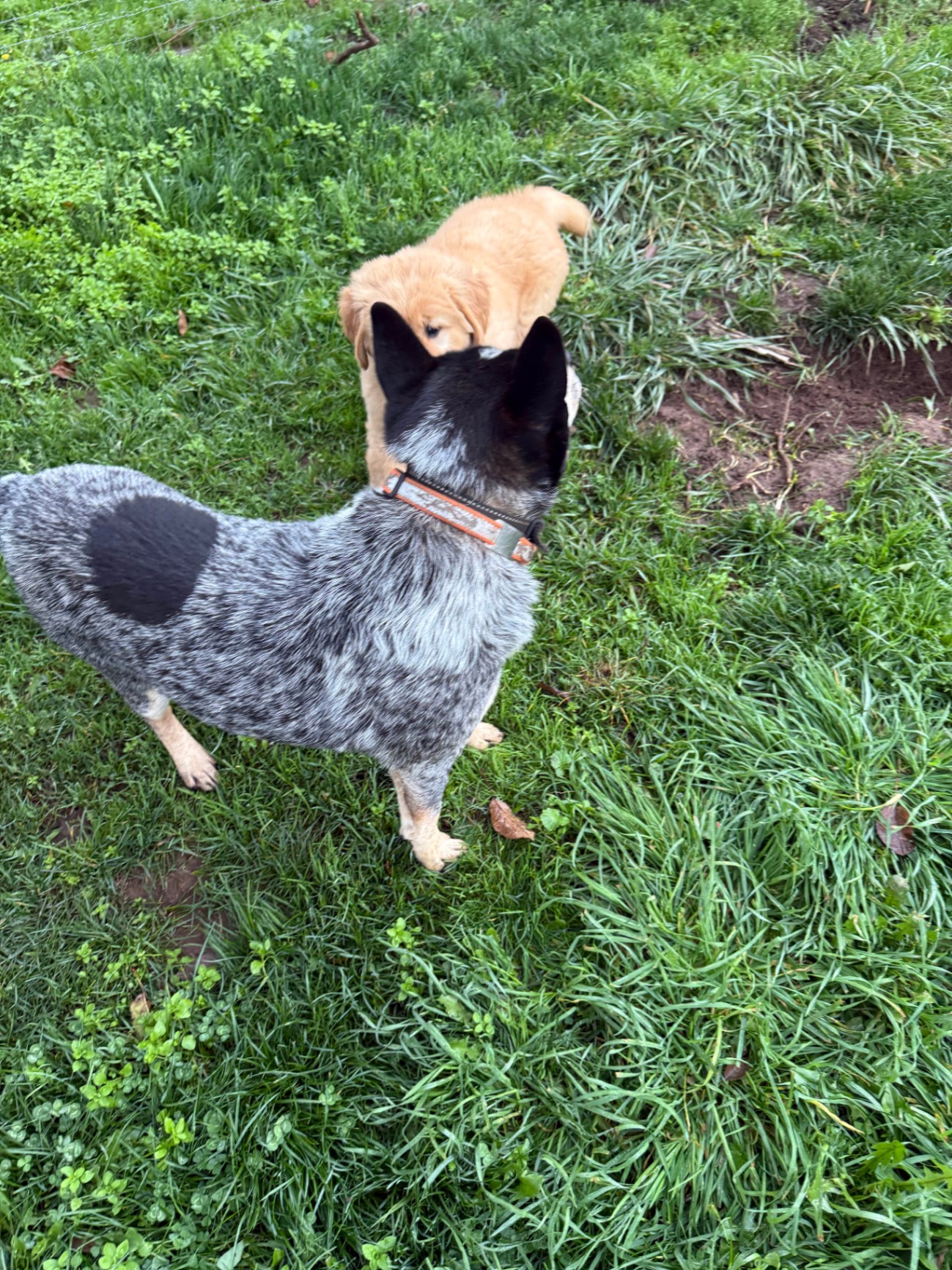
As you can see with our blue heeler and golden puppy friends, socialization allows dogs to learn from one another. Even if you only have one dog, providing opportunities for them to see and interact with the world (in a controlled, safe way) is a vital part of their holistic care routine.
Creating a "Sanctuary" Home Environment
Our homes in Boring are our castles, but for a dog, a house can sometimes be a loud, busy place. Holistic care involves looking at the environment through your dog's eyes. Is there a place where they can truly "switch off"?
Stress has a physical impact on a dog’s immune system. If a dog is constantly on edge due to loud noises or a lack of personal space, their health will eventually suffer. We strive to provide calm, quiet zones at the resort for napping because we know how important rest is for recovery and growth.
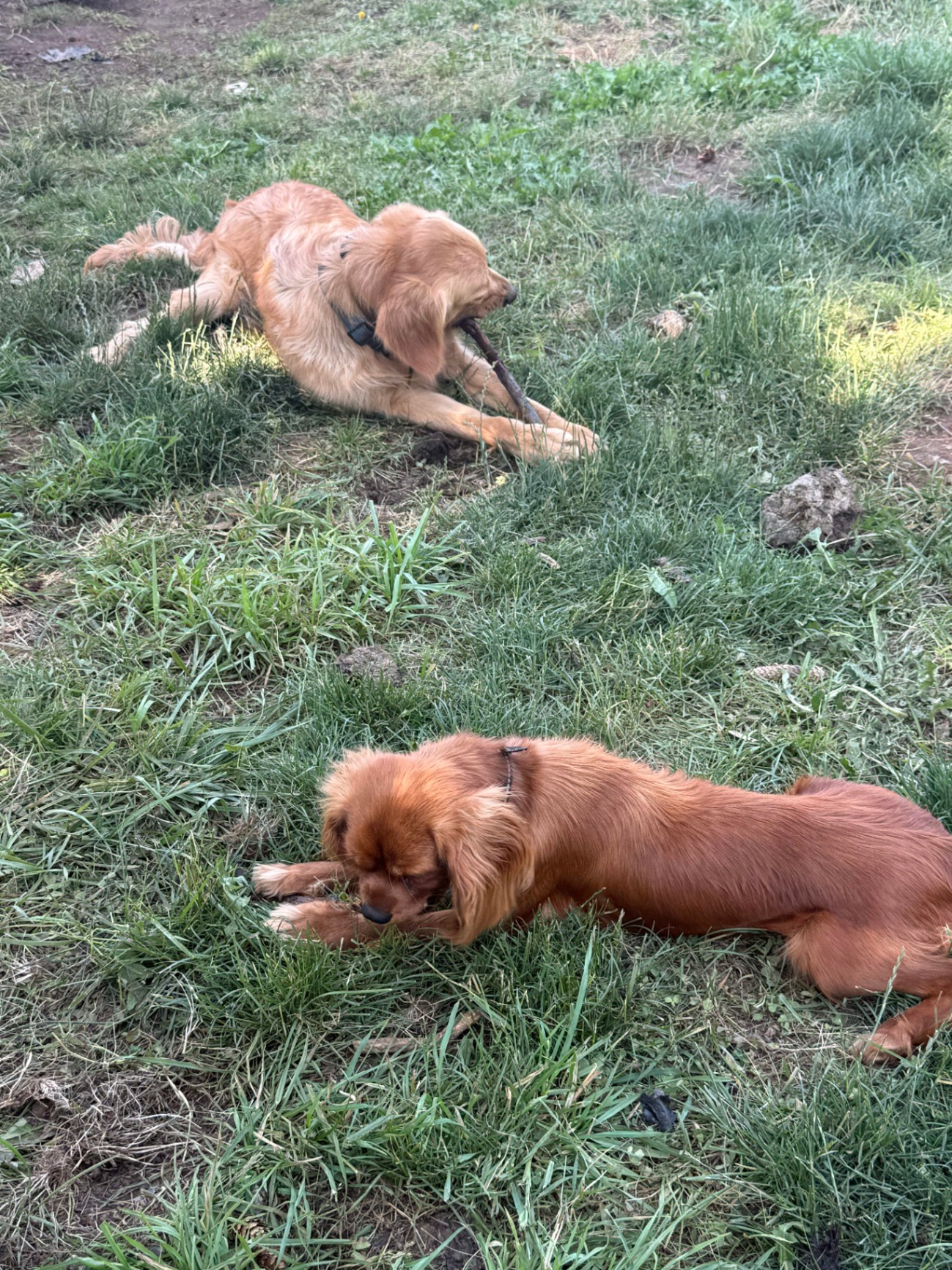
Just like these two lounging on the grass, your dog needs "permission" to do nothing. Providing a dedicated bed in a low-traffic area of your home gives them a sense of security.
🏠 Home Integration Tip: The "Decompression Zone"
To better integrate your K-9 friend into your family life, we recommend creating a Decompression Zone.
This is a specific spot in your house: maybe a corner of the den or a space under a side table: that belongs strictly to the dog.
The Rule: When the dog is in this zone, no one (including the kids!) is allowed to pet or disturb them.
The Benefit: This teaches the dog that they have a "safe harbor" when the house gets too hectic.
The Result: It reduces "resource guarding" and anxiety-based nipping because the dog knows they can simply retreat when they've had enough.
Our Philosophy at Green Acres
We do what we do because we love these animals like they’re our own. We aren't just a business; we’re a part of the Boring community. When we’re out there in the mud, or when we’re carefully selecting the right play group for your pup, we’re doing it with a commitment to their whole being.
We understand that your dog is a member of your family, and we feel honored when you trust us with their care. Holistic care isn't about perfection; it’s about making small, intentional choices every day to help our pets thrive. Whether it’s choosing a better treat, planting some lavender, or just giving them a quiet place to nap, every bit counts.
If you ever have questions about how to implement these practices, or if you just want to swap stories about life in Boring with a K-9 companion, stop by and see us at greenacresk9resort.com. We’re always here to help.
Stay muddy and stay happy, Boring!
: Mark and the Green Acres Team
Bibliography & Peer-Reviewed Sources
Graham, L., Wells, D. L., & Hepper, P. G. (2005). "The influence of olfactory stimulation on the behaviour of dogs housed in a rescue shelter." Applied Animal Behaviour Science, 91(1-2), 143-153. (Study on the calming effects of lavender and chamomile).
Handl, S., & Iben, C. (2014). "Nutritional habits of dogs and cats." Veterinary Medicine Austria. (Review of dietary impacts on canine health).
Kerepesi, A., Dóka, A., & Miklósi, Á. (2015). "Dogs and their human companions: The importance of touch." Journal of Veterinary Behavior. (Research on how physical contact reduces cortisol levels).
Milgram, N. W., et al. (2005). "Learning ability in aged beagle dogs is preserved by dietary fortification with antioxidants." Neurobiology of Aging, 26(1), 31-45. (Science regarding whole-food nutrients and brain health).
Raghavan, M., et al. (2005). "Evaluation of the effect of dietary vegetable consumption on reducing the risk of transitional cell carcinoma of the urinary bladder in Scottish Terriers." Journal of the American Veterinary Medical Association, 227(1), 94-100.
Comments