
The Proven Daily Dog Wisdom Framework: Rotate Care, Health, and Social Time (So Your Dog Actually Thrives)
- Green Acres K-9 Resort
- Mar 5
- 5 min read

Hey there, Boring pet parents! Mark here from Green Acres K-9 Resort. If you’ve ever dropped your pup off with us or spent a Saturday hiking the trails around Clackamas County, you know one thing for sure: a tired dog is a happy dog. But here’s a little secret we’ve learned from years of hands-on care and diving deep into canine behavioral science: there’s a massive difference between a dog that is "pleasantly tired" and one that is completely exhausted.
In the world of professional pet care, we use something we like to call the Daily Dog Wisdom Framework. It’s a science-backed approach that focuses on three pillars: Care (Rotation), Health (Monitoring), and Socialization (Engagement). We believe that by rotating through these three areas, we aren’t just "watching" dogs; we’re helping them thrive. Whether your furry friend is spending the day with us here in Boring or lounging at home with you, understanding this framework will change the way you look at your dog’s daily routine.
The Science of the "Off Switch": Why Rotation is Care
We’ve all seen it: the dog that doesn’t know when to stop. At a traditional "all-day play" daycare, dogs might be on their feet for 8 to 10 hours straight. While that sounds like a blast, science tells us a different story. Research into canine physiology shows that adult dogs naturally need between 12 and 16 hours of sleep per day to maintain a healthy immune system and emotional regulation.
When a dog is forced to stay "on" for too long, their cortisol levels (the stress hormone) spike. This can lead to what we call "over-arousal," which looks a lot like a toddler who’s missed their nap: cranky, reactive, and unable to settle.
At Green Acres, we practice a strict rotation schedule. We believe that for every period of high-energy play, there must be an equivalent period of deep rest. This isn't just about giving our staff a break; it’s about honoring the dog’s biological need for decompression. We typically follow a 90-minute to 2-hour cycle.
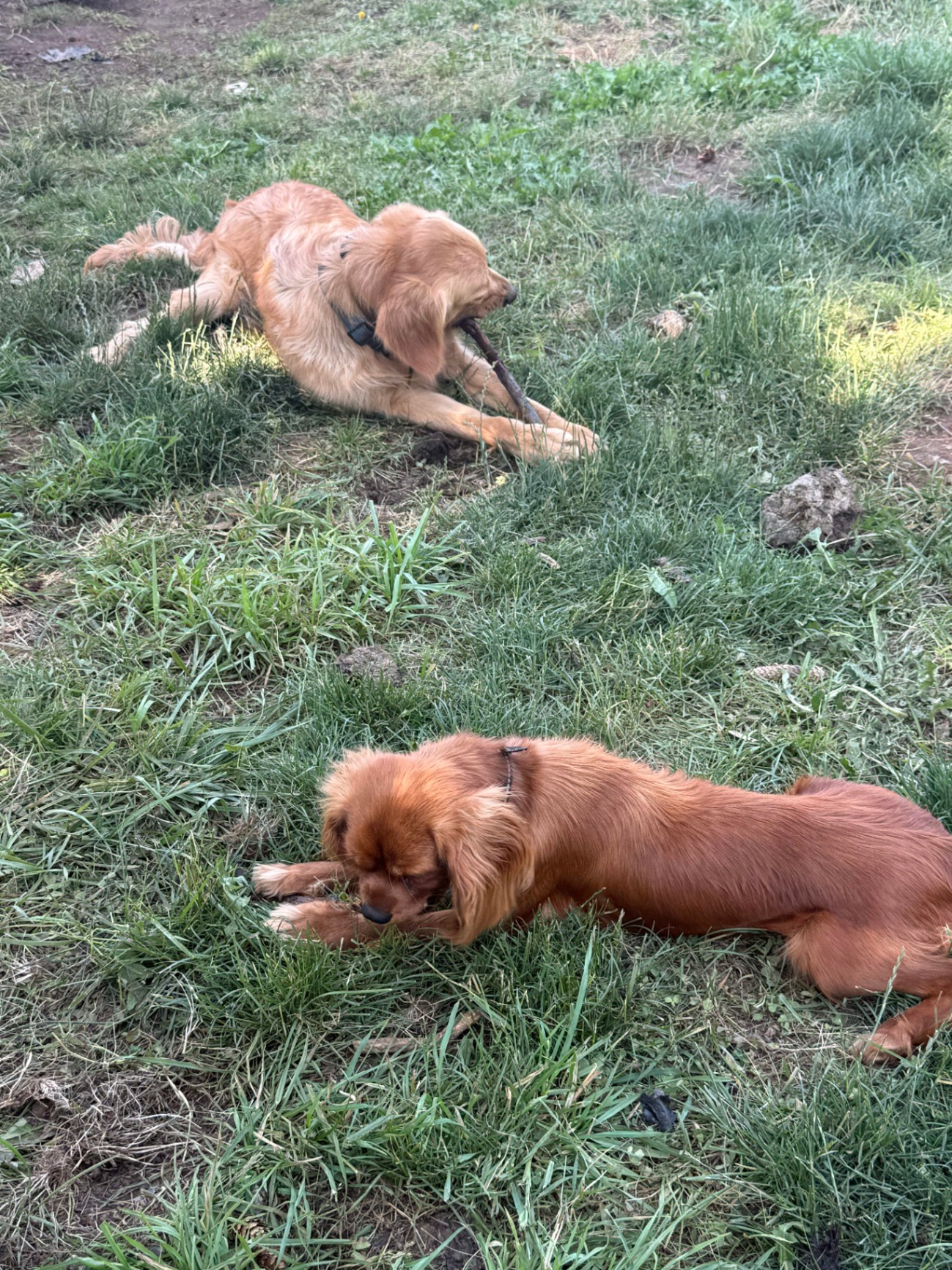
As you can see in the photo above, even during "outside time," we encourage moments of quiet. These two are practicing the art of doing nothing, which is just as important as a game of fetch. By rotating between activity and rest, we ensure that when your dog comes home to you in Boring, they are relaxed and happy, rather than physically depleted and stressed. You can read more about why this rhythm matters in our post on why your dog’s daily routine matters more than you think.
Health Monitoring: The Silent Pillar
The second part of our framework is Health. When we rotate dogs out of play and into their rest periods, it gives us a vital opportunity to perform "nose-to-tail" wellness checks. When a dog is mid-sprint, it’s hard to notice a slight limp or a small scratch. But during the quiet moments of the Daily Dog Wisdom Framework, we can really look at each pup.
We’re looking for:
Hydration levels: Is the dog drinking too much or too little?
Paw health: Boring can get pretty muddy and wet, especially this time of year! We check for irritated paw pads or debris caught in the fur.
Body temperature: Especially for our senior residents or those with thick coats.
Energy transitions: How quickly does the dog’s heart rate return to normal after play?

This level of individual attention is what separates holistic care from basic pet sitting. We treat every dog like they’re our own family: because, to us, they are. Monitoring health isn't just about catching sickness; it’s about optimizing wellness. It’s the reason why science-based holistic care matters so much in a boarding environment. It allows us to pivot the daily plan if a dog seems a little stiff or if they’re showing signs of mental fatigue.
Socialization: Quality Over Quantity
The final pillar is Socialization. People often think socialization means "playing with other dogs," but it’s actually much broader than that. It’s about navigating the world with confidence.
True socialization involves sensory enrichment. For a dog in Boring, Oregon, that means smelling the damp earth, feeling the grass between their toes, and interacting with different species of plants. This is why we’ve designed our play yards to be more than just flat enclosures.
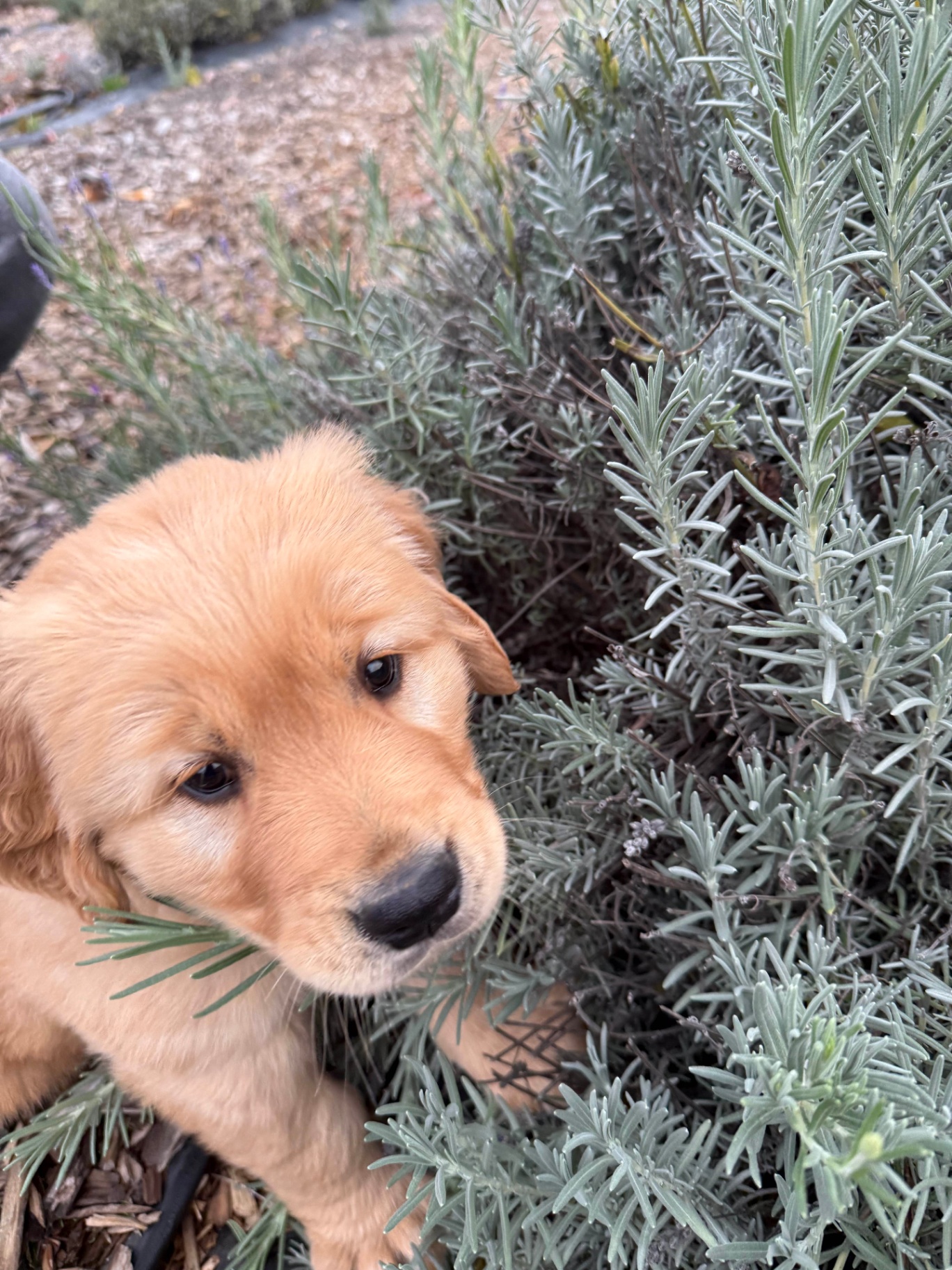
When a puppy explores a lavender bush, like the one in the photo above, they are engaging their brain in a way that a game of tag simply can’t match. This sensory input tires the brain, which is often more effective at creating a "thriving" dog than physical exercise alone. We focus on small, supervised groups where we can manage the dynamics and ensure every interaction is a positive one. This prevents the "socialization mistakes" that can lead to long-term anxiety. If you're interested in the nuances of this, check out our guide on 5 science-backed dog socialization mistakes.
Putting It All Together: A Thriving Dog
When you rotate Care, Health, and Socialization, you get a dog that is balanced. They have the physical fitness of an athlete, the mental clarity of a well-rested student, and the social confidence of a seasoned traveler.
At Green Acres K-9 Resort, we strive to be the bridge between clinical science and home-cooked warmth. We know that leaving your dog is hard. We understand the "dog parent guilt" that comes with a long workday. That’s why we’ve built this framework: to give you peace of mind that your dog isn't just "getting by," they are actually thriving in an environment designed for their specific biological needs.
Whether they are here for overnight pet care or just a day of play, our goal is the same: to return a dog to you that is better off than when they arrived.
Home Integration Tip: The "Decompression Corner"
You can implement the Daily Dog Wisdom Framework at home starting today! One of the best ways to help your dog thrive is to create a dedicated Decompression Corner.
Choose a quiet spot in your house (away from the TV and the kitchen chaos) and place a comfortable bed there. After your daily walk or a session of backyard play, lead your dog to this spot with a "long-lasting" healthy treat, like a frozen Kong or a natural chew.
The Rule: When the dog is in the Decompression Corner, no one (especially kids!) is allowed to pet them or bother them. This teaches your dog that "rest" is a scheduled, valuable part of their day. It helps them learn to "switch off" independently, which is a key skill for a well-behaved family pet. This simple habit mimics our rotation schedule at the resort and helps maintain that mental health boost at home. For more tips on this, read our easy guide for Portland pet owners on holistic routines.
Check out our latest happy campers!
You can see the Daily Dog Wisdom Framework in action every day on our Facebook Page. We love sharing photos of our Boring, Oregon pups enjoying their mud, their naps, and their friends!
Bibliography & Peer-Reviewed Sources
Sleep Patterns and Cognitive Function:Bunford, N., et al. (2018). "Differences in Dog Sleep Patterns and the Link to Emotional Reactivity and Learning." Scientific Reports. This study highlights the 12-16 hour sleep requirement for healthy canine brain function.
Cortisol and Exercise:Tiira, K., & Lohi, H. (2015). "Early Life Experiences and Daily Challenges Influence Fearfulness and Noise Sensitivity in Dogs." PLOS ONE. This research explores how over-stimulation and lack of rest cycles contribute to long-term stress in domestic dogs.
Sensory Enrichment:Wells, D. L. (2009). "Sensory Stimulation as Environmental Enrichment for Captive Animals." Applied Animal Behaviour Science. A deep dive into why sniffing plants (like our lavender!) is vital for canine mental health.
Social Dynamics:Bekoff, M. (2001). "Social Play Behavior: Cooperation, Fairness, Trust, and the Evolution of Morality." Journal of Consciousness Studies. Supports the need for structured, supervised social windows rather than uncontrolled "pack" play.
Comments