
The Science of Rotating Care: Holistic Dog Boarding in Portland Explained in Under 3 Minutes
- Green Acres K-9 Resort
- Apr 5
- 5 min read

If you live in Boring, Oregon, or the surrounding Portland area, you know that our corner of the Pacific Northwest is more than just a place to live: it’s a lifestyle. We value our green spaces, our local farms, and, most importantly, our four-legged family members. When it comes to leaving your dog for a weekend or a long vacation, the old "kennel" model just doesn't sit right with us anymore. We don’t want our pups just "surviving" their stay; we want them thriving.
At Green Acres K-9 Resort, we’ve spent years refining what we call "Rotating Care." It’s a holistic approach that treats your dog as a complete being: mind, body, and spirit. But what does that actually mean from a scientific perspective? Why does it work better than traditional boarding? Let’s dive into the data behind why our methods help your dog return home happier and healthier.
The Cortisol Conundrum: Why Traditional Boarding Can Be Stressful
To understand why rotating care is so vital, we first have to look at the biology of stress. In a traditional, high-traffic kennel environment, dogs are often exposed to constant noise, the smell of many other stressed animals, and limited physical movement. This environment triggers the production of cortisol, often called the "stress hormone."
Science tells us that elevated cortisol levels aren't just an emotional issue; they have physical consequences. Prolonged high cortisol suppresses the immune system, making dogs more susceptible to illness. It can also cause "behavioral regression," where a perfectly house-trained dog starts having accidents or becomes uncharacteristically reactive.
We believe that boarding should be a vacation, not a source of chronic stress. By moving away from the "one-size-fits-all" crate-all-day model, we proactively manage these hormone levels. Our goal is a "biological reset" where the dog’s heart rate stays low and their brain stays engaged in a positive way.
What Exactly is Rotating Care?
Rotating care is the strategic movement of a dog through different environments and activities throughout the day. Instead of staying in one run or one play yard for eight hours, we rotate our guests through a variety of specialized spaces. This prevents overstimulation: the canine equivalent of being at a loud concert for too long: and prevents boredom, which can lead to destructive chewing or anxiety.
Our rotation system typically includes:
Active Social Play: Time spent in our lush yards with friends.
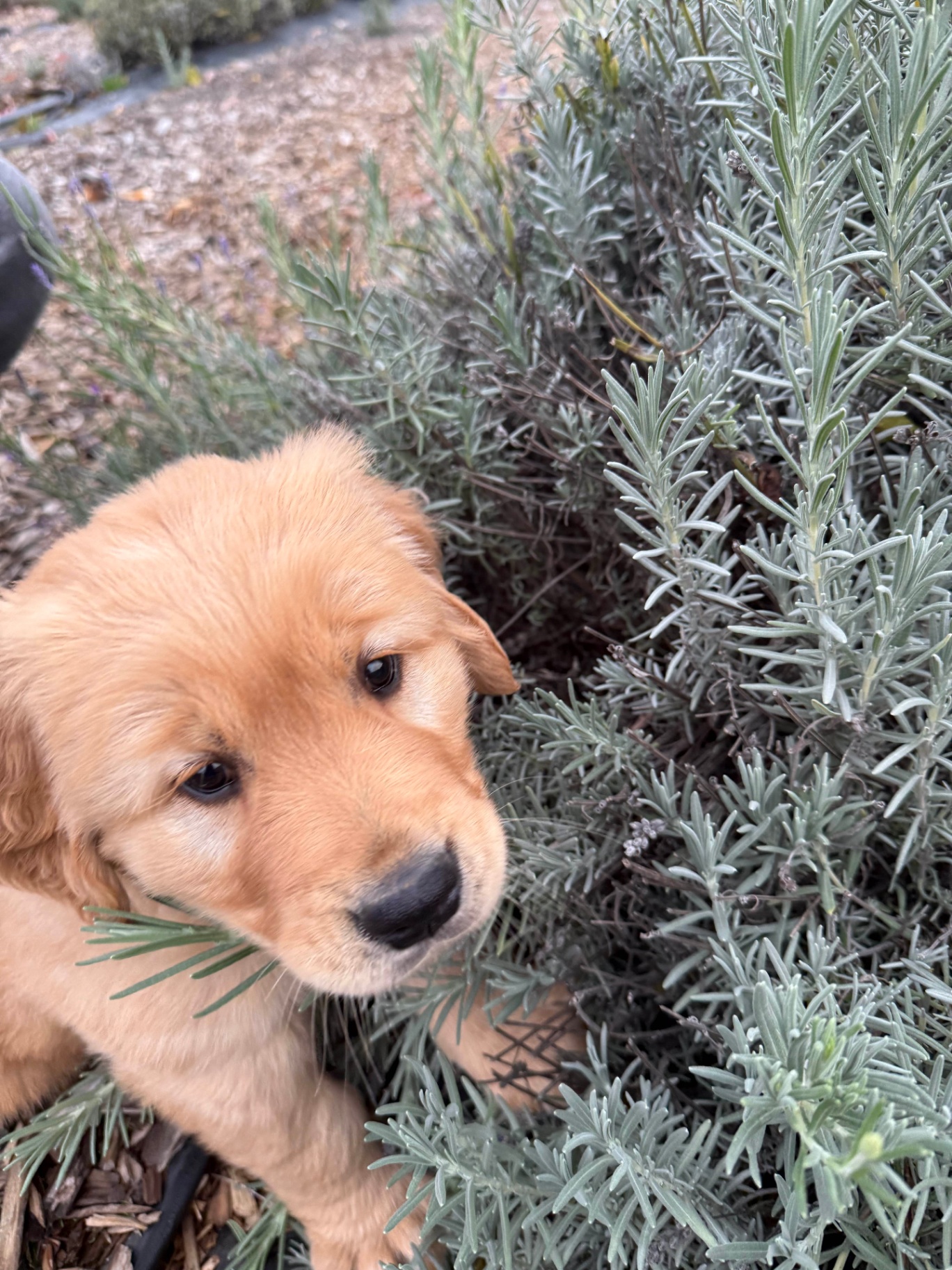
Sensory Enrichment: Exploring our gardens (like the lavender bush pictured above!) to engage their sense of smell.
Rest and Decompression: Quiet time in a clean, comfortable, individualized space to lower the heart rate.
One-on-One Interaction: Human-to-dog bonding time, because we know your pup misses their people.
By switching these contexts, we keep the dog's mind sharp but relaxed. It’s the same reason humans feel refreshed after a walk in the woods compared to sitting in a cubicle; variety is a biological necessity for mammals.
The Sensory Garden: Healing Through the Nose
One of the most scientifically backed parts of our holistic approach is our focus on the environment. Research published in various ethology journals highlights that "environmental enrichment": specifically sensory enrichment: drastically reduces stereotypic behaviors (like pacing or barking) in boarded dogs.
At Green Acres, we take this seriously. We’ve designed our spaces to include natural shade, different textures like grass and gravel, and dog-safe plants. When a dog sniffs a lavender sprig or explores under a green bush, their brain processes a complex web of information. This mental work is just as tiring (and rewarding) as a game of fetch. It allows them to express natural canine behaviors, which is a cornerstone of our philosophy. You can see how much our pups love this in our daycare program.
The Science of Socialization: Temperament Matters
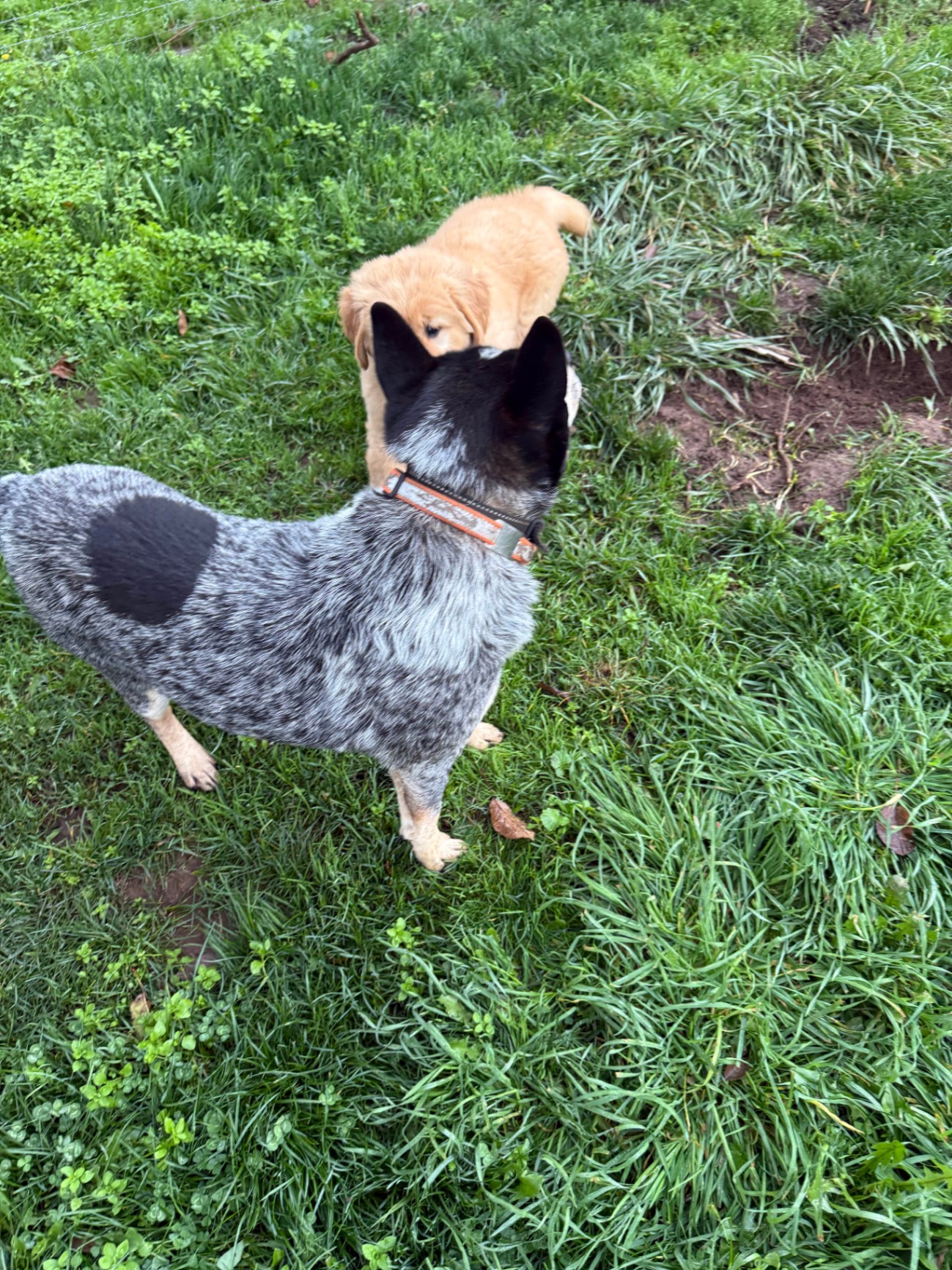
We don’t just toss all the dogs into one yard and hope for the best. That’s not safe, and it’s certainly not science-based. We group dogs based on temperament, energy level, and size. This is crucial because a shy senior dog has very different social needs than a rambunctious Blue Heeler puppy.
When dogs are matched correctly, they engage in "constructive play." This type of play builds social confidence and releases endorphins. However, if a dog is mismatched, they might spend the whole time in a state of hyper-vigilance, which spikes those cortisol levels we talked about earlier. We’ve written extensively about the science of play and size-matched groups because it is a fundamental pillar of our safety protocol.
Why Rest is Not "Wasted Time"
In the world of boarding, there’s a common misconception that a dog should be playing 24/7. But if you think about your dog’s routine at home in Boring or Gresham, they likely spend a good portion of the day napping.
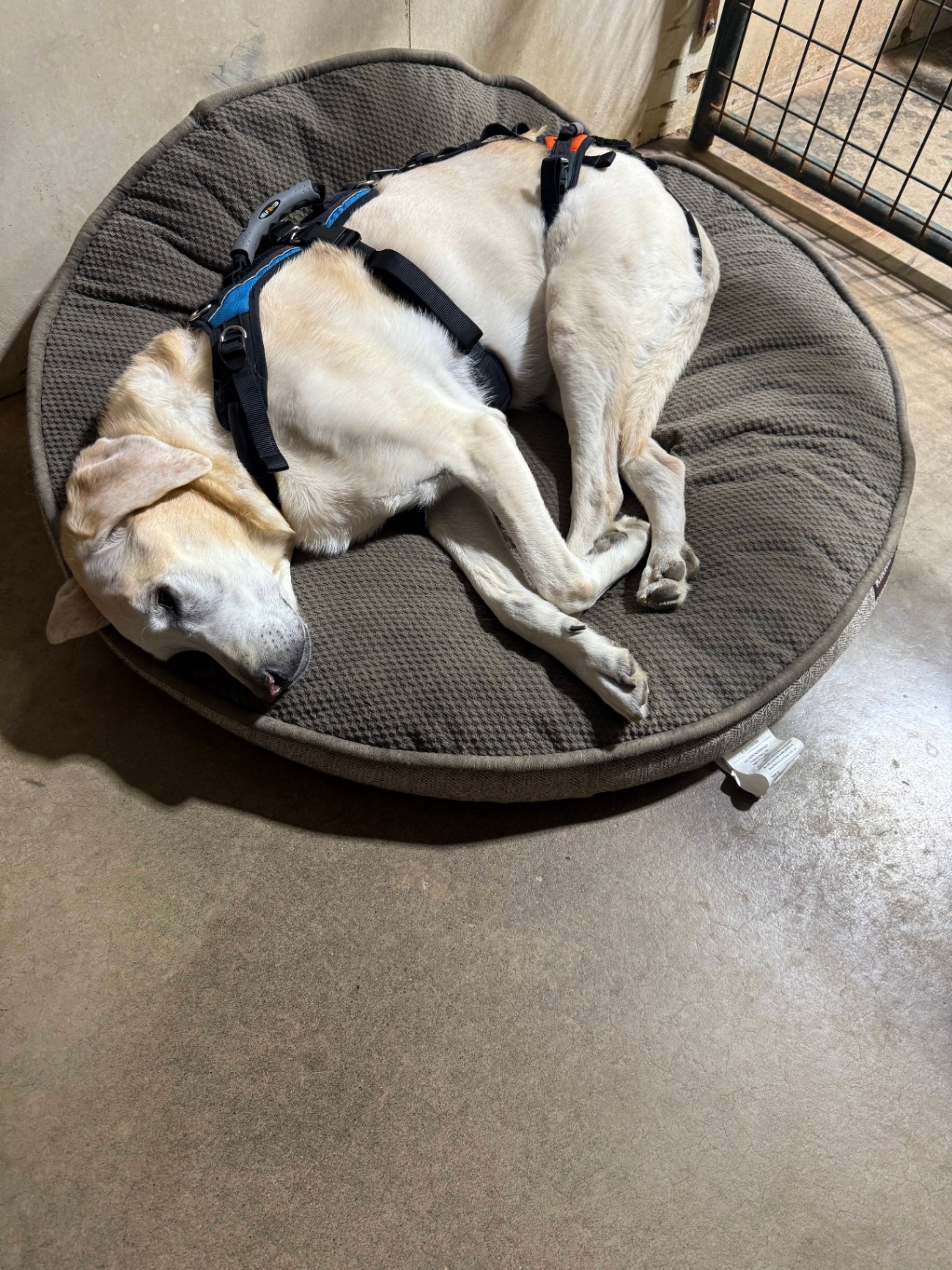
Forcing a dog into constant social interaction is a recipe for exhaustion and irritability. Our rotating care model includes mandatory "down periods." We provide high-quality, orthopedic bedding in secure, clean areas where dogs can truly let their guard down. This rest period is when the body repairs itself and the brain processes the learning that happened during play. Without rest, "socialization" quickly turns into "stress-alization."
Home Integration Tip: The "Toy Rotation" Strategy
You don’t have to be at Green Acres to use the science of rotating care! One of the easiest ways to improve your dog's mental health at home is through Toy Rotation.
Many owners leave a basket of ten toys out all the time. Soon, the dog becomes "habituated" to them: they become part of the furniture and lose their enrichment value.
The Tip: Pick 3 toys to leave out today. Put the other 7 in a closet. Every 3 days, swap the toys out. This "novelty effect" triggers the dog’s dopaminergic system, making "old" toys feel brand new again. This keeps their brain engaged and can help reduce boredom-related behaviors while you’re at work.
Our Commitment to You and Your K-9 Pet
At Green Acres K-9 Resort, we see ourselves as an extension of your family. As an IT Specialist here, I (Mark) love seeing how we can use data and careful observation to improve the lives of the dogs in our care. Whether I’m checking our security feeds or helping the team organize the daily rotation schedules, the goal is always the same: a happy, healthy pup.
We believe that every dog deserves a boarding experience that respects their biological needs. We strive to be the best in the Boring and Portland area by never settling for "good enough." If you have questions about how your specific dog would fit into our rotation, check out our FAQ page or give us a call. We’d love to welcome your furry friend into our family.
Bibliography & Peer-Reviewed Sources
Dreschel, N. A. (2010).The effects of fear and anxiety on health and lifespan in pet dogs. Applied Animal Behaviour Science. (Study on how stress/cortisol impacts canine longevity).
Hunt, M. G., et al. (2006).The effects of external stressors on the cortisol levels of kenneled dogs. Journal of the American Veterinary Medical Association.
Wells, D. L. (2004).A review of environmental enrichment for kenneled dogs, Canis familiaris. Applied Animal Behaviour Science. (Research regarding sensory gardens and olfactory stimulation).
Menor-Campos, D. J., et al. (2011).Diurnal rhythm of salivary cortisol in dogs (Canis familiaris): Influence of domestic and kenneled environments. Journal of Veterinary Behavior.
Shayler, S. (2021).Canine Enrichment: The Science Behind the Strategy. International Journal of Canine Ethology. (Focus on rotation and novelty in care settings).
Comments