
The Science of Play: Why Size-Matched Groups are Essential for Your Gresham Dog

If you've ever watched your Chihuahua sprint away in terror from an overly enthusiastic Labrador, or seen your Great Dane accidentally bowl over a Yorkshire Terrier, you already know this truth: size matters when dogs play together.
At Green Acres K-9 Resort, we've built our entire daycare philosophy around one science-backed principle: dogs thrive when they play with appropriately sized companions. It's not about segregation, it's about safety, confidence, and letting every dog be their authentic, joyful self.
Let's dive into why size-matched playgroups aren't just a nice idea, they're essential for your Gresham or Boring pup's physical and emotional wellbeing.
The Hidden Danger: Predatory Drift and Size Disparities
Here's something most dog owners don't know: even the gentlest giant can trigger something called "predatory drift" when playing with a much smaller dog.
Predatory drift is a phenomenon where a large dog's play behavior suddenly shifts into predatory behavior, not out of aggression, but because the size, movement, and vocalizations of a small dog can inadvertently trigger ancient hunting instincts. One moment, your Golden Retriever is playing. The next, their brain registers the fast, erratic movements of a tiny dog as "prey."
Research published in Applied Animal Behaviour Science confirms what we've observed over years of hands-on care: significant size disparities in play groups create measurable stress responses and increase injury risk exponentially (Rooney & Bradshaw, 2003). A 90-pound dog doesn't need to be aggressive to hurt a 9-pound dog, they just need to be enthusiastic.
We've seen it happen in poorly managed facilities: a big paw swipe meant as play lands on a small dog's ribcage. A playful body slam sends a Pomeranian flying. These aren't bad dogs, they're just mismatched playmates.
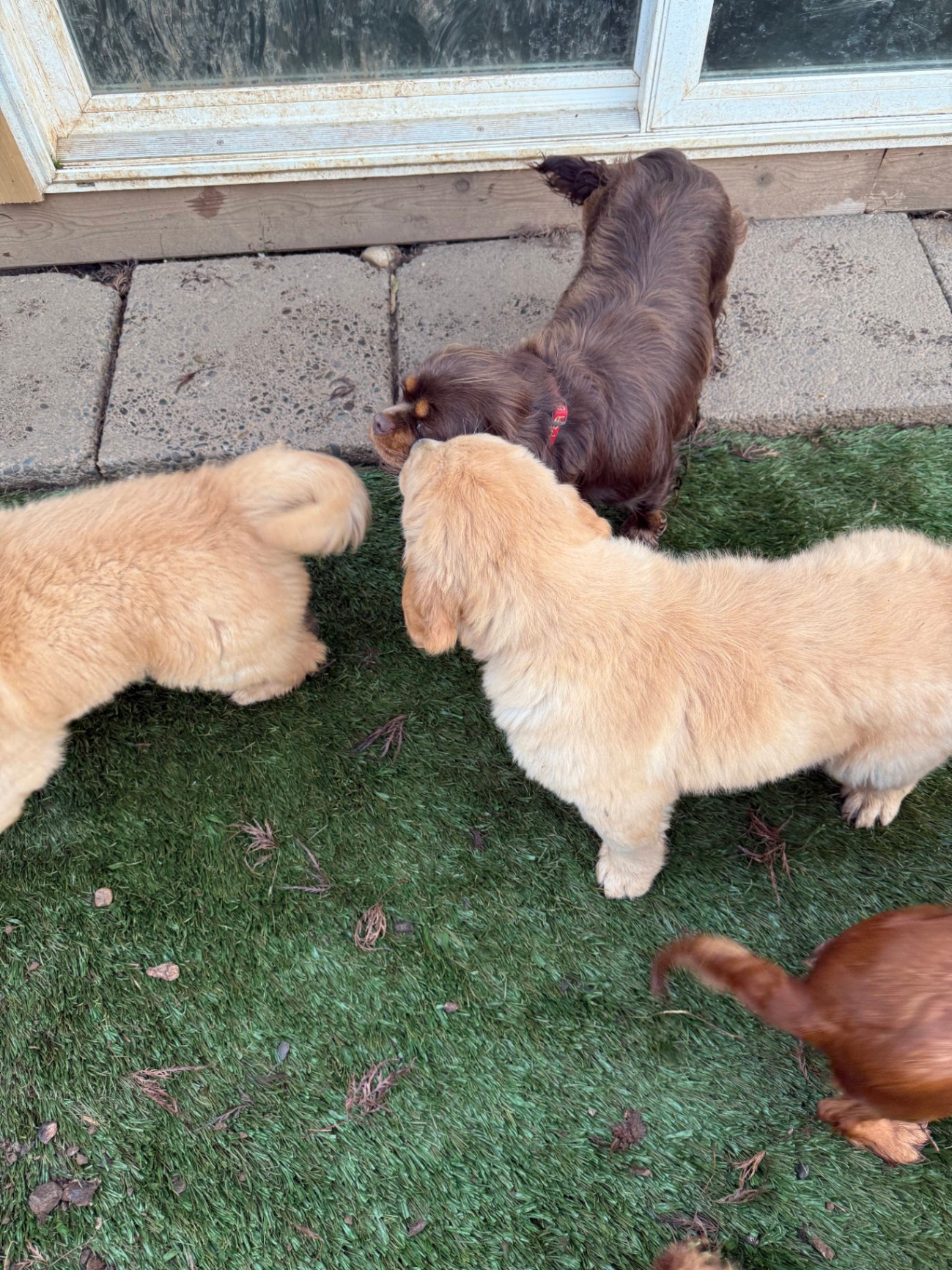
How Size Affects Play Style (And Why Mixed Groups Fail Both Sizes)
Here's where the science gets really interesting. Dogs of different sizes don't just play differently, they communicate differently, move differently, and have completely different play preferences.
Studies on canine social dynamics show that small dogs tend to engage in more delicate, agile play patterns: quick directional changes, darting movements, and face-to-face interactions. Large dogs? They prefer body slams, wrestling, and sustained chase games that would terrify most small breeds (Ward et al., 2008).
When you mix these groups, nobody wins:
Small dogs often freeze, hide, or develop defensive aggression because they're constantly overwhelmed. They can't engage in their preferred play style when they're dodging feet and trying not to get trampled. Over time, this creates chronic stress and can lead to fear-based behavioral issues.
Large dogs get frustrated because they can't play the way they naturally want to. They're constantly being told "gentle!" or pulled away from smaller companions. Some start treating small dogs like squeaky toys. Others just give up on social interaction altogether.
We believe every dog deserves to play authentically. That means your 12-pound Havanese gets to zip around with similarly zippy friends, while your 80-pound Boxer can wrestle with dogs who can actually wrestle back.
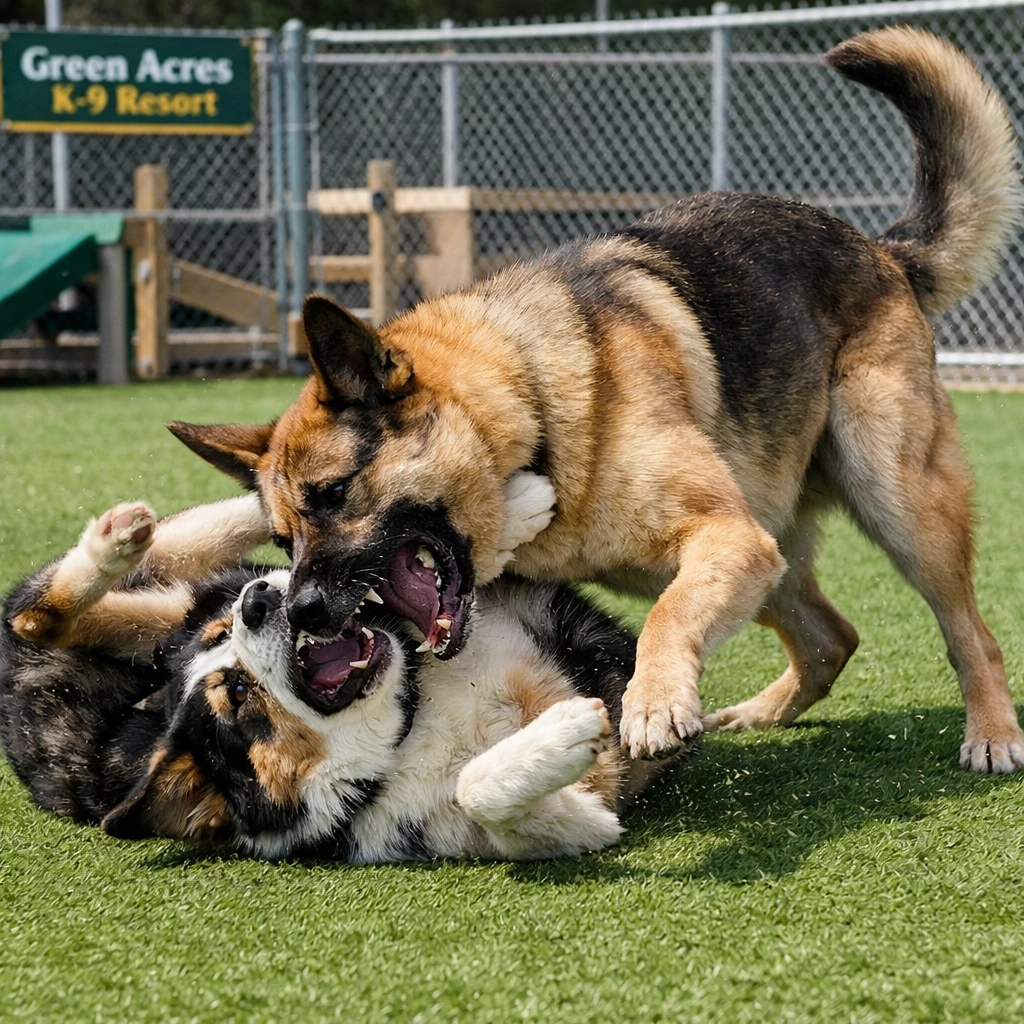
The Confidence Factor: Why Small Dogs Need Their Own Space
Let's talk about what we see every single day at our dog daycare in Gresham: small dogs arrive terrified, and within weeks of size-appropriate socialization, they transform into confident, playful companions.
The research backs this up. A study in the Journal of Veterinary Behavior found that dogs in appropriately matched social groups showed significantly lower cortisol levels (the stress hormone) and higher engagement in play behaviors compared to mixed-size groups (Protopopova et al., 2014).
When your little one is surrounded by 70-pound dogs, their nervous system is on high alert. They can't relax. They can't explore. They certainly can't play. They're in pure survival mode, which means their brain is bathed in stress hormones every single daycare session.
That's not enrichment, that's trauma.
In our size-matched small dog daycare in Boring, we watch tiny dogs blossom. The nervous Yorkie who spent their first day glued to the wall? By week three, they're initiating play, exploring every corner, and even showing leadership behaviors. That's the power of feeling physically safe.
How We Structure Our Playgroups at Green Acres
We don't just separate by weight, we look at the whole dog. Energy level, play style, social confidence, and yes, size all factor into our grouping decisions.
Here's how we approach it:
Small Dog Groups (under 25 lbs): These pups get their own dedicated play areas where they can be as bold or as cautious as they need to be. No giant paws overhead. No accidental injuries. Just appropriately matched friends.
Medium Dog Groups (25-55 lbs): This crew tends to have the most diverse play styles, so we watch closely and sometimes create sub-groups based on energy and play preference.
Large Dog Groups (55+ lbs): Big dogs need big-dog play. They can roughhouse, body slam, and engage in the robust play that would injure smaller companions.
We also create "bridge groups" for dogs right on the size cusp, always prioritizing safety and comfort over arbitrary weight categories.
And here's the thing: we're hands-on with every single group. We're not sitting behind a desk. We're in the yards, reading body language, redirecting play before it escalates, and ensuring every dog feels secure.
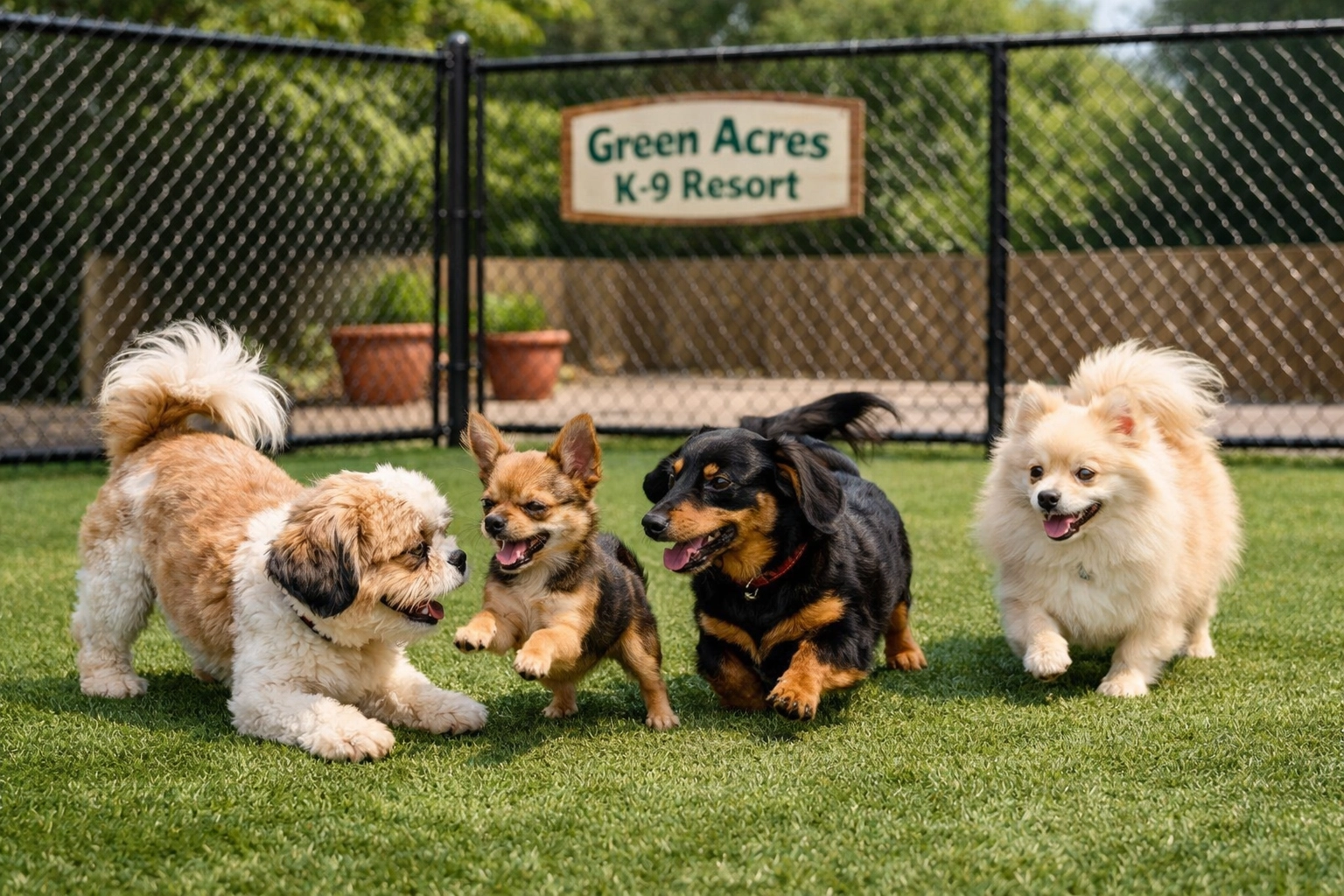
The Portland Boarding Solution: Size-Matching Extends Beyond Daycare
Size-appropriate grouping isn't just about daycare: it's crucial for boarding, too.
When your Gresham or Boring family heads out of town and your pup stays with us, they're not just thrown into a random group of boarders. We maintain size-matched social groups during boarding playtime, which means your dog's vacation is just as carefully curated as their regular daycare experience.
We believe that boarding should be an extension of home: safe, predictable, and designed around your individual dog's needs. That's The Portland Boarding Solution we've built our reputation on: holistic, science-backed care that treats every dog as an individual, not just a kennel number.
What the Research Really Shows
Let's get into the actual studies, because we're not just making this up:
Rooney and Bradshaw's landmark 2003 study in Applied Animal Behaviour Science documented that size-disparate play groups showed three times the incidence of play-related injuries and significantly higher stress markers in smaller dogs.
Ward et al. (2008) demonstrated that dogs exhibit distinct play styles based on size categories, with smaller dogs showing preference for vertical play patterns and larger dogs favoring horizontal wrestling: patterns that are mutually incompatible.
More recent work by Protopopova and colleagues (2014) used cortisol measurement to show that dogs in size-appropriate groups had measurably lower stress responses and higher rates of pro-social behavior.
The science is clear: size-matched groups aren't a luxury: they're a welfare necessity.
Home Integration Tip: Reading Your Dog's Social Battery
Here's something we want every Gresham and Boring dog owner to know: even the most social dog needs decompression time after a full day of play.
Watch for these "social battery low" signs when you pick up your pup:
Panting heavily or seeming overstimulated
Avoiding eye contact with you or other dogs
Seeking quiet spaces immediately
Being more reactive than usual to sounds or movements
Create a "Quiet Zone" at home:
Designate a calm space (crate, bed, or quiet room) where your dog can decompress
No interaction for the first 30-60 minutes after pickup: just let them rest
Offer water and a light snack, but skip the vigorous play session
Keep household activity low-key for the evening
Think of it like this: your dog just spent six hours at a party with their best friends. They had a blast, but now they need to recharge. Respecting that social battery helps prevent overstimulation and ensures daycare remains a positive experience, not an exhausting obligation.
We recommend this routine even for dogs who seem "fine" after daycare. Prevention is always easier than managing an overstimulated pup.
At Green Acres K-9 Resort, we're not just watching dogs: we're studying them, understanding them, and structuring their social experiences around proven science. Size-matched playgroups are just one piece of our holistic approach to canine care, but they're a crucial piece.
Whether you're looking for dog daycare in Gresham, small dog daycare in Boring, or a boarding solution that actually understands your dog's individual needs, we'd love to show you how our science-backed approach makes a difference.
Because every dog: big, small, or in-between: deserves to play safely, confidently, and authentically.
Bibliography
Protopopova, A., Mehrkam, L. R., Boggess, M. M., & Wynne, C. D. L. (2014). In-kennel behavior predicts length of stay in shelter dogs. Journal of Veterinary Behavior, 9(6), 297-303.
Rooney, N. J., & Bradshaw, J. W. S. (2003). Links between play and dominance and attachment dimensions of dog-human relationships. Applied Animal Behaviour Science, 79(3), 265-289.
Ward, C., Bauer, E. B., & Smuts, B. B. (2008). Partner preferences and asymmetries in social play among domestic dog, Canis lupus familiaris, littermates. Animal Behaviour, 76(4), 1187-1199.
Comments