
The Ultimate Guide to Interactive Dog Daycare: Everything Gresham Pet Owners Need to Succeed
- Green Acres K-9 Resort
- Apr 6
- 5 min read

If you’re a dog parent living here in the Boring or Gresham area, you know that our corner of Oregon is a paradise for four-legged friends. Between the hiking trails and the lush greenery, our pups have plenty of space to run. But as our lives get busier and we head off to work or manage the kids' schedules, we often find ourselves wondering: Is my dog getting enough out of their day?
At Green Acres K-9 Resort, we believe that dog daycare should be more than just a place to "drop off" your pet. It shouldn't be a holding pen. We believe in the power of interactive daycare: a science-backed approach to socialization and mental enrichment that transforms a "good dog" into a "thriving dog."
In this guide, we’re going to dive deep into what interactive daycare really means, the science of why it works, and how you can ensure your furry family member is getting the absolute best care while you’re away.
Why Socialization is Science, Not Just Play
When we see dogs tumbling around in the grass together, it looks like pure, unadulterated fun. And it is! But beneath the surface, there is a complex biological process happening. Socialization is actually a critical component of canine cognitive health.
Research in the field of ethology (the study of animal behavior) shows that dogs who engage in regular, supervised social play have lower levels of cortisol (the stress hormone) and higher levels of oxytocin (the "bonding" hormone). However, the key word there is supervised.
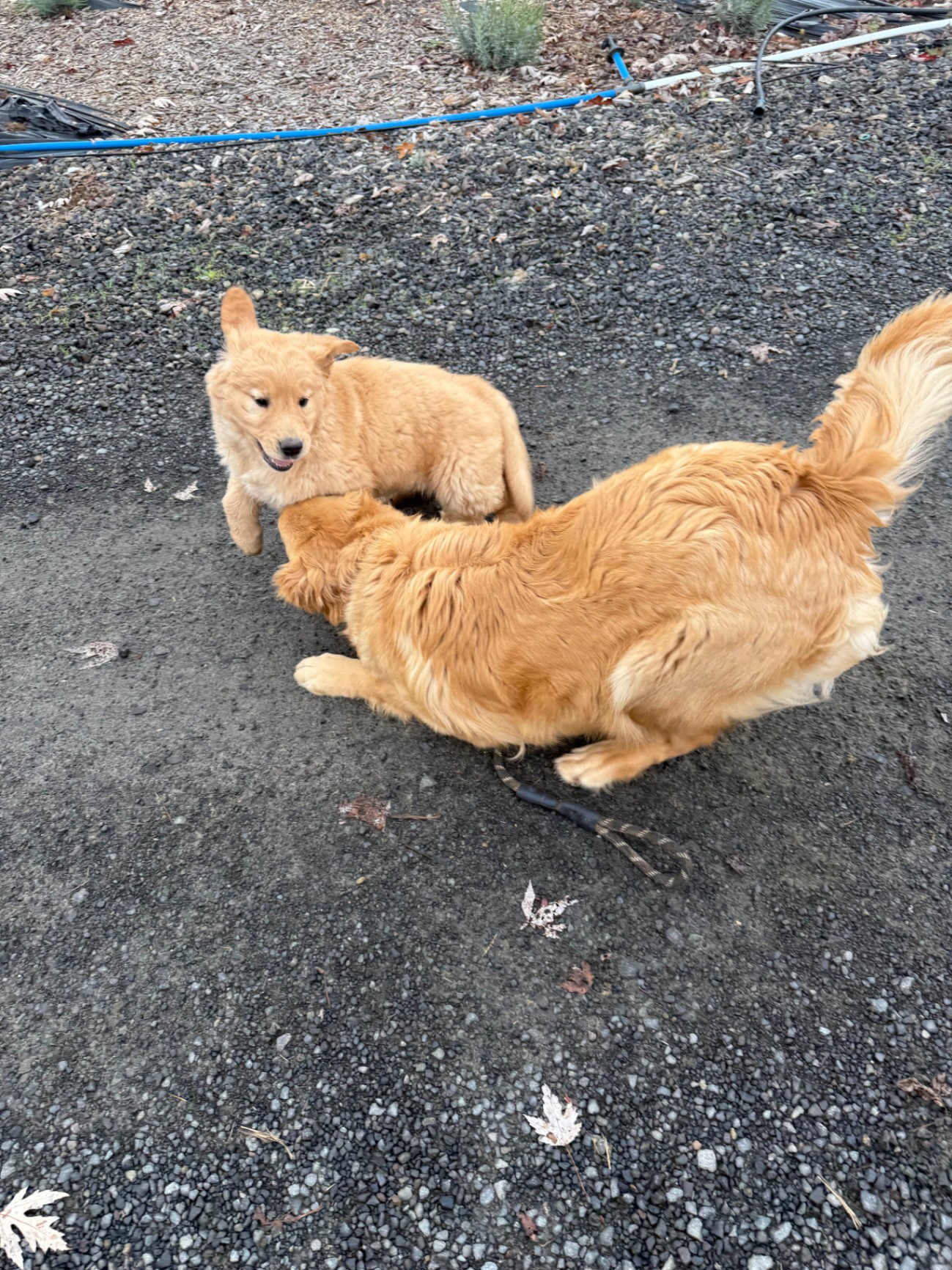
In an interactive daycare setting, we aren't just letting dogs "sort it out." We are actively managing the "play language" of the pack. When dogs play, they engage in "self-handicapping" and "role-reversal": behaviors where a larger dog might let a smaller dog "win" a wrestling match to keep the game going. This is a high-level cognitive function that keeps their brains sharp and their social skills polished.
The "Interactive" Difference: Beyond the Four Walls
So, what makes a daycare "interactive"? In many traditional facilities, dogs are placed in a large room with dozens of other dogs and left to their own devices. At Green Acres, we find that this can often lead to "flooding": a psychological state where a dog becomes overwhelmed by too much stimuli, leading to shut-down or aggression.
Interactive daycare, the kind we practice right here in Boring, focuses on three main pillars:
1. Controlled Group Dynamics
We don't believe in "one size fits all." We carefully curate our playgroups based on size, temperament, and energy level. A senior dog who wants to lounge in the sun shouldn't be pestered by a high-energy puppy. By maintaining low staff-to-dog ratios, our team can step in and redirect energy before it turns into stress. You can learn more about our philosophy on our About page.
2. Mental and Sensory Enrichment
Dogs experience the world through their noses. Interactive daycare should include sensory elements that engage their natural instincts. This is why we are so proud of our outdoor spaces. From gravel patches to lush grass and even sensory gardens, we provide an environment that encourages exploration.

3. Rotating Activities
Just like humans, dogs get bored. An interactive program includes rotating exercise and rest periods. We utilize "decompression time" where dogs can chew on a toy or lounge in a quiet spot. This prevents the "over-tired toddler" syndrome that often happens after a long day of unstructured play. We’ve talked about this before in our post on why rotating exercise changes the game.
The Importance of the "Outdoor" Factor
In the Gresham area, we are blessed with a climate that, while a bit rainy at times, offers incredible fresh air. Science tells us that dogs who spend time outdoors in natural environments show improved immune function and better sleep patterns.
Natural surfaces like grass and mulch provide different tactile feedback than cold concrete or rubber matting. When a dog at our resort explores the lavender in our sensory garden or sniffs the perimeter of our secure play yards, they are performing "olfactory work." This mental exercise is often more tiring: and rewarding: than a simple game of fetch.

Is Your Dog a Candidate for Interactive Daycare?
We love every dog that comes through our gates, but we also know that daycare isn't for everyone. Some dogs are "introverts" and prefer the company of humans over a pack of peers.
Before enrolling your pet in any daycare program, a reputable facility should perform a thorough evaluation. We look for:
Body Language: Is the tail tucked? Are the ears pinned back? Or is there a "loose, wiggly" posture?
Recovery Time: If a dog gets startled, how quickly do they bounce back?
Social Interest: Do they actively seek out interaction, or do they hug the fence line?
We take this process very seriously because we treat your dogs like our own. We’ve spent many mornings personally checking every inch of our fencing and refreshing the water bowls to ensure everything is perfect for the day's guests. It’s unglamorous work, but it’s what keeps our "pack" safe.
Home Integration Tip: Creating a "Scent Circuit"
We want the benefits of daycare to follow your dog home to your living room in Gresham. One of the best ways to integrate the "interactive" mindset into your home life is through a Scent Circuit.
The Tip: Take three to five empty cardboard boxes or plastic containers. Place a high-value treat (or a piece of our farm-fresh food) in only one of them. Space them out across your backyard or living room. Let your dog "hunt" for the treat. This mimics the foraging behavior they do at daycare and helps burn off mental energy on those rainy Oregon evenings when a long walk isn't in the cards. It’s a great way for the whole family, including children, to bond with the dog in a calm, structured way.
What to Look for in a Gresham Daycare
If you’re searching for the right spot for your pup, don't be afraid to ask the hard questions. A caring facility will be happy to answer them:
What is your staff-to-dog ratio? (Ideally, it should be no more than 1:15 for active play).
How do you handle conflict? (Look for answers involving redirection and "time-outs," not punishment).
What are the vaccination requirements? (Safety first! We always require up-to-date records to protect everyone).
Do you have outdoor access? (Essential for sensory health).
Final Thoughts from the Green Acres Team
At the end of the day, our mission at Green Acres K-9 Resort is to provide a "home away from home" that actually improves your dog's quality of life. We believe that every wagging tail is a sign of a job well done. We aren't just IT specialists, managers, or caretakers; we are dog lovers who understand the deep bond you have with your pet.
If you have questions about whether your pup is ready for the pack, check out our FAQ page or give us a shout on our contact page. We’d love to welcome you and your K-9 pet into our family.
Whether you're in Boring, Gresham, or anywhere in between, remember that a tired dog is a happy dog: but an enriched dog is a healthy one.
Bibliography & Peer-Reviewed Sources
Bekoff, M. (2001). "Social Play Behavior: Cooperation, Fairness, Trust, and the Evolution of Morality." Journal of Consciousness Studies. (Discussing the cognitive complexity of canine play).
Horowitz, A. (2009). "Inside of a Dog: What Dogs See, Smell, and Know." Scribner. (On the importance of olfactory enrichment).
Shiverdecker, M. D., et al. (2013). "The aspects of social and environmental enrichment on the behavior of kenneled dogs." Applied Animal Behaviour Science.
Wrubel, K. M., et al. (2011). "Dog park visitor habits and probability of aggression." Journal of Applied Animal Welfare Science. (Contextualizing the importance of supervised vs. unsupervised play).
Sommerville, R., et al. (2017). "Why do dogs play? Function and welfare implications of play in the domestic dog." Applied Animal Behaviour Science.
Comments