
Why Everyone Is Talking About Rotating Dog Care (And Why Boring Pet Owners Should Too)
- Green Acres K-9 Resort
- Apr 18
- 5 min read

If you live in Boring, Oregon, you’ve probably heard the jokes. "Is it really boring there?" "Do you guys just sit around and watch the grass grow?" We know the truth, of course. Living out here near the foothills of the Cascades is anything but dull. But when it comes to our dogs, sometimes we, as well-meaning pet parents, can accidentally fall into a "boring" routine. We walk the same loop, feed the same kibble, and play the same game of fetch until our arms ache and our dogs look at us with that "is this it?" expression.
Lately, there’s been a lot of buzz in the veterinary and canine behavioral world about "Rotating Dog Care." You might have seen it mentioned in our Daily Dog Wisdom Framework. But what does it actually mean? At Green Acres K-9 Resort, we believe that rotation isn’t just a fancy buzzword; it’s the secret to a balanced, happy, and long-lived companion.
In this post, we’re going to dive into the science of why rotating your dog’s environment, social interactions, and health routines is the best thing you can do for your four-legged family member.
What Exactly is Rotating Dog Care?
At its heart, rotating dog care is the practice of systematically changing the stimuli your dog interacts with to prevent "habituation", the fancy science term for getting bored and tuned out. Just like we wouldn't want to eat oatmeal for every meal and watch the same episode of The Office every night, dogs thrive on managed novelty.
When we talk about rotation here at the resort, we’re looking at three main pillars:
Social Rotation: Changing the group dynamics and playmates.
Sensory Rotation: Introducing new smells, textures, and environments (like our sensory garden!).
Cognitive Rotation: Switching up the "jobs" or puzzles a dog has to solve.
The Science of the "Sniff": Why Novelty Matters
Dogs are sensory machines. Their brains are wired to process information through their noses, ears, and paws. Research published in Applied Animal Behaviour Science suggests that environmental enrichment, specifically the introduction of novel scents and objects, significantly reduces stress behaviors in kenneled and domestic dogs (Wells, 2009).
When a dog experiences the same environment day after day, their brain essentially "shuts off" certain pathways. By rotating where they play and who they play with, we trigger "neophilia", a love for new things, which releases dopamine. This keeps their minds sharp and helps prevent cognitive decline as they age.
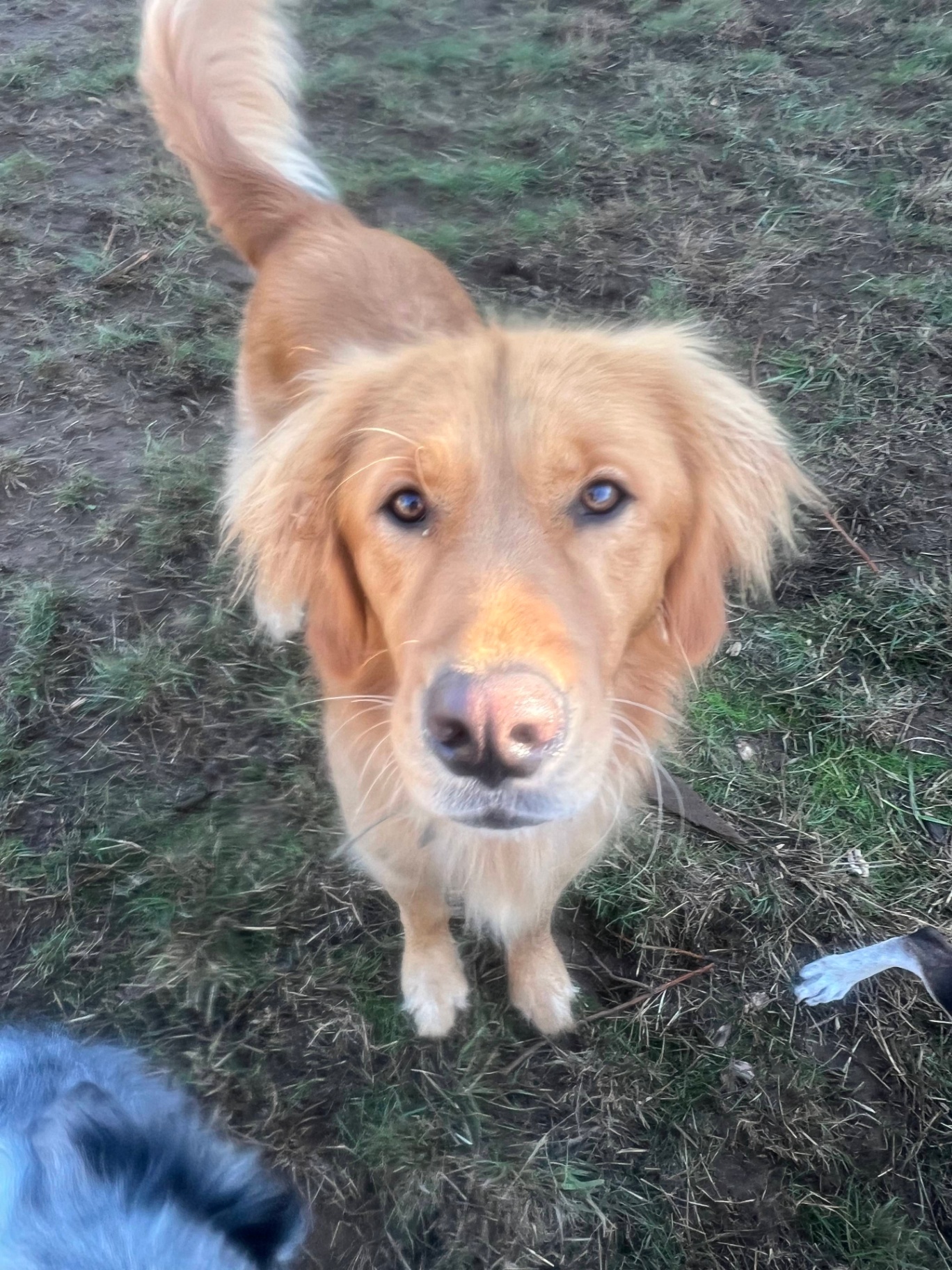
As you can see in the photo above, one of our Golden friends is having a blast in Exercise Yard A. By rotating our pups through different yards throughout the day, they don't just stay in one spot. They get to experience different grass heights, different wind patterns, and different social "vibes." This keeps their energy levels balanced.
Socialization Isn't Just "Meeting Other Dogs"
Many owners think socialization is a "one and done" box to check during puppyhood. However, science tells us that social needs change as a dog matures. A study by Bauer and Smuts (2007) highlighted that play behavior is a complex communication tool that helps dogs navigate social hierarchies and manage conflict.
If a dog only ever plays with the same neighbor dog, they develop a "shorthand" communication. That’s fine, but it doesn't challenge their social "muscles." Rotating social groups, which we do carefully here at our daycare, allows dogs to practice their body language with different "dialects."
We take this personally. As a family-operated business, we spend our days (and often our nights) watching these interactions. We’re out there in the mud and the grass, making sure that a shy Blue Heeler feels comfortable enough to say hello to a boisterous Golden Retriever puppy. We believe every dog deserves a social circle that challenges them without overwhelming them.
The Sensory Garden: More Than Just Pretty Plants
One of our favorite parts of the "Rotating Care" philosophy is sensory rotation. Most backyard environments in Boring are great, but they are static. At Green Acres, we’ve developed spaces where dogs can engage their noses in a way that mimics a trek through the wild, safely.
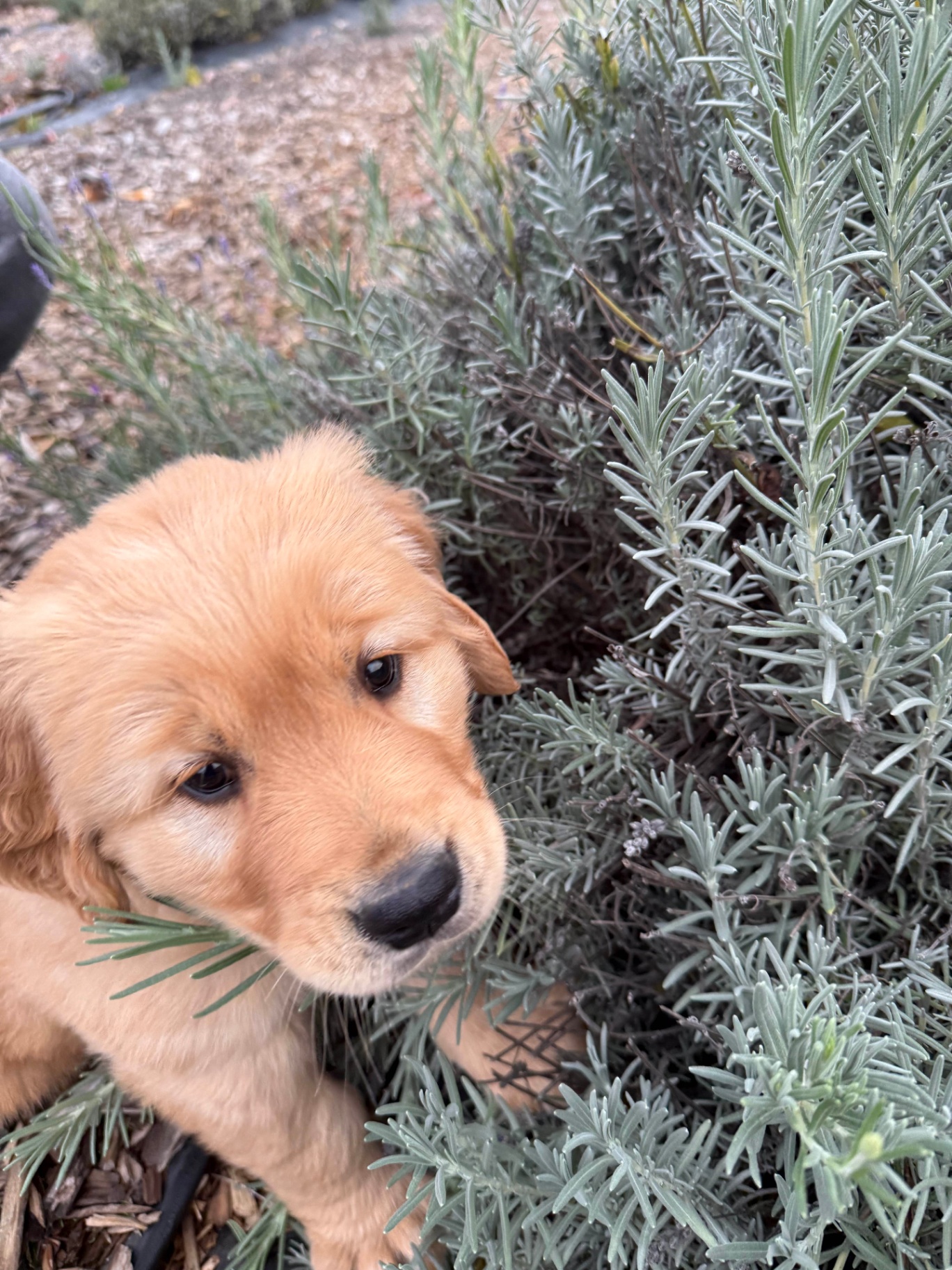
In the image above, you can see one of our pups exploring our lavender bushes. Lavender isn't just for human spas; studies have shown that the scent of lavender can have a calming effect on dogs, reducing barking and pacing (Graham et al., 2005). We rotate which plants are accessible and which areas are open for "sniffari" sessions to ensure the experience stays fresh.
Why "Boring" Routines Can Actually Be Stressful
It sounds counterintuitive, doesn't it? We usually think routines reduce stress. While a predictable mealtime is great for a dog's digestive system, a predictable life leads to a lack of mental resilience.
According to the concept of "Cognitive Enrichment," dogs that are faced with new (but manageable) challenges are more confident and less likely to develop anxiety-based behaviors. If your dog only ever walks on the pavement of your street, a trip to a crowded park or a vet office becomes a terrifying ordeal because it’s "too different."
By rotating care: taking them to boarding one weekend, or using a pet taxi for a grooming appointment the next: you are building a dog that is adaptable. You’re raising a "can-do" K-9.
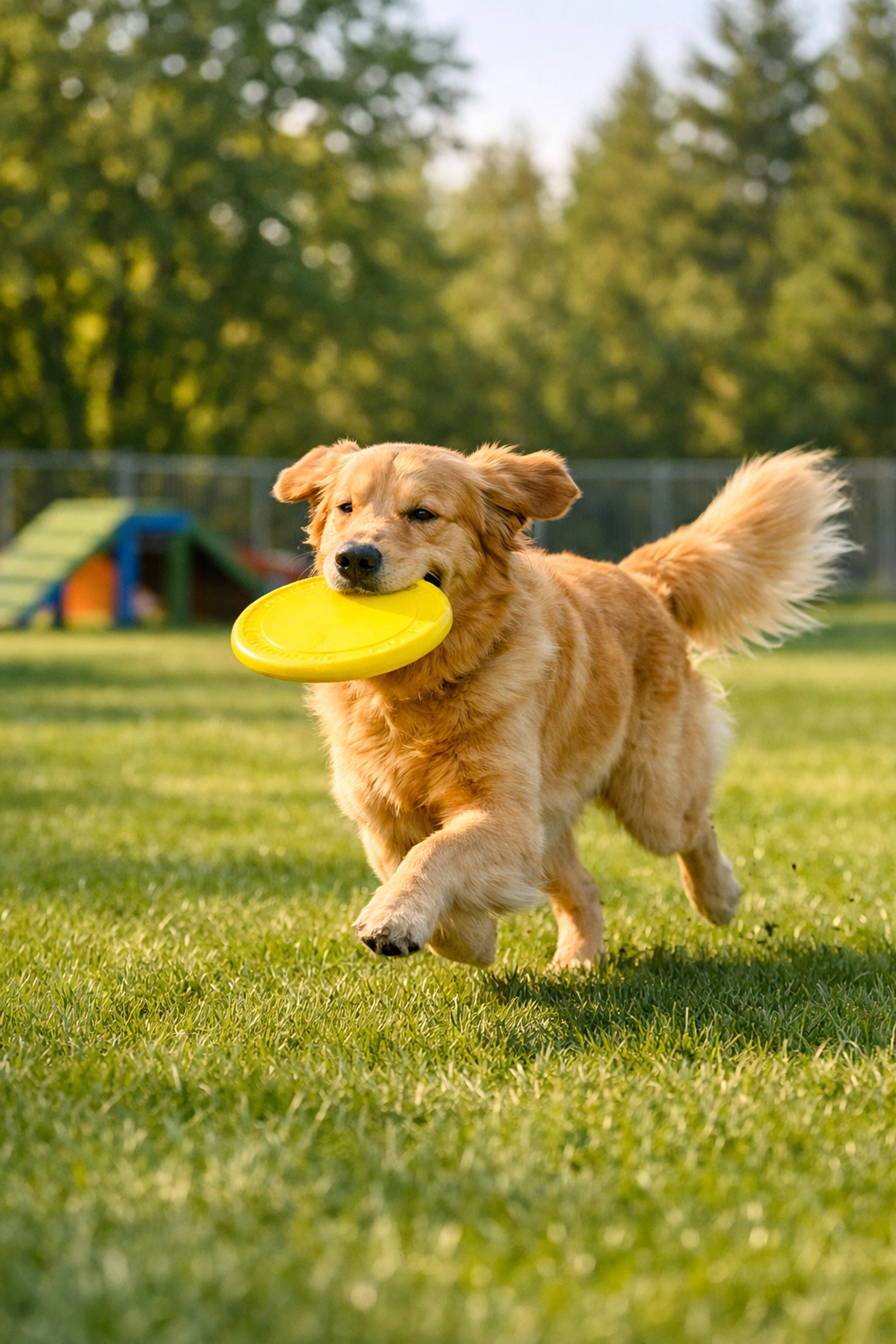
Home Integration Tip: The "Toy Rotation" Strategy
You don't need a 10-acre resort to practice rotating care! Here is a practical science-backed tip to better integrate this philosophy at home:
The 3-Bin System:
Why it works: When you bring out "new" toys every week, the toys regain their "novelty value." This increases the time your dog spends in independent play, which reduces clinginess and separation anxiety. It also gives you a chance to inspect toys for wear and tear, keeping your pup safe!
Our Commitment to the Boring Community
We’re not just a business; we’re your neighbors. We know that choosing a place for your dog to stay is a huge decision. It’s why we’re so obsessed with the details. Whether it’s the farm-fresh food we offer or the way we meticulously plan our yard rotations, every choice is made with the same love we give our own kids and pets.
We believe that dogs aren't just "pets": they are sentient beings who deserve a life full of variety, health, and social joy. We strive to provide a space where "Boring" dogs can live their most exciting lives.
Final Thoughts
Rotating dog care is about more than just keeping things interesting; it’s about honoring the biological needs of your dog. By focusing on rotation, you’re investing in their brain health, their social confidence, and their emotional well-being.
If you’re curious about how your dog would thrive in a rotating care environment, come visit us! We’d love to show you around our about page or chat with you directly. Let’s make sure no dog in Boring, Oregon, has a boring day ever again.
Bibliography & Peer-Reviewed Sources
Bauer, E. B., & Smuts, B. B. (2007).Play signaling and visual assessment in domestic dogs (Canis lupus familiaris). Clinical Animal Behavior Service, University of Michigan. This study examines how social play serves as a vital communication tool for canine development.
Graham, L., Wells, D. L., & Hepper, P. G. (2005).The influence of olfactory stimulation on the behaviour of dogs housed in a rescue shelter. Applied Animal Behaviour Science. This research confirms the calming effects of scents like lavender and chamomile on dogs.
Wells, D. L. (2009).Sensory enrichment in shelters: Review and mechanisms. Applied Animal Behaviour Science. A comprehensive look at how changing sensory input (smell, sound, sight) improves welfare in managed canine environments.
Meehan, C. L., & Mench, J. A. (2007).The challenge of challenge: Can we provide the right type of enrichment to optimize animal welfare? Applied Animal Behaviour Science. This paper discusses the necessity of "manageable challenges" and cognitive rotation for psychological health.
Comments