
Boost Your Dog’s Mental Health Instantly with These 5 Holistic Socialization Tips for Portland Owners
- Green Acres K-9 Resort
- Apr 8
- 5 min read

It’s a beautiful, crisp Wednesday morning here in Boring, Oregon. As the sun starts to peek through the Douglas firs on our property, we’ve already been up for hours, prepping the play yards and making sure every water bowl is sparkling clean. There’s something special about April in the Pacific Northwest, the air is fresh, the mud is plentiful (believe us, we spend a lot of time with the hose and towels!), and our furry guests are bursting with springtime energy.
At Green Acres K-9 Resort, we believe that socialization isn’t just about "playing with other dogs." It’s a vital component of a dog’s holistic health. Just like we need our community and friends to stay mentally sharp and emotionally balanced, our dogs thrive when they have meaningful, safe, and science-backed social interactions.
Whether you’re a long-time resident of Boring or you’re commuting from Gresham or Portland, understanding the "why" behind socialization can change the way you look at your pup’s mental health. Today, we’re diving deep into five holistic socialization tips that you can start using right now to boost your dog's well-being.
1. Prioritize "Sniffaris" for Sensory Enrichment
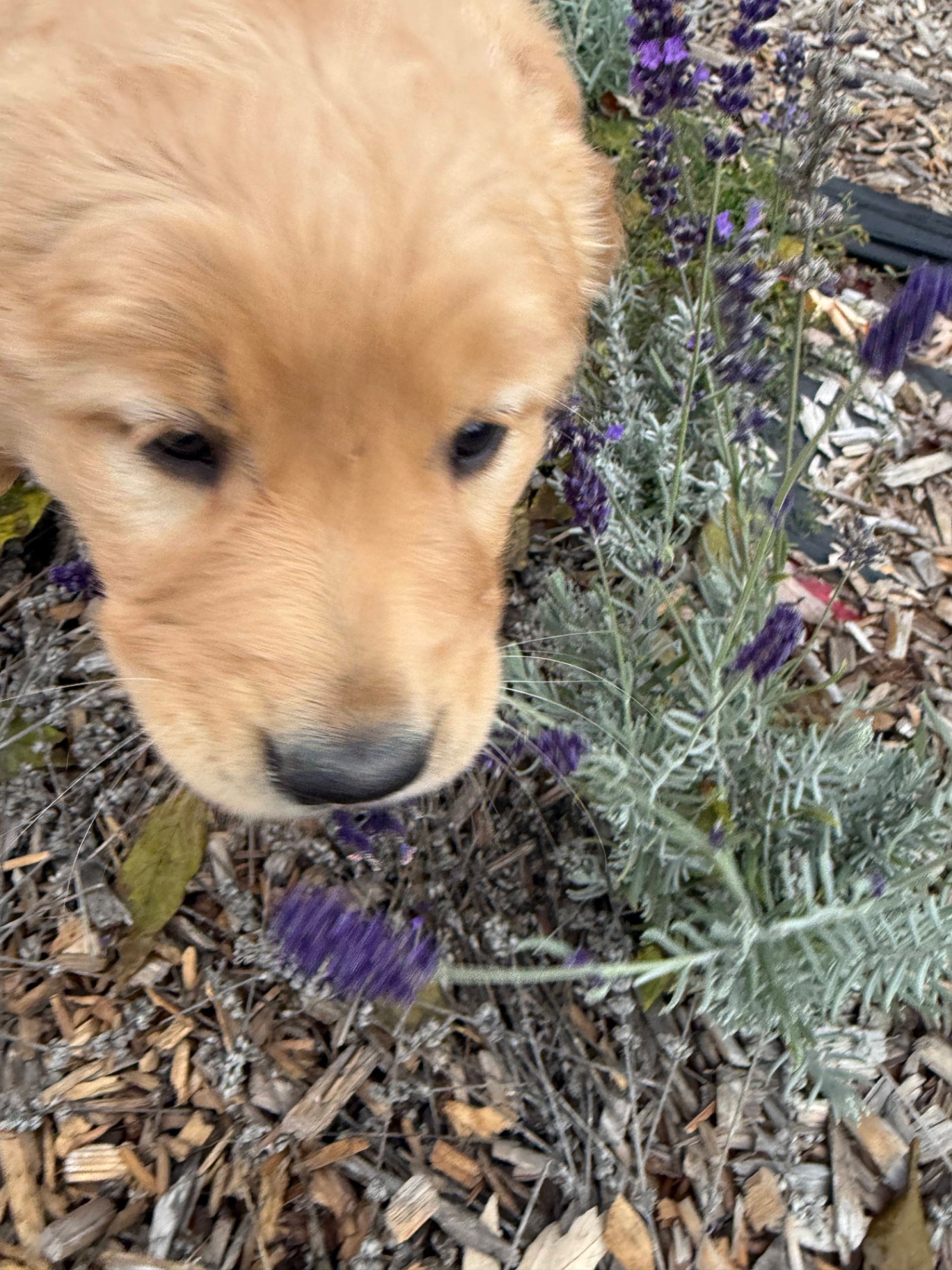
We often think socialization means direct interaction, but holistic socialization actually starts with the nose. In the scientific community, it's well-documented that a dog's olfactory bulb is roughly 40 times larger than a human's relative to brain size. When we take our dogs on what we call a "Sniffari," we are allowing them to socialize with their environment.
In our ultimate guide to holistic dog care, we emphasize that mental stimulation is just as tiring (and rewarding) as physical exercise. When your dog sniffs a fence post where another dog has been, they are essentially "reading the morning news." They learn who was there, what they ate, and even their emotional state.
The Holistic Tip: Next time you’re walking near the Boring Trail, let your dog lead with their nose. Instead of a brisk walk for distance, try a slow walk for scent. This lowers cortisol levels and provides a calm form of social discovery that doesn't overstimulate the nervous system.
2. Quality Over Quantity: The Power of "Parallel Play"
One of the biggest mistakes we see owners make is assuming their dog needs to meet every dog they see on a leash in Portland. Science tells us that forced greetings on a 6-foot leash often lead to "leash reactivity" because the dogs feel trapped.
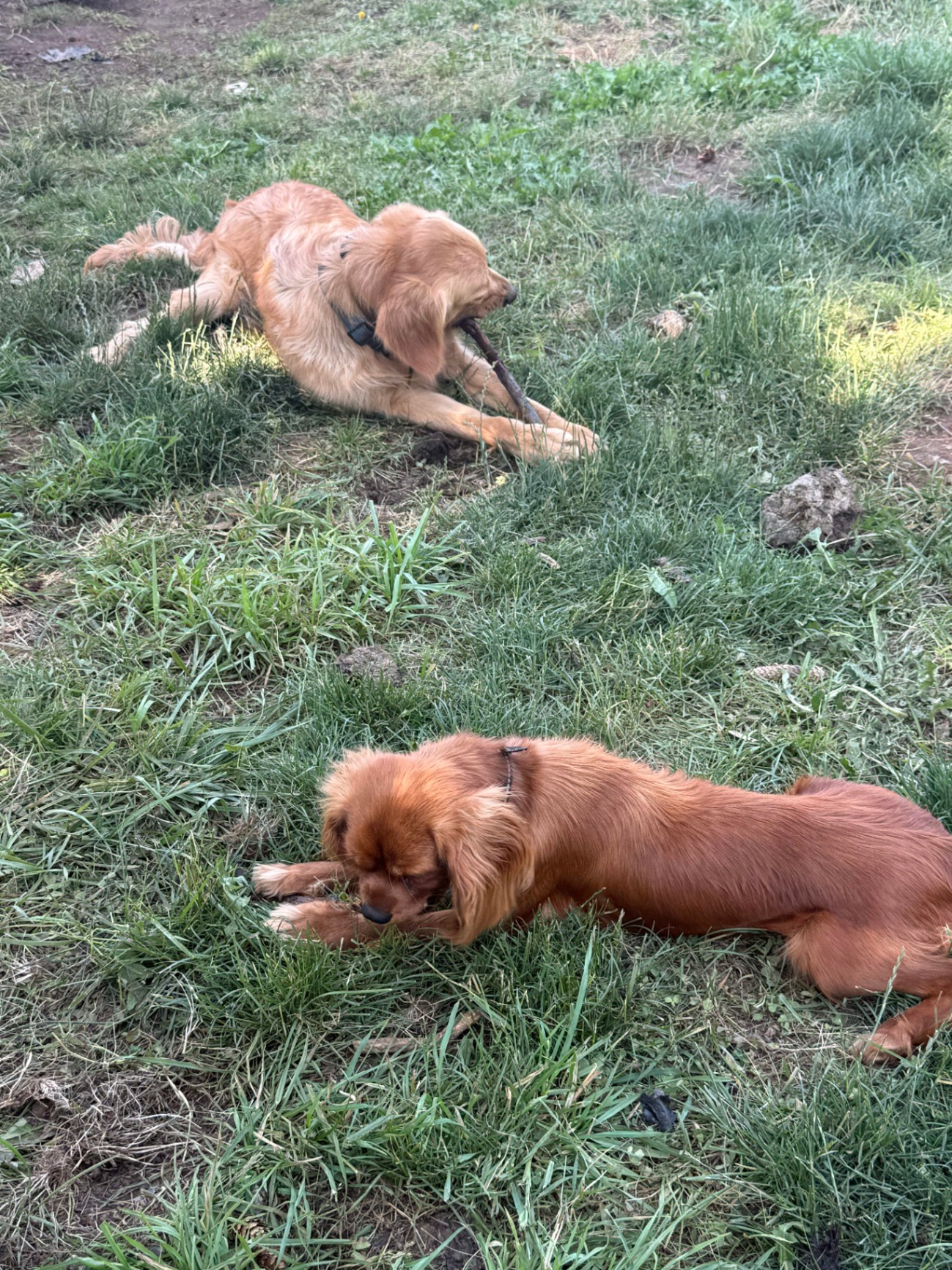
At Green Acres, we practice a holistic framework that focuses on comfortable boundaries. Sometimes, the best socialization is simply being in the presence of another dog without interacting. This is called parallel play or neutral observation. It teaches your dog that the presence of others is "no big deal," which is the ultimate goal of a confident, well-adjusted pet.
If you’re struggling with an over-excited or anxious pup, checking out our post on 7 mistakes you’re making with anxious dogs can help you understand how to lower those stress thresholds.
3. Use Positive Reinforcement to Build Emotional Resilience
Socialization is essentially a series of "learning events." According to the principles of classical conditioning (the famous Pavlovian response), we want our dogs to associate new sights, sounds, and social cues with positive outcomes.
Whenever we introduce a puppy to a new experience in our puppy socialization 101 program, we use high-value rewards. But it’s not just about treats; it’s about the tone of our voice and our own calm energy. We believe that our dogs mirror our emotions. If you are stressed at the dog park, your dog will be too.
The Holistic Tip: When you encounter something new, like a loud truck on Highway 212 or a group of cyclists, give your dog a treat before they have a chance to react fearfully. You are literally rewiring their brain to see the "scary" thing as a "snack" thing.

4. Controlled Playgroups for Social Mastery
Not all play is created equal. Science-based studies on canine behavior show that unsupervised dog parks can sometimes do more harm than good, as they can lead to "bullying" behaviors or traumatic experiences that stick with a dog for life.
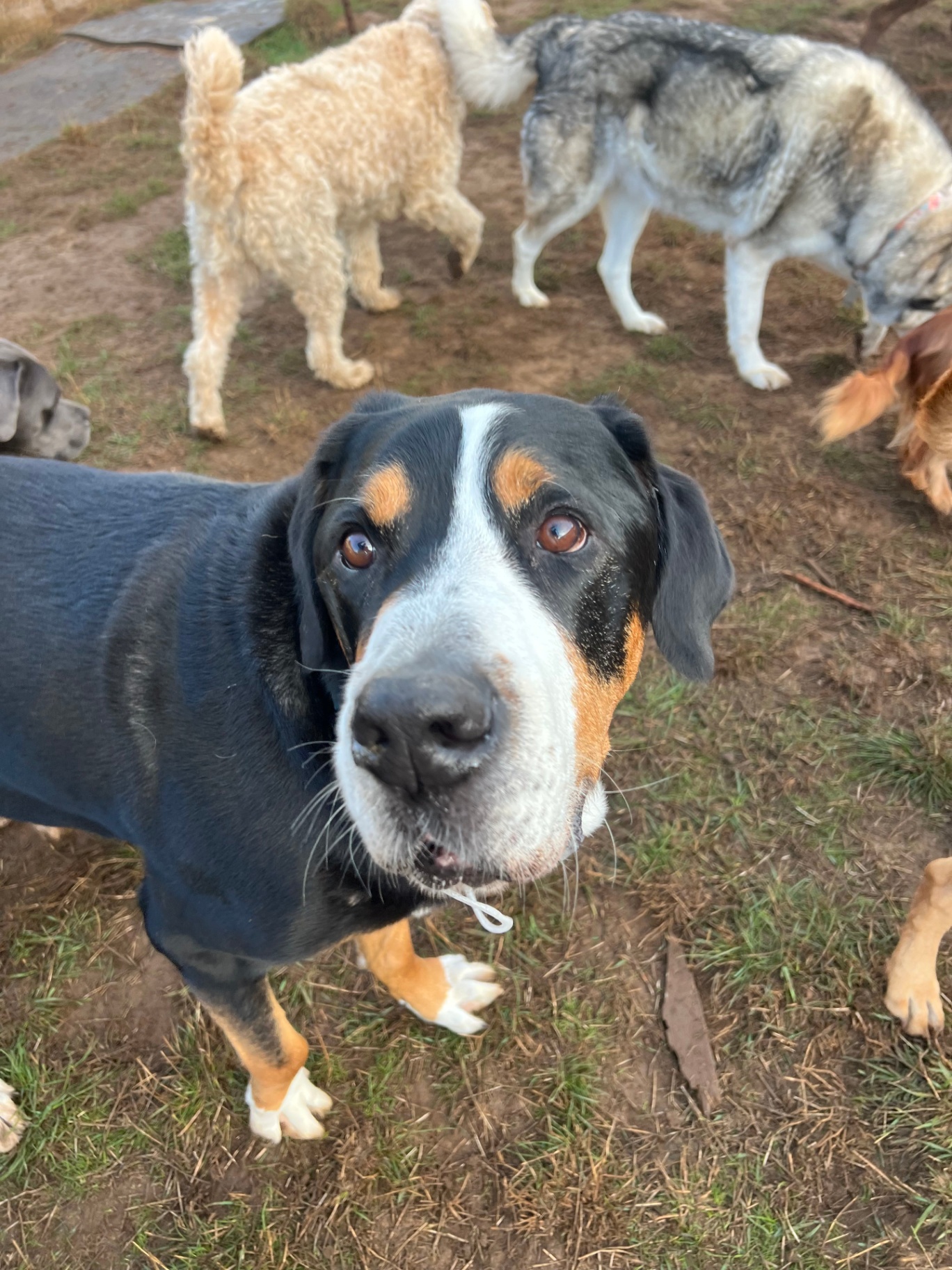
We strive to provide a different experience. In our supervised playgroups, we match dogs based on size, temperament, and play style. We’re out there in the mud with them, monitoring body language, looking for those "play bows," "hip checks," and "shake-offs" that signal healthy communication. It’s hands-on work, and yes, it means we’re often covered in fur by noon, but seeing a shy dog finally initiate play with a new friend makes every minute worth it.
For those in Gresham or Boring looking for a safe environment, we’ve developed a proven dog daycare framework that ensures every interaction is a "win" for your dog’s mental health.
5. The "Rest and Reset" Phase
A crucial part of holistic socialization that many people forget is the "downward dog" time. When dogs socialize, their brains are working overtime to process social cues, scents, and physical movement. This increases the production of adrenaline and cortisol. For that learning to "stick" and for their mental health to remain stable, they need restorative sleep.
In our holistic dog boarding here in Boring, we ensure that every period of high-energy socialization is followed by a quiet rest period. This allows the dog's nervous system to return to a baseline state. Without this, dogs can become "chronically over-aroused," leading to irritability and anxiety.
Home Integration Tip: The "Visitor Protocol"
To help your dog integrate these social skills at home, try the "Settled Greeting." When guests come over to your house in Boring or Portland, ask them to ignore your dog for the first five minutes. No eye contact, no talking, no touching. This allows your dog to socialise via scent (sniffing the guest's shoes or bags) without the pressure of physical interaction. Once your dog settles down and walks away, then the guest can call them over for a pet. This reinforces a calm state of mind and teaches your dog that they don't have to be "on" the moment someone enters their territory.
Why We Do What We Do
At Green Acres K-9 Resort, we aren't just a business; we’re a family of dog lovers. When we aren't caring for your pets, we’re at home with our own: watching how our kids interact with our senior dogs or training our youngest pups to be good citizens. We know that your dog is a member of your family, and their mental health is just as important as their physical health.
We believe that every dog deserves a life filled with confidence and joy. Whether it's through holistic grooming to keep them feeling comfortable in their skin or structured social time to keep their minds sharp, we are here to support you and your K-9 pet every step of the way.
Bibliography & Peer-Reviewed Sources
Miklósi, Á. (2014). Dog Behaviour, Evolution, and Cognition. Oxford University Press. (On the importance of social learning and olfactory processing).
Serpell, J. A. (2017). The Domestic Dog: Its Evolution, Behavior and Interactions with People. Cambridge University Press. (On the developmental periods and socialization).
American Veterinary Society of Animal Behavior (AVSAB). (2008). Position Statement on Puppy Socialization. (Science-backed evidence for early socialization benefits).
Overall, K. L. (2013). Manual of Clinical Behavioral Medicine for Dogs and Cats. Elsevier Health Sciences. (On the physiological effects of stress and the importance of rest in behavioral health).
Shay Kelly. (2019). Dog Enrichment: The What, the Why and the How. (Specifically on sensory and social enrichment strategies).
Comments