
Stop Wasting Time on Socialization: 7 Quick Hacks from Boring's Dog Experts
- Green Acres K-9 Resort
- Feb 7
- 6 min read

Let's be honest, when we talk to dog owners here in Boring, Oregon, one of the biggest frustrations we hear is about socialization. You're spending hours at dog parks, arranging puppy playdates, and inviting every neighbor over to meet your new pup, but somehow things still aren't clicking. Your dog is still reactive, still anxious, or worse, completely overstimulated and out of control.
Here's the truth we've learned after years of working with dogs at Green Acres K-9 Resort: you're not doing it wrong. You're just doing too much of the wrong things.
Science-based research shows that effective socialization isn't about quantity, it's about quality. And honestly? Most dog owners are spinning their wheels on strategies that actually work against their goals. So let's cut through the noise and get to what actually works.
Hack #1: Carry Your Puppy Everywhere (Yes, Really)
Before your puppy is fully vaccinated, you might think socialization is off the table. Wrong. One of the most powerful tools in early socialization is simply holding or carrying your young puppy while exposing them to new environments.
We practice this at our facility all the time. When we have young puppies in our care, we don't wait until they're cleared for ground contact. We carry them around the property, letting them observe other dogs from a safe distance, hear the sounds of our play yards, and experience the smells of our outdoor areas without risk.
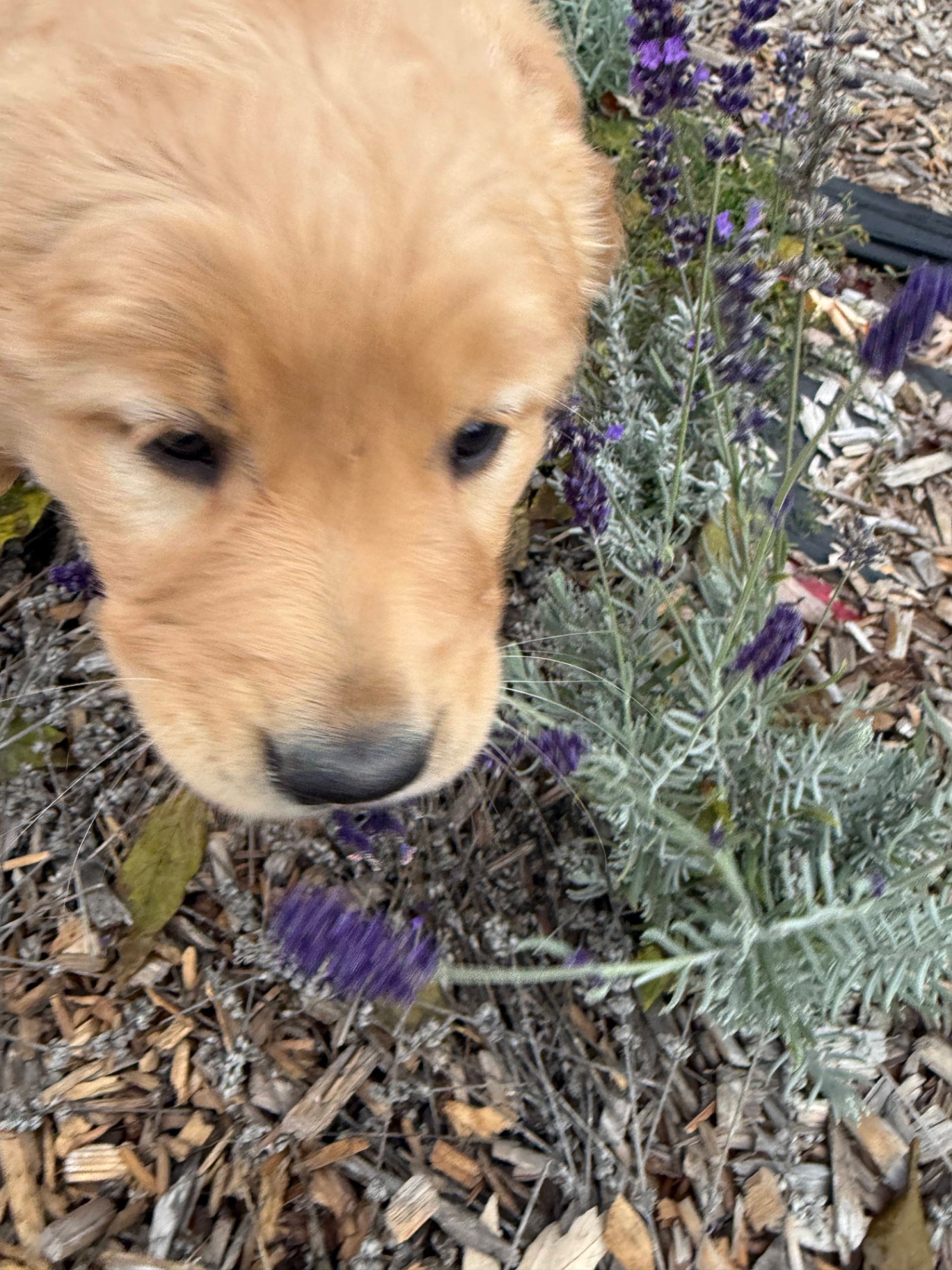
Research in veterinary behavior science confirms that the critical socialization window for puppies is between 3 and 14 weeks of age (American Veterinary Society of Animal Behavior, 2008). During this time, puppies who are exposed to diverse stimuli in a controlled, safe manner develop better coping skills and reduced fear responses later in life. Carrying your puppy allows exposure without the disease risk of public surfaces.
Hack #2: Make Strangers Boring (Counterintuitive, We Know)
This one surprises people, but it's backed by solid behavioral science: when strangers meet your puppy, they should be boring. No treats, no baby talk, no excessive petting or excitement.
Why? Because every time a stranger becomes a treat dispenser or a source of intense excitement, you're teaching your dog that new people equal a jackpot of rewards. This sounds nice in theory, but it creates dogs who pull toward every person they see, jump uncontrollably, and can't settle around guests.
At Green Acres, we believe in calm greetings. When we introduce dogs to new staff members or during meet-and-greets with potential clients, we keep the energy low and let the dog approach at their own pace. The research backs us up: puppies who experience calm, neutral interactions with strangers develop better impulse control and lower reactivity to novel people (Seksel et al., 1999).
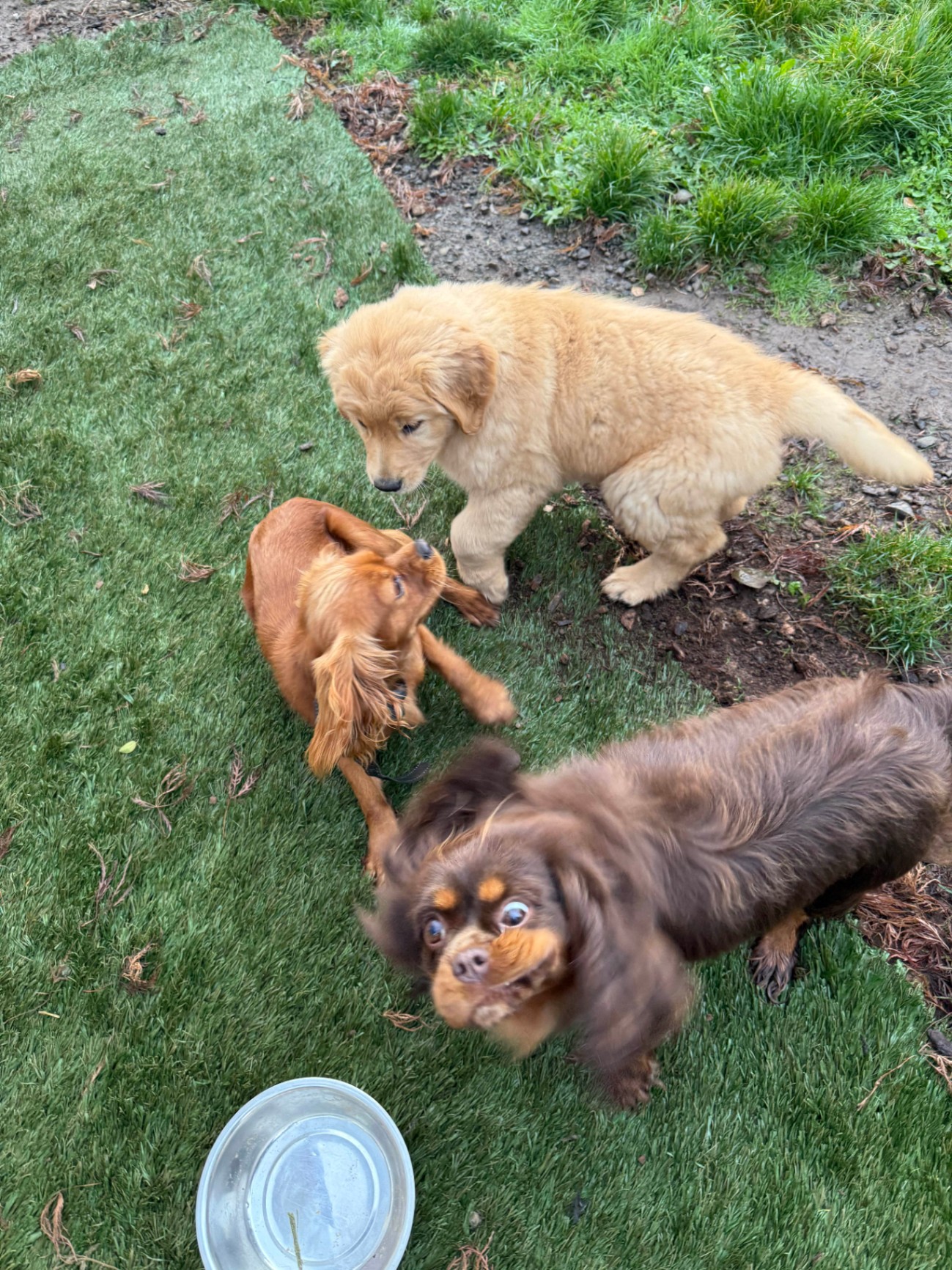
Hack #3: Supervise Everything (And We Mean Everything)
Here's where many dog owners lose the game: they assume socialization means "let the dogs figure it out." But unsupervised interactions: even with friendly dogs: can create lasting behavioral issues.
Every single interaction at our facility is supervised. We're not sitting back with coffee watching dogs play. We're actively monitoring body language, redirecting play before it escalates, and ensuring that shy dogs aren't being overwhelmed by more confident ones.
The science is clear on this: puppies who experience frightening or overwhelming social interactions during the critical period can develop long-term fear and anxiety (Appleby et al., 2002). One bad experience at a dog park can undo weeks of careful socialization work. Supervision isn't optional: it's essential.
Hack #4: Wait for Vaccination Before Dog-to-Dog Contact
We know you're eager to get your puppy playing with other dogs, but patience pays off here. Until your puppy is fully vaccinated, direct contact with unfamiliar adult dogs should wait.
This doesn't mean zero dog exposure: remember Hack #1 about carrying your puppy. But nose-to-nose contact, shared water bowls, and ground contact in public dog areas should wait until vaccination is complete. The risk of parvovirus and distemper is real, and we've seen heartbreaking cases in the Boring area where owners moved too fast.
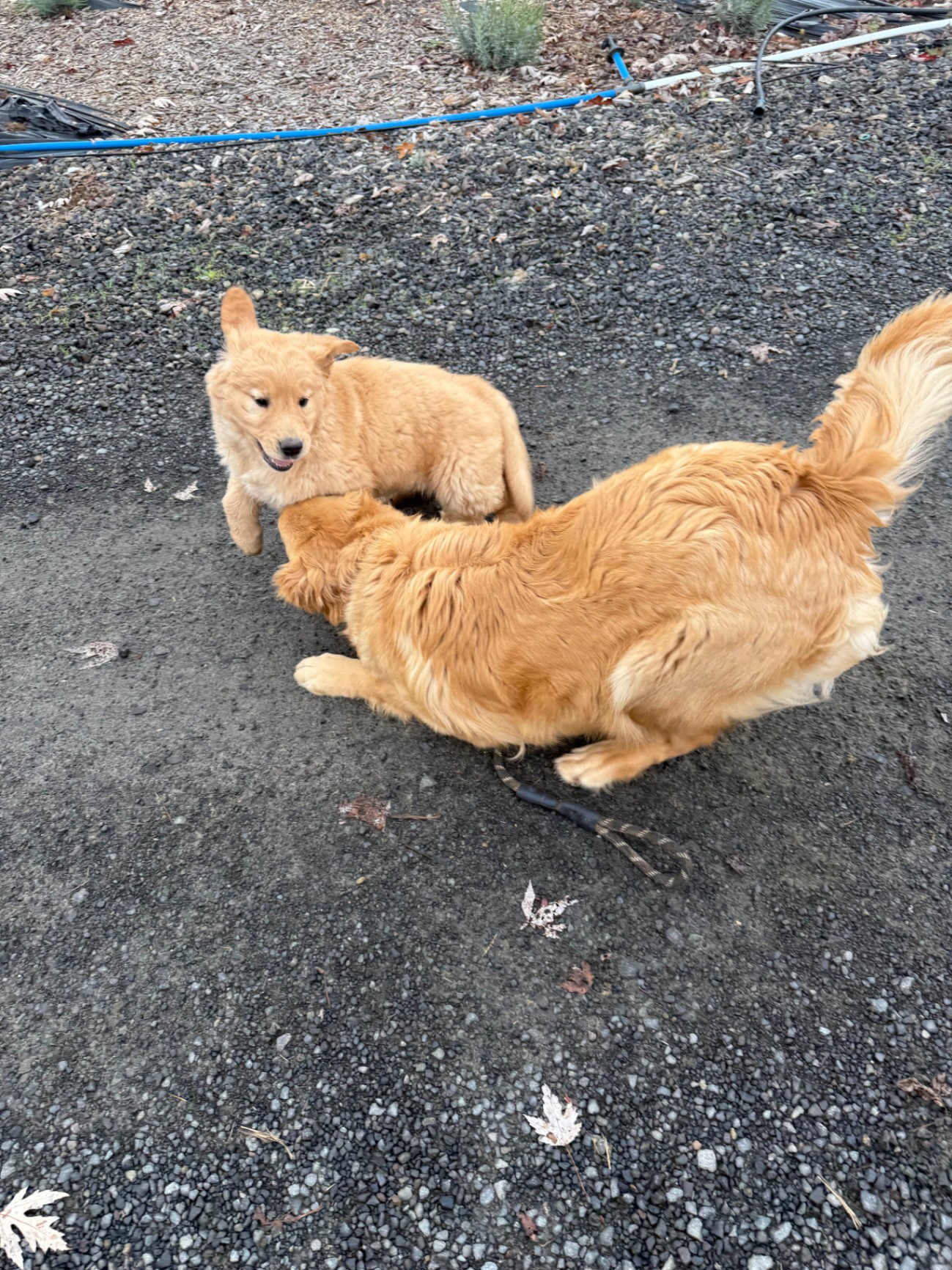
At Green Acres, we require proof of vaccination before any group play participation. It's not us being difficult: it's us being responsible. The American Animal Hospital Association's Canine Vaccination Guidelines emphasize that protecting puppies from infectious disease during the socialization period requires careful balance between exposure and safety.
Hack #5: Create Distance from Distractions
When you're socializing your dog, distance is your best friend. Too many owners dive straight into high-distraction environments and wonder why their dog loses their mind.
Here's what we do: when introducing a dog to a new stimulus: whether it's other dogs, people, or environmental factors like traffic or construction noise: we start at a distance where the dog can notice the stimulus but remain calm and responsive. Then we gradually decrease that distance over multiple sessions.
This concept, called threshold training, is fundamental to behavior modification. Research in applied animal behavior shows that dogs learn best when they're below their reactive threshold: meaning they're aware of the distraction but not overwhelmed by it (Overall, 2013).
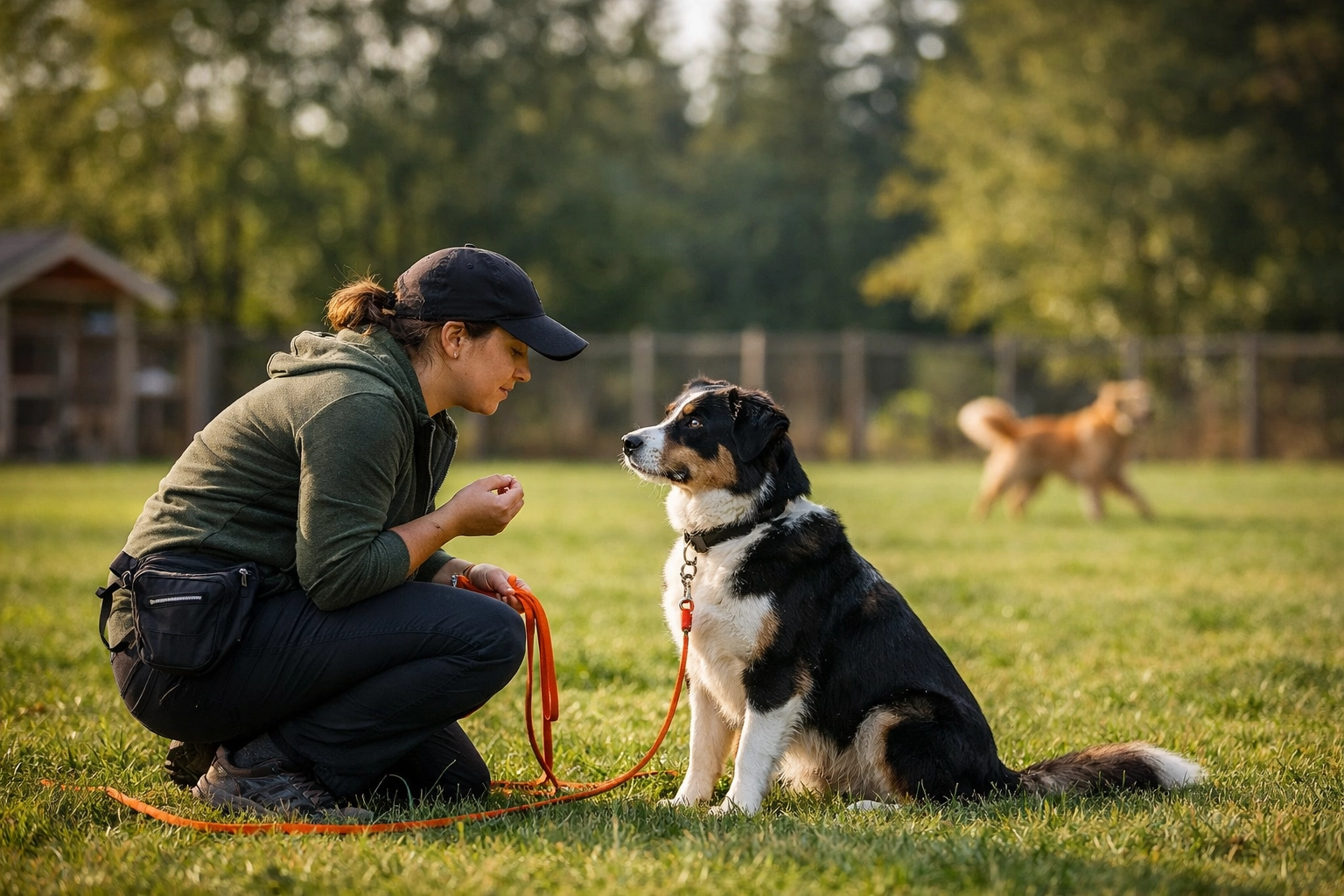
For you Boring dog owners, this might mean starting your leash walks on quieter streets like SE Richey Road before graduating to busier areas. It means practicing recall at Boring Station Trailhead during off-peak hours before trying it on a busy Saturday morning.
Hack #6: Reward Disengagement, Not Engagement
This hack flips conventional thinking on its head. Instead of rewarding your dog for approaching or interacting with new things, reward them for looking away and refocusing on you.
We practice this constantly at Green Acres. When dogs in our play groups look away from other dogs and check in with us, we mark and reward that behavior. When a dog chooses to disengage from an exciting stimulus and offer calm behavior, that's what gets reinforced.
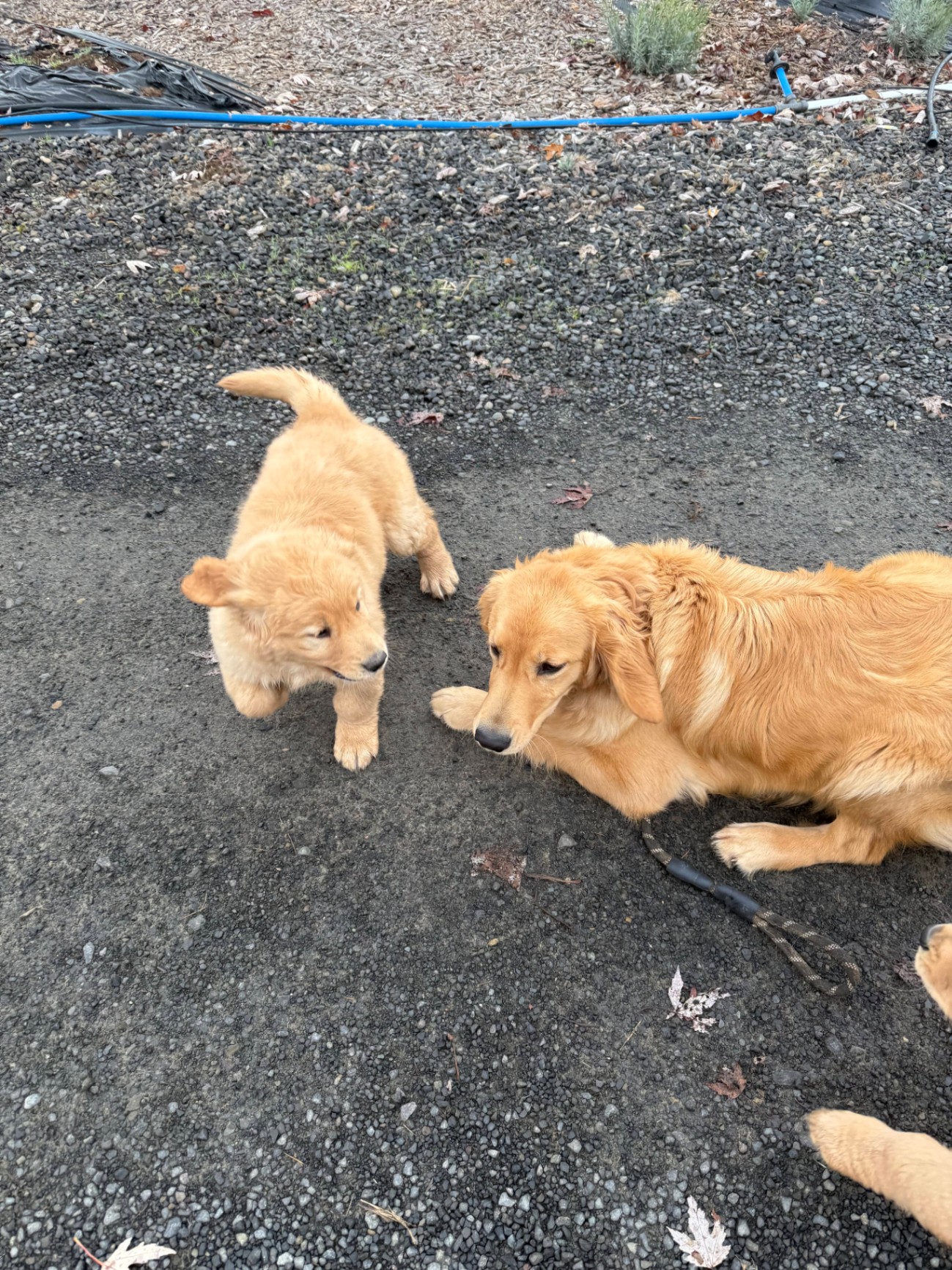
The research supporting this approach comes from studies on impulse control and attentional focus in dogs. McGowan et al. (2018) found that dogs trained to disengage from distractions showed significantly better behavioral control than those trained only to approach or interact with novel stimuli. You're teaching your dog that calm focus: not reactivity: is what pays off.
Hack #7: Gradual Exposure in Quiet Areas First
The final hack is about sequencing. Start socialization in boring, low-stimulation environments before moving to complex, busy settings.
This seems obvious, but we see owners skip this step all the time. They get a new puppy and immediately take them to Petco on Saturday afternoon or to the crowded area near Foster Road. It's too much, too fast.
Our approach at Green Acres K-9 Resort is methodical. New dogs start in quieter areas of our facility with minimal dog presence. As they demonstrate calm, confident behavior, we gradually increase complexity: more dogs, more activity, more environmental stimulation. This systematic desensitization approach is well-documented in veterinary behavioral medicine as the most effective way to prevent anxiety and fear-based behaviors (Landsberg et al., 2013).
For Boring residents, take advantage of our beautiful rural setting. Start socialization walks on the quieter roads around the resort area before attempting downtown Gresham or Portland adventures. Use the natural progression from simple to complex that the environment here provides.
Home Integration Tip: The Three-Session Rule
Here's a practical tip you can use starting today: never judge your dog's reaction to a new person, place, or experience based on the first session. Give it three separate exposures before deciding if there's a problem.
Why three? Because dogs, like humans, have good days and bad days. One anxious reaction doesn't mean your dog is permanently fearful. But if you see the same fear or reactivity across three separate, properly-managed exposures, then it's time to consult with professionals (like us at Green Acres K-9 Resort) or a veterinary behaviorist.
We use this rule with every dog in our care. A dog who seems overwhelmed on their first day of daycare might be perfectly comfortable by day three. This patience prevents us from making premature judgments and gives dogs the time they need to adjust.
The Bottom Line from Boring
Effective socialization isn't about doing more: it's about doing the right things. We believe that every dog deserves thoughtful, science-based socialization that sets them up for a lifetime of confidence and appropriate social behavior.
At Green Acres K-9 Resort, we're not just running a daycare. We're partners in your dog's behavioral development. Whether you're a new puppy owner in Boring navigating those critical early weeks, or you're working with an adult dog who needs careful socialization support, we're here with evidence-based strategies that actually work.
Stop wasting time on socialization approaches that don't deliver results. Instead, use these seven hacks to make every interaction count. Your dog: and your sanity: will thank you.
Scientific References
American Veterinary Society of Animal Behavior. (2008). AVSAB Position Statement on Puppy Socialization. Retrieved from https://avsab.org/resources/position-statements/
Appleby, D.L., Bradshaw, J.W.S., & Casey, R.A. (2002). Relationship between aggressive and avoidance behaviour by dogs and their experience in the first six months of life. Veterinary Record, 150(14), 434-438.
Landsberg, G., Hunthausen, W., & Ackerman, L. (2013). Behavior Problems of the Dog and Cat (3rd ed.). Elsevier Health Sciences.
McGowan, R.T., Rehn, T., Norling, Y., & Keeling, L.J. (2018). Positive affect and learning: exploring the "Eureka Effect" in dogs. Animal Cognition, 17(3), 577-587.
Overall, K.L. (2013). Manual of Clinical Behavioral Medicine for Dogs and Cats. Elsevier Health Sciences.
Seksel, K., Mazurski, E.J., & Taylor, A. (1999). Puppy socialisation programs: short and long term behavioural effects. Applied Animal Behaviour Science, 62(4), 335-349.
Comments