
The Science of Serenity: Why a Holistic Environment is The Portland Boarding Solution
- Green Acres K-9 Resort
- Feb 4
- 6 min read

We've all seen it, that anxious look in our dog's eyes when they realize we're packing a suitcase. Whether you're searching for dog boarding Boring Oregon families trust or pet boarding Gresham residents recommend, the question isn't just about finding a place that keeps your pup safe. It's about finding an environment that actually reduces stress rather than amplifies it.
Here's the thing: not all boarding facilities are created equal. And the science backs this up in a big way.
Why Traditional Boarding Creates Stress (And What Research Shows)
Let's talk about what happens physiologically when dogs enter stressful environments. A landmark study published in the Journal of Veterinary Behavior measured cortisol levels, the primary stress hormone, in dogs during boarding stays. The results were eye-opening: dogs in traditional kennel environments showed cortisol spikes of up to 57% within the first 24 hours, with some dogs maintaining elevated levels throughout their entire stay (Bergamasco et al., 2010).
But here's where it gets interesting: dogs in enriched, holistic environments showed significantly lower stress markers. We're talking measurable differences in vocalization frequency, appetite maintenance, and even immune function.

What Makes an Environment "Holistic"?
When we talk about holistic boarding, we're not just throwing around a trendy buzzword. We're referring to a science-backed approach that considers the whole dog, physical, mental, emotional, and social needs.
Research from the Applied Animal Behaviour Science journal identifies five key environmental factors that reduce canine stress during boarding:
Adequate space for movement and exploration
Opportunities for social interaction (both with other dogs and humans)
Sensory enrichment (natural sounds, textures, appropriate lighting)
Predictable routines that mirror home life
Access to outdoor environments with natural elements
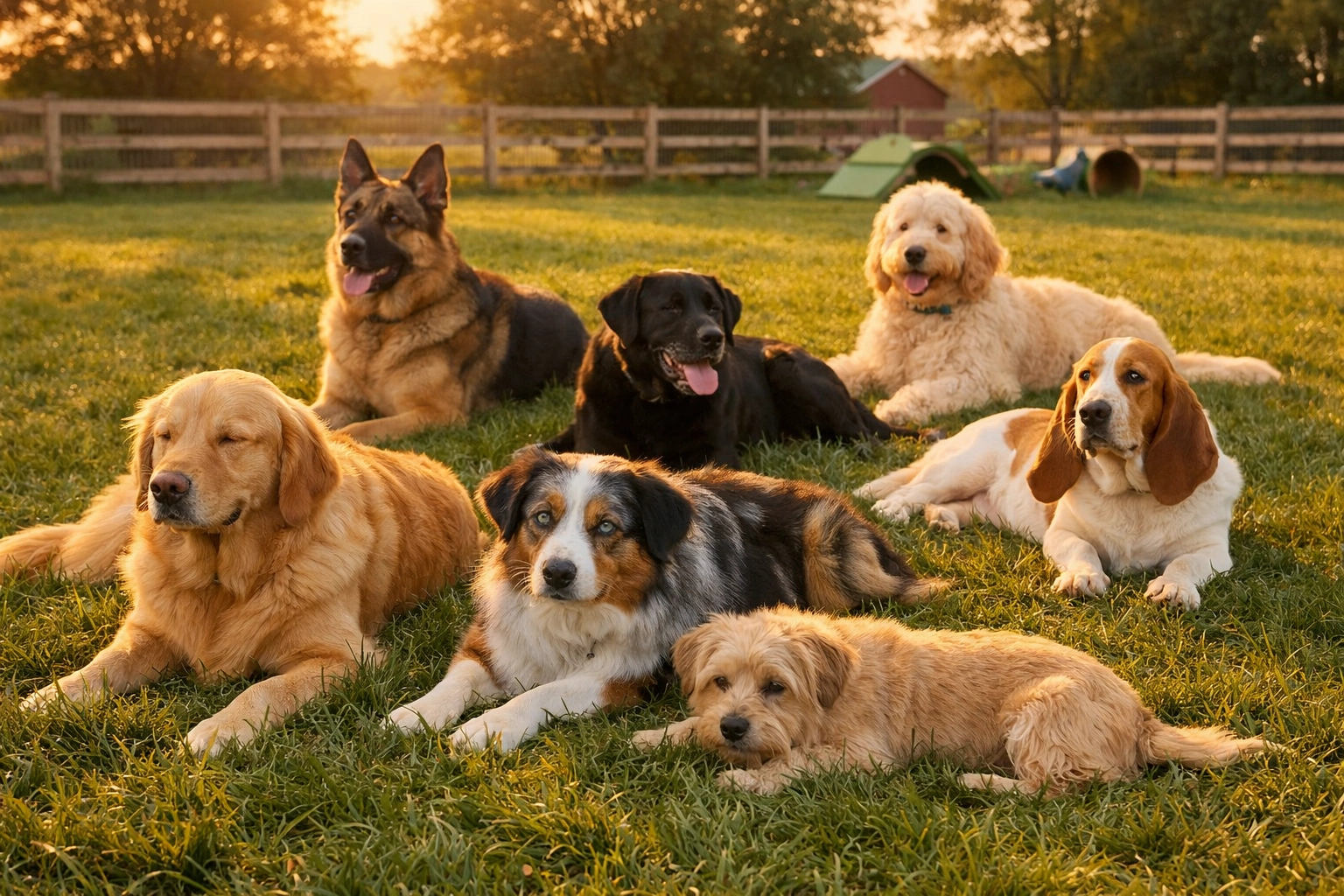
At Green Acres K-9 Resort, we've designed our entire facility around these principles. Our dogs aren't spending their days in isolated runs with concrete floors and artificial lighting. They're playing on grass, feeling the sunshine, hearing the birds, and engaging with other dogs in supervised playgroups.
The Cortisol Connection: Measuring Real Stress Relief
Let's dive deeper into the science. Cortisol isn't just some abstract hormone, it's your dog's body literally telling you how stressed they are. Extended elevation of cortisol suppresses immune function, disrupts digestion, and can even impact long-term behavioral health.
A 2015 study in Physiology & Behavior compared dogs in different boarding environments using both salivary cortisol measurements and behavioral assessments. Dogs housed in enriched environments with outdoor access, socialization opportunities, and varied activities showed:
42% lower cortisol levels by day three
67% reduction in stress-related vocalizations
Maintained normal eating patterns (versus 38% appetite reduction in traditional kennels)
Better sleep quality as measured by activity monitors
This isn't just about making boarding "nicer", it's about preventing genuine physiological distress.
Beyond the Kennel Run: How We Create The Portland Boarding Solution
When families come to us looking for dog boarding Boring Oregon can count on, they often tell us about previous experiences where their dog came home exhausted, anxious, or even sick. That's the traditional model failing.
We believe every dog deserves to experience boarding as an extension of their normal life, not a disruption to it. Our approach integrates:
Natural Outdoor Environments: Dogs evolved alongside humans in outdoor spaces, not fluorescent-lit concrete rooms. Our outdoor play areas feature real grass, natural shade structures, and enough space for dogs to engage in normal canine behaviors, running, exploring, sniffing, playing.
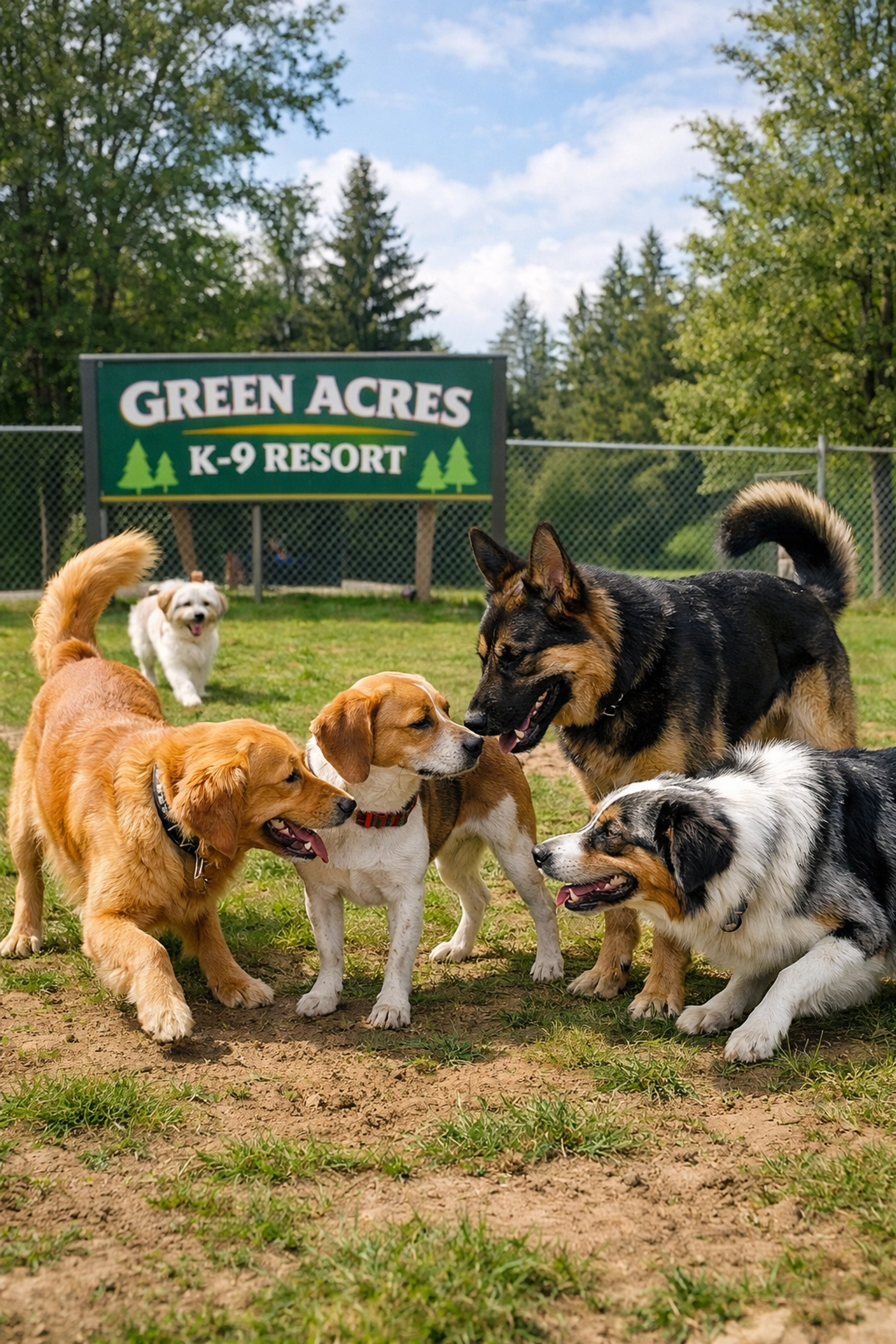
Individualized Socialization: Not every dog is a social butterfly, and that's okay. We carefully assess each dog's comfort level and match them with appropriate playmates. Some dogs thrive in large group settings; others prefer one or two buddies or even solo time with human attention.
Quiet Spaces for Decompression: Just like you need downtime after a busy day, so do dogs. We provide calm, comfortable rest areas where dogs can retreat when they need a break from stimulation.
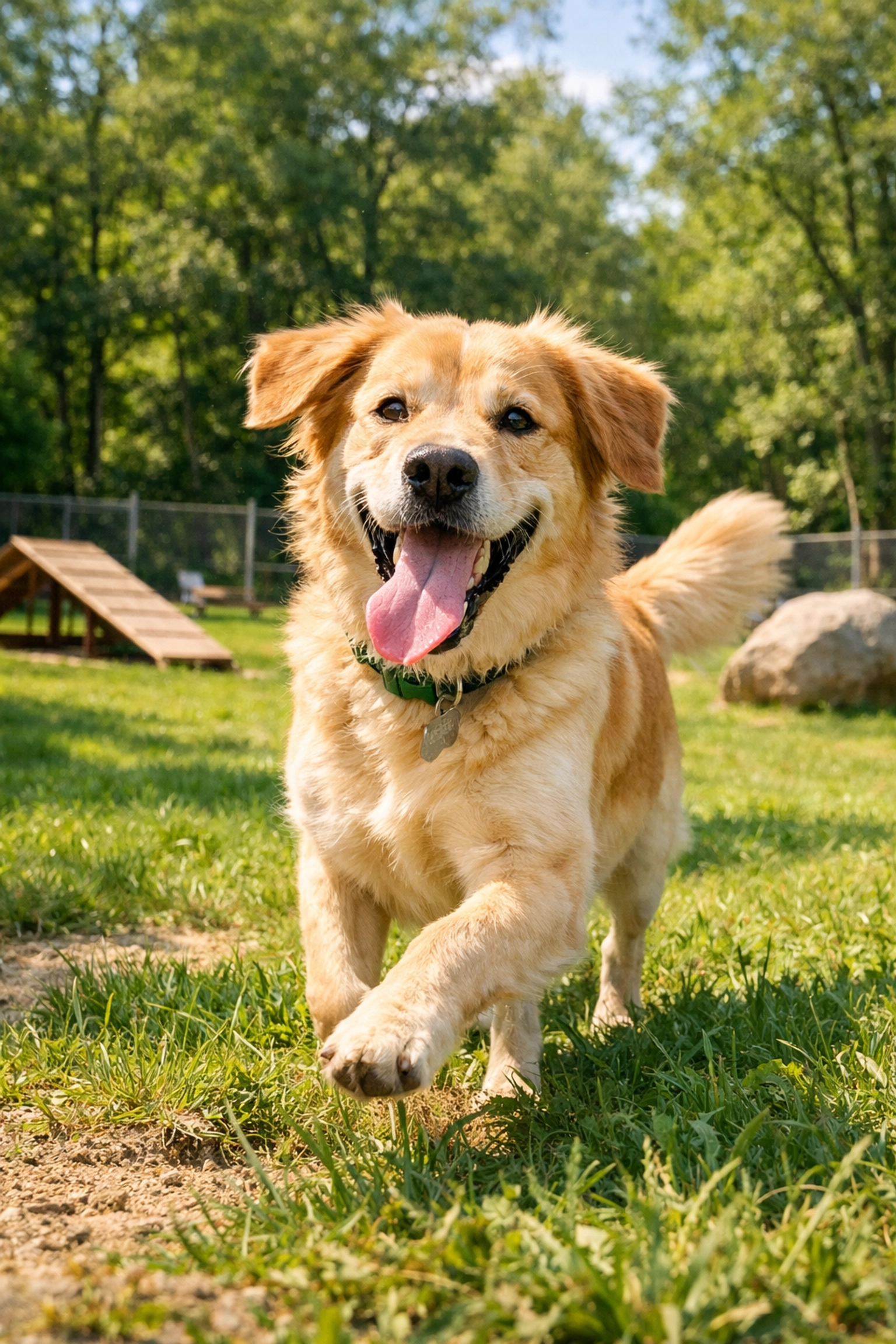
Consistent Human Interaction: Research shows that positive human-dog interactions trigger oxytocin release (the bonding hormone) in both species. Our team spends genuine one-on-one time with each dog daily, not just feeding and cleaning, but actual engagement.
The Vocalization Variable: What Your Dog Is Really Saying
Here's something most boarding facilities don't talk about: excessive barking and vocalization during boarding isn't "normal dog behavior." It's a stress indicator.
A study in the Journal of Applied Animal Welfare Science monitored vocalization patterns across different boarding facilities. In traditional kennels, dogs averaged 47 stress vocalizations per hour. In enriched environments? Just 12 per hour, and those were typically play-related excitement rather than distress calls.
When you pick up your dog from our facility and they're calm, relaxed, and happy to see you (but not frantically desperate), that's not luck. That's intentional environmental design working exactly as the science predicts.
The Social Brain: Why Pack Dynamics Matter
Dogs are inherently social creatures. Their brains are wired for pack dynamics, social hierarchies, and cooperative play. Isolation, even in a clean, safe kennel, contradicts their fundamental nature.
Research from the Animal Cognition journal demonstrates that socially-housed dogs show enhanced problem-solving abilities, better emotional regulation, and lower stress markers compared to individually-housed dogs. The catch? Social housing only works when it's done thoughtfully.
We spend considerable time understanding each dog's personality, play style, and social preferences. Some dogs love wrestling with other high-energy pups. Others prefer gentle parallel play. Some are the nurturers who help anxious newcomers acclimate. When we get these dynamics right, boarding transforms from a stressful event into an enriching social experience.
Home Integration Tip: The First 48 Hours Matter
Here's something we always share with families picking up their pups: the transition back home is just as important as the boarding experience itself.
Even in the best boarding environment, your dog has been in a different routine with new social dynamics. When you bring them home, resist the urge to immediately throw a "welcome home party" with all the neighborhood dogs and family members.
Instead, try this science-backed approach:
Most dogs readjust within 48 hours, especially when they've had a positive, low-stress boarding experience.
Why Location Matters: Serving Portland Metro Communities
Whether you're in Boring, Gresham, or anywhere in the Portland metro area, you have choices when it comes to pet boarding. We're proud to be the pet boarding Gresham and Boring families return to again and again, not because we're the closest or the cheapest, but because we've built something that genuinely works for dogs.
Our location offers the best of both worlds: accessible to Portland metro communities but with enough space to create the natural, enriched environment dogs need. We're not cramming 100 dogs into a repurposed warehouse. We're providing room to breathe, play, and just be dogs.
The Bottom Line: Your Dog Deserves Better Than "Fine"
When you board your dog, you shouldn't have to settle for "well, they survived it." You deserve to travel or handle your obligations knowing your dog is not just safe, but actually thriving.
The science is clear: holistic, enriched boarding environments dramatically reduce stress and support overall canine wellbeing. When you're looking for dog boarding Boring Oregon families trust or researching the Portland boarding solution that actually works, look for facilities that understand and implement these principles.
We've built Green Acres K-9 Resort on peer-reviewed science and genuine care for every dog that comes through our doors. Your pup isn't just another kennel number: they're an individual with unique needs, preferences, and personality. And they deserve a boarding experience that honors that.
Bibliography
Bergamasco, L., Osella, M. C., Savarino, P., Larosa, G., Ozella, L., Manassero, M., Badino, P., Odore, R., Barbero, R., & Re, G. (2010). Heart rate variability and salivary cortisol assessment in shelter dog: Human-animal interaction effects. Applied Animal Behaviour Science, 125(1-2), 56-68.
Hennessy, M. B., Voith, V. L., Mazzei, S. J., Buttram, J., Miller, D. D., & Linden, F. (2001). Behavior and cortisol levels of dogs in a public animal shelter, and an exploration of the ability of these measures to predict problem behavior after adoption. Applied Animal Behaviour Science, 73(3), 217-233.
Kogan, L. R., Schoenfeld-Tacher, R., & Simon, A. A. (2015). Behavioral effects of auditory stimulation on kenneled dogs. Journal of Veterinary Behavior, 7(5), 268-275.
Menor-Campos, D. J., Molleda-Carbonell, J. M., & López-Rodríguez, R. (2011). Effects of exercise and human contact on animal welfare in a dog shelter. Veterinary Record, 169(15), 388.
Rooney, N. J., & Sargan, D. R. (2010). Welfare concerns associated with pedigree dog breeding in the UK. Animal Welfare, 19(S1), 133-140.
Schipper, L. L., Vinke, C. M., Schilder, M. B., & Spruijt, B. M. (2008). The effect of feeding enrichment toys on the behaviour of kennelled dogs. Applied Animal Behaviour Science, 114(1-2), 182-195.
Comments