
Why Rotating Play Styles Will Change the Way You Socialize Your Dog in Portland
- Green Acres K-9 Resort
- Apr 7
- 6 min read

Hey there, fellow dog lovers! Mark Griffin here from the IT and admin side of Green Acres K-9 Resort. While I spend a lot of my time making sure our systems run smoothly, my heart: like everyone else’s here: is truly out in the yards with our four-legged guests. Living and working here in Boring, Oregon, we’re lucky to have such a beautiful, sprawling space where we get to see firsthand how dogs interact, learn, and grow.
If you’re a pet parent in the Portland or Gresham area, you’ve probably heard a lot about "socialization." Usually, people think that just means "letting my dog play with other dogs." But as we’ve learned through years of hands-on experience and a deep dive into canine behavioral science, socialization is so much more than a free-for-all at the local park.
In fact, we’ve found that the "secret sauce" to a truly well-adjusted, confident dog is something we call Rotating Play Styles. This isn’t just a fancy phrase we made up over coffee; it’s a science-backed approach to holistic dog care that changes the way your dog’s brain processes the world around them.
The Science of the "Socialization Window"
To understand why rotating play styles work, we have to look at the biology of a dog’s brain. Most owners know about the critical socialization period (roughly 3 to 16 weeks of age), but socialization doesn’t stop there. Brain plasticity: the brain's ability to change and adapt: continues throughout a dog's life.
According to the landmark research by Scott and Fuller (1965), early experiences shape a dog's personality and their ability to handle stress. However, modern neurobiology shows that repeated, varied experiences are what keep the amygdala (the brain's fear center) from overreacting to new stimuli. When we rotate play styles, we aren't just giving them exercise; we are literally building a more resilient nervous system.
For more on how this works with younger pups, check out The Ultimate Guide to Puppy Daycare and Socialization.
Style 1: The Group Dynamic (Social Learning)
The first style most people are familiar with is group play. This is where dogs learn the "language" of being a dog. At Green Acres, we believe in supervised, size-and-temperament-matched groups. This isn't just about burning off steam; it’s about social feedback.
When a puppy plays too rough and an older, balanced dog gives a gentle "correction" (like a low growl or walking away), the puppy learns impulse control. Science calls this "social referencing." The dog looks to their peers to understand what behaviors are acceptable.
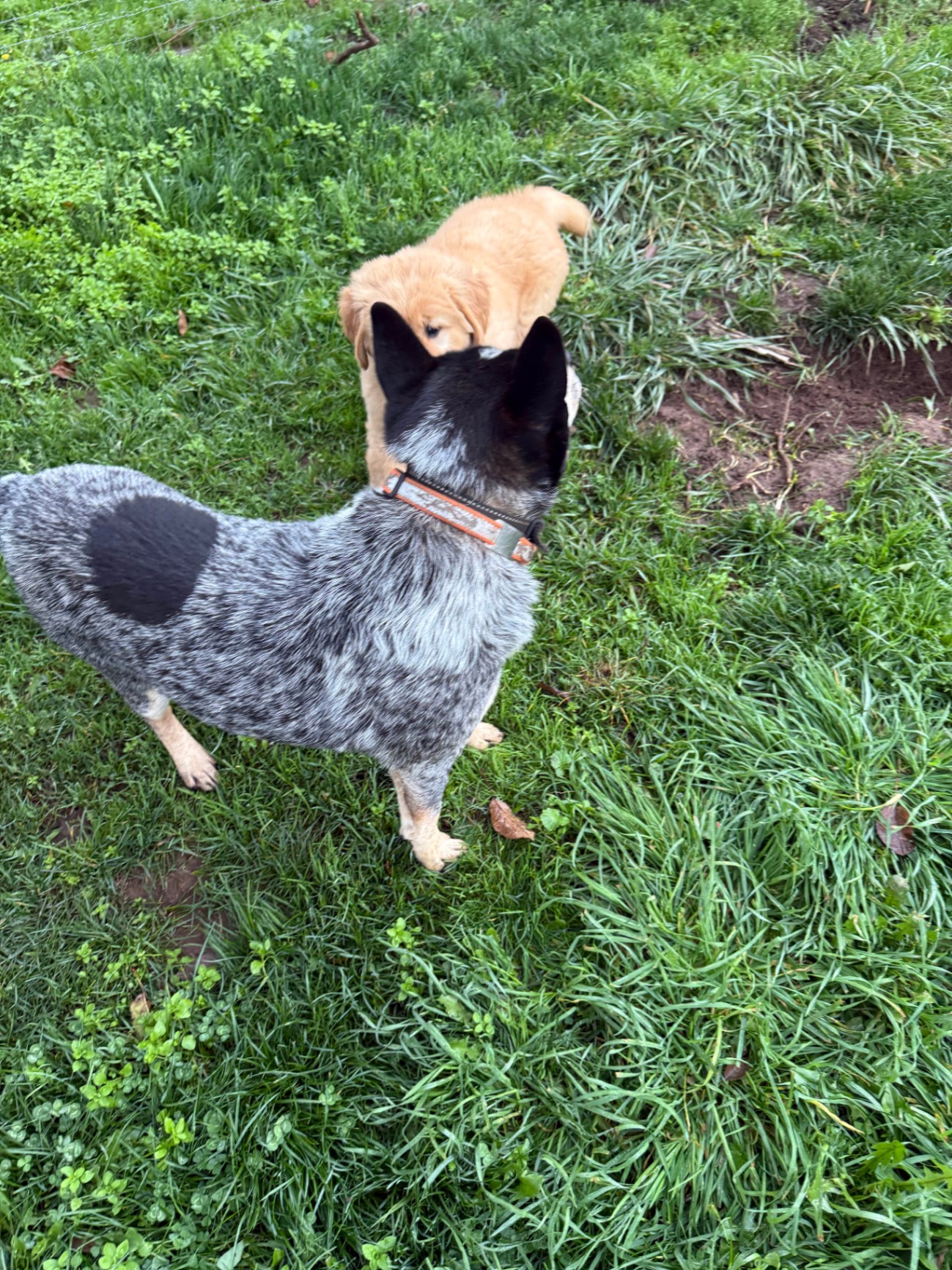
In the photo above, you can see a blue heeler and a golden retriever puppy engaging in this exact type of natural socialization in our play yard. This mix of breeds and ages: under our watchful eyes: helps them develop a diverse "vocabulary" of social cues.
Style 2: Sensory Exploration (The "Sniffari")
One of the biggest mistakes we see in the Gresham and Portland dog community is the belief that a tired dog is always a happy dog. If a dog is physically exhausted but mentally wired, they can actually become more anxious. This is why we rotate into "Sensory Play" or what we affectionately call the "Sniffari."
A dog’s olfactory bulb is about 40 times larger than a human’s (relative to total brain size). When we allow dogs to explore our sensory gardens: filled with dog-safe plants like lavender and different textures like mulch and gravel: we are engaging their primary way of understanding the world.
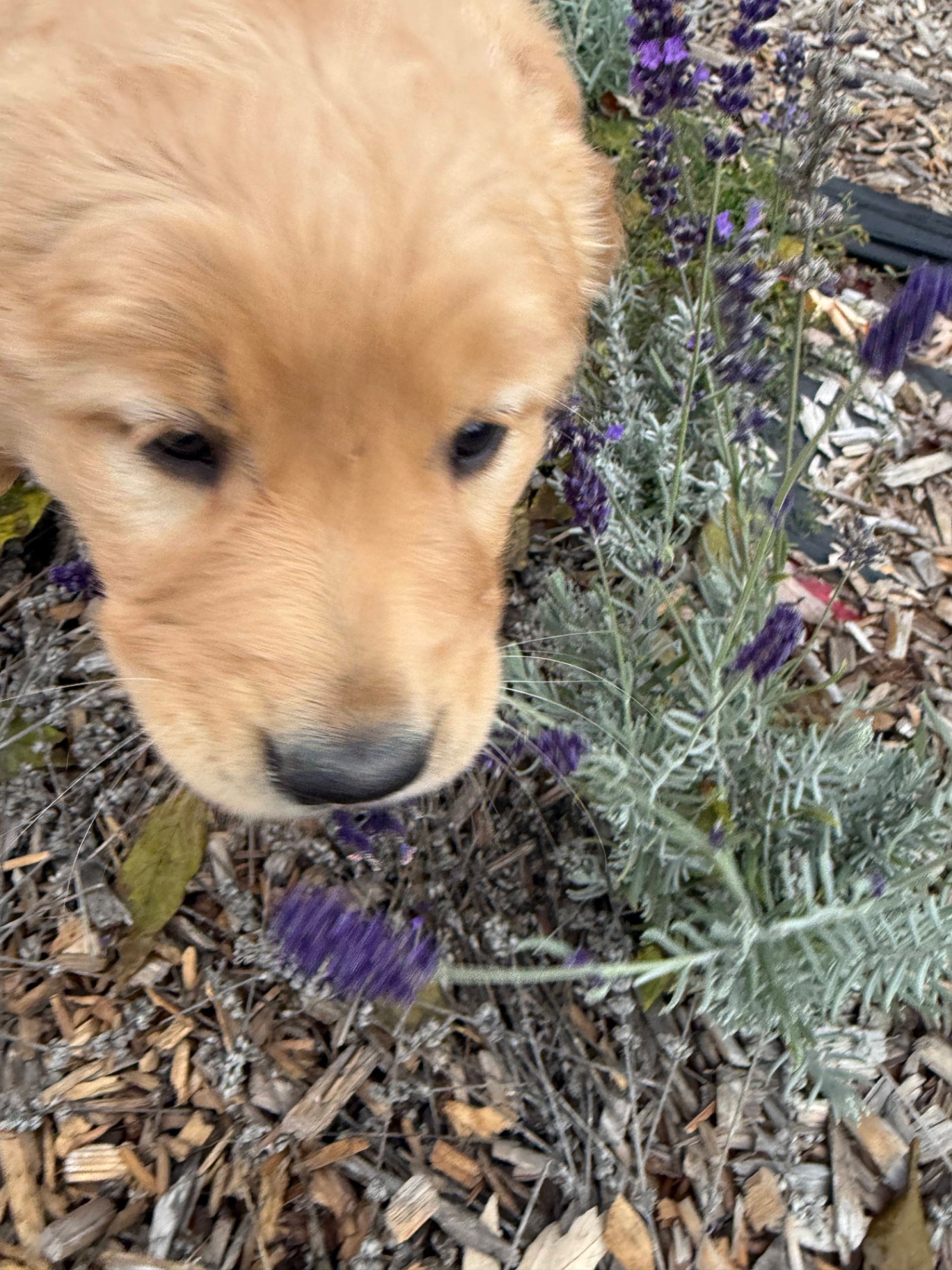
As seen here, one of our golden retriever pups is busy investigating some lavender. This type of play lowers cortisol levels and provides mental stimulation that "group wrestling" simply can't match. It’s a vital part of our holistic dog care framework.
Style 3: Structured Play and Impulse Control
The third style we rotate in is structured play. This involves interactive toys, agility equipment, or "work-play" like fetch. This style focuses on the bond between the human handler and the dog, as well as the dog's ability to focus despite distractions.
If a dog only ever engages in "unstructured" play, they can struggle to listen to you when they are excited. By rotating in structured sessions: where they might have to "sit" before we throw the frisbee or navigate a tunnel: we are teaching them that they can be excited and obedient at the same time. This is a game-changer for those walks through the busy streets of downtown Portland!
Style 4: The Power of the "Rest Cycle"
We can't talk about rotating play styles without talking about the "off switch." Science shows that sleep is when the brain processes and solidifies what it has learned during the day. If a dog is in a state of high arousal for 8 hours straight at a daycare, they aren't learning; they are just surviving.
At Green Acres, we make rest a mandatory "play style." We provide quiet, comfortable spaces where dogs can chew on a stick or just lounge in the grass. This "downward regulation" is essential for preventing the over-arousal that leads to "leash reactivity" or "dog park burnout."
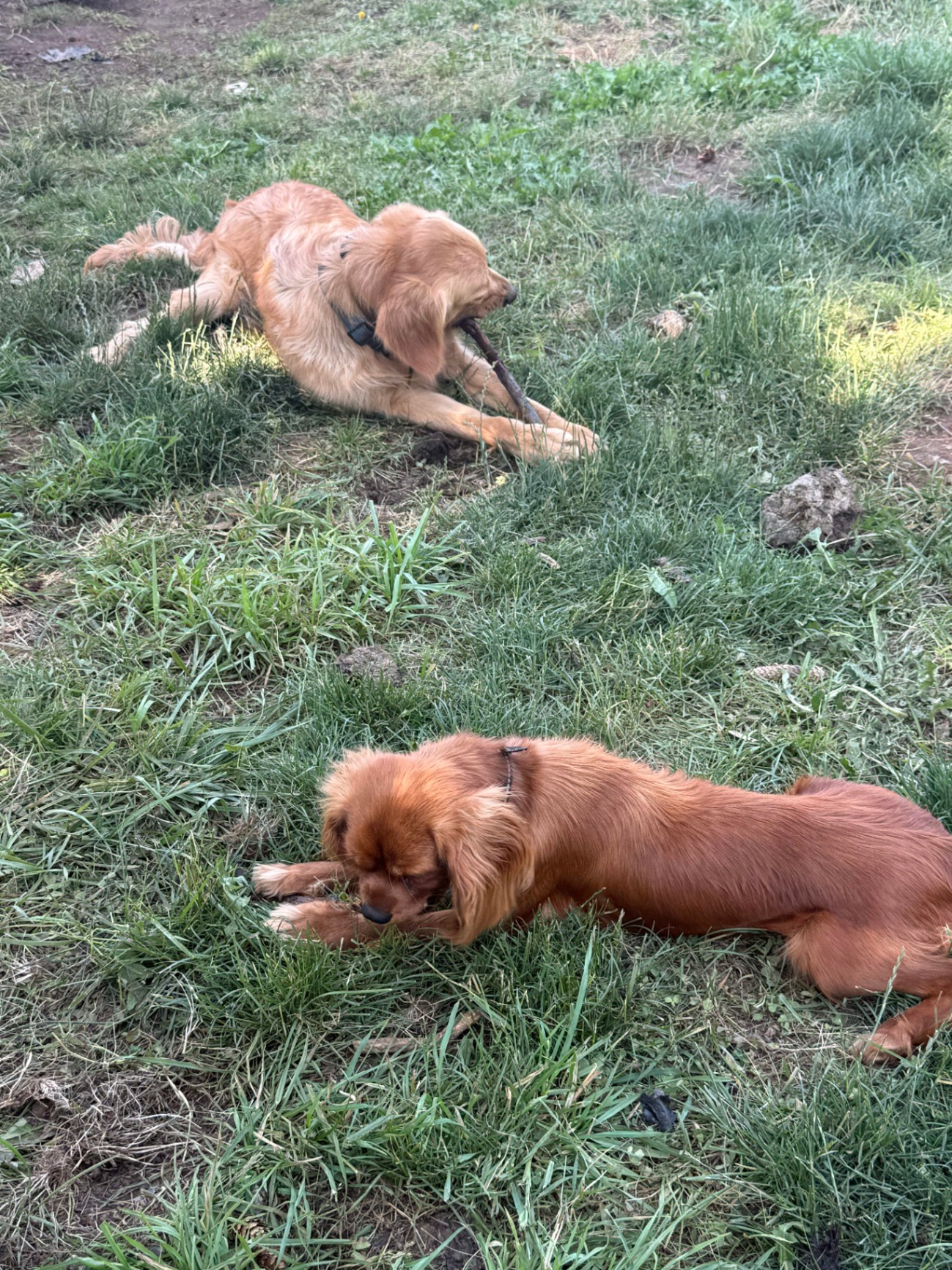
Seeing these two lounging in the grass near our Boring facility reminds us that sometimes, the best socialization is simply being comfortable in someone else’s presence without the need to "do" anything. This is especially helpful for anxious dogs; for more tips on that, see our guide on 7 mistakes you’re making with anxious dogs.
Why This Works for Boring and Gresham Residents
Living in the PNW, our dogs have to be versatile. One day you’re hiking at Oxbow Regional Park, and the next you’re sitting at a dog-friendly brewery in Gresham. A dog that has only ever experienced one style of play (usually high-intensity wrestling) will struggle to settle in a public space.
By rotating these styles, we are preparing your K-9 family member for the real world. We are building a dog that knows how to play hard, how to sniff and explore, how to listen to their "boss," and most importantly, how to relax.
Home Integration Tip: The "Rule of Three" Play Rotation
We want you to bring the Green Acres philosophy into your own living room! You don’t need a massive yard in Boring to practice rotating play styles. Try the Rule of Three this week:
Morning (Active): 10 minutes of high-intensity play (tug or fetch).
Mid-day (Sensory): A "Sniffari" walk. Instead of walking for distance, let your dog lead the way with their nose for 15 minutes. If they want to sniff one tree for five minutes, let them!
Evening (Cognitive/Rest): 5 minutes of "trick for treats" followed by a high-value chew (like a Kong or a natural bone) in their designated "calm zone."
By switching the "mode" of interaction, you’ll find your dog is more attentive to you and generally more relaxed in the house.
Our Heart at Green Acres
We treat every dog that walks through our gates like they are our own. Whether I’m fixing a router or helping the team transition a group of Goldens into the sensory garden, the goal is the same: a happy, healthy, and holistically cared-for dog. We believe that by understanding the science of how dogs learn, we can provide a level of care that goes beyond just "pet sitting."
If you’re looking for a place that understands the nuance of your dog's social needs, we’d love to have you join our family. You can learn more about our holistic boarding options here.
Stay wagging, Portland!
: Mark Griffin & the Green Acres K-9 Resort Team
Bibliography & Peer-Reviewed Sources
Scott, J. P., & Fuller, J. L. (1965).Dog Behavior: The Genetic Basis. University of Chicago Press. (The foundational study on critical socialization periods).
Bekoff, M. (2001). "Social Play Behavior: Cooperation, Fairness, Trust, and the Evolution of Morality." Journal of Consciousness Studies. (Discusses how play styles contribute to social development and cognitive health).
Horowitz, A. (2009). "Attention to attention in domestic dog (Canis familiaris) dyadic play." Animal Cognition. (Explaining how dogs communicate during varied play interactions).
Tiira, K., & Lohi, H. (2015). "Early Life Experiences and Exercise Associate with Dog Anxiety." PLOS ONE. (Research supporting the link between varied exercise/socialization and reduced anxiety).
Panksepp, J. (1998).Affective Neuroscience: The Foundations of Human and Animal Emotions. Oxford University Press. (Science behind the "play drive" and its neurological benefits).
Comments