
The Proven Daily Dog Wisdom Framework: How Rotating Care, Health, and Socialization Benefits Dogs in Gresham
- Green Acres K-9 Resort
- Apr 9
- 5 min read

Living out here in the beautiful stretches between Boring and Gresham, we are lucky to have the space and the community that truly loves our four-legged family members. But as any dog parent knows, keeping a dog happy and healthy is about more than just a backyard and a bowl of kibble. Here at Green Acres K-9 Resort, we’ve spent years refining what we call the Daily Dog Wisdom Framework.
This isn't just a fancy name we came up with over coffee; it’s a science-based approach to canine wellness that focuses on three critical, rotating pillars: Care, Health, and Socialization. We’ve found that when we rotate these focuses, dogs don't just "survive" their day, they thrive. Whether you’re dropping your pup off with us or managing your routine at home in Gresham, understanding how these three elements interact is the key to a balanced, calm, and joyful dog.
Why Rotation Matters: The Science of "The New"
You might wonder why we emphasize "rotation." If a dog likes to play, shouldn't they just play all day? Science tells us no. According to research published in Applied Animal Behaviour Science, dogs experience "habituation": a decrease in response to a stimulus after repeated presentations. Essentially, if a dog does the same thing every single day, their brain stops engaging.
By rotating our focus between structured care (rest and environment), physical health (exercise and nutrition), and socialization (peer interaction), we keep their cognitive functions sharp and their stress levels low. This is the heart of why rotating exercise will change the way you manage holistic dog care in Portland.
Pillar 1: Holistic Care and Environmental Enrichment
Care is the foundation. It’s the unglamorous stuff we do: scrubbing the suites, checking the temperature of the grass, and ensuring every pup has a quiet place to decompress. In the Daily Dog Wisdom Framework, "Care" refers to the environment we provide.
A dog’s environment dictates their nervous system's state. Science shows that "Environmental Enrichment" (EE) can actually increase the weight and thickness of the cerebral cortex and improve learning and memory. This is why we don't just have flat, concrete pens. We’ve designed our resort with sensory gardens and varied textures.
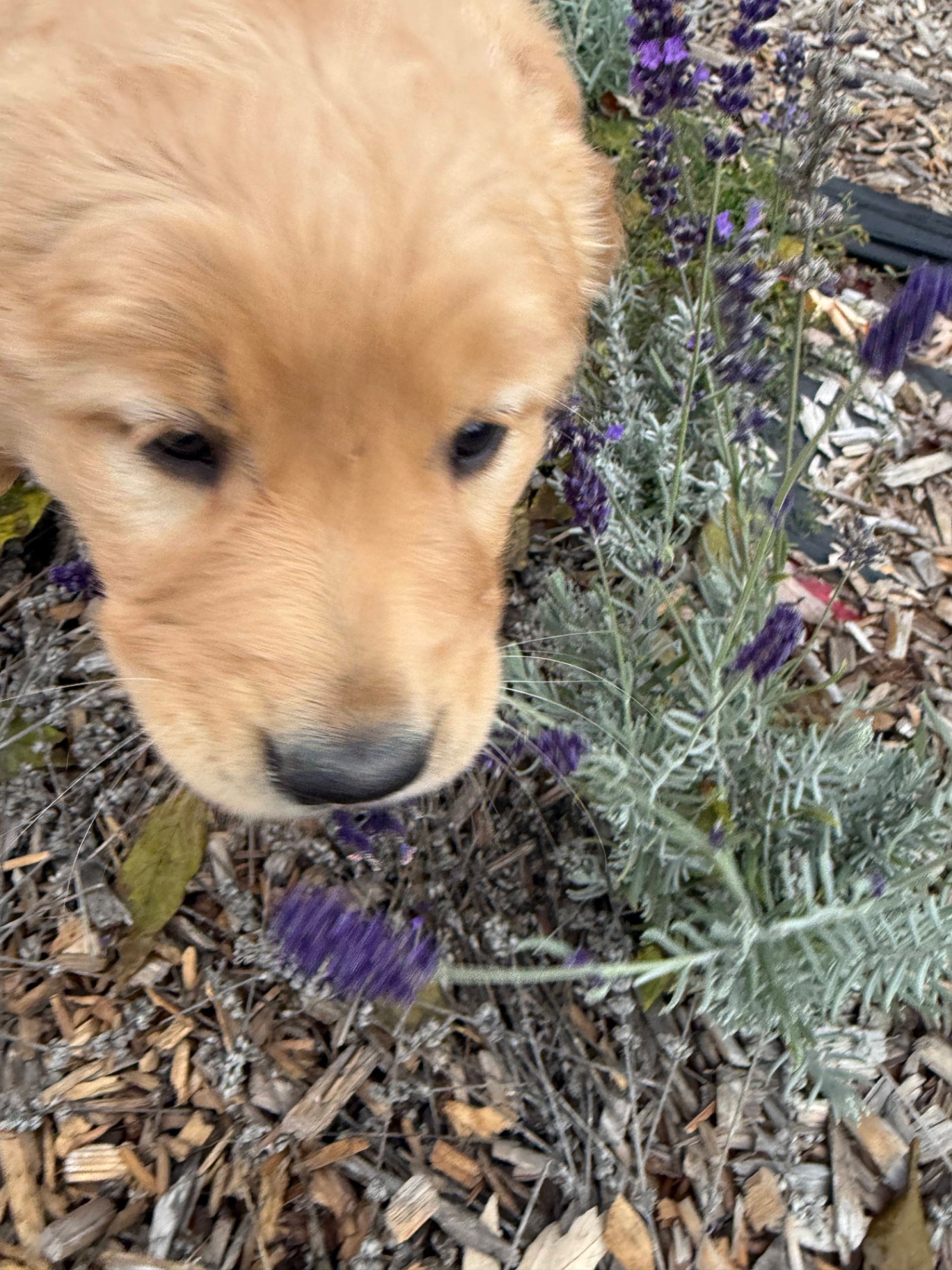
When your dog is in the "Care" phase of the rotation, they are learning how to exist in a space comfortably. We believe that a dog who knows how to relax in a stimulating environment is a dog who is truly well-cared for. We take this personally: our own family pets spend time in these same spaces, and we treat every Gresham pup as if they were sleeping in our own living room.
Pillar 2: Physical and Mental Health
The second pillar of our framework is Health. We often think of health as just "not being sick," but in the Daily Dog Wisdom Framework, health is proactive. It’s about the biological rhythms of the dog.
Canine health is deeply tied to their activity levels. A study in the Journal of Veterinary Behavior suggests that lack of appropriate physical and mental stimulation is a leading cause of behavioral issues, such as anxiety and destructiveness. At Green Acres, we don't just let dogs run aimlessly. We rotate their health activities between high-intensity play and low-intensity "scent work."
Using their noses is one of the healthiest things a dog can do. It lowers their heart rate and engages the "seeking" system in their brain, releasing dopamine. This is part of our commitment to the ultimate guide to holistic dog care, ensuring that health isn't just about muscles, but about the mind too.
Pillar 3: Socialization and Social Intelligence
Socialization is often the most misunderstood part of dog ownership. Many people think it just means "playing with other dogs." In our framework, socialization is about social intelligence.
Dogs are social learners. According to the "Social Learning Theory" in canines, dogs learn best by observing and interacting with stable, well-adjusted peers. This is why we are so careful about how we group our pups. We don't just throw everyone in one big yard. We match temperaments and energy levels to ensure every interaction is a positive learning experience.
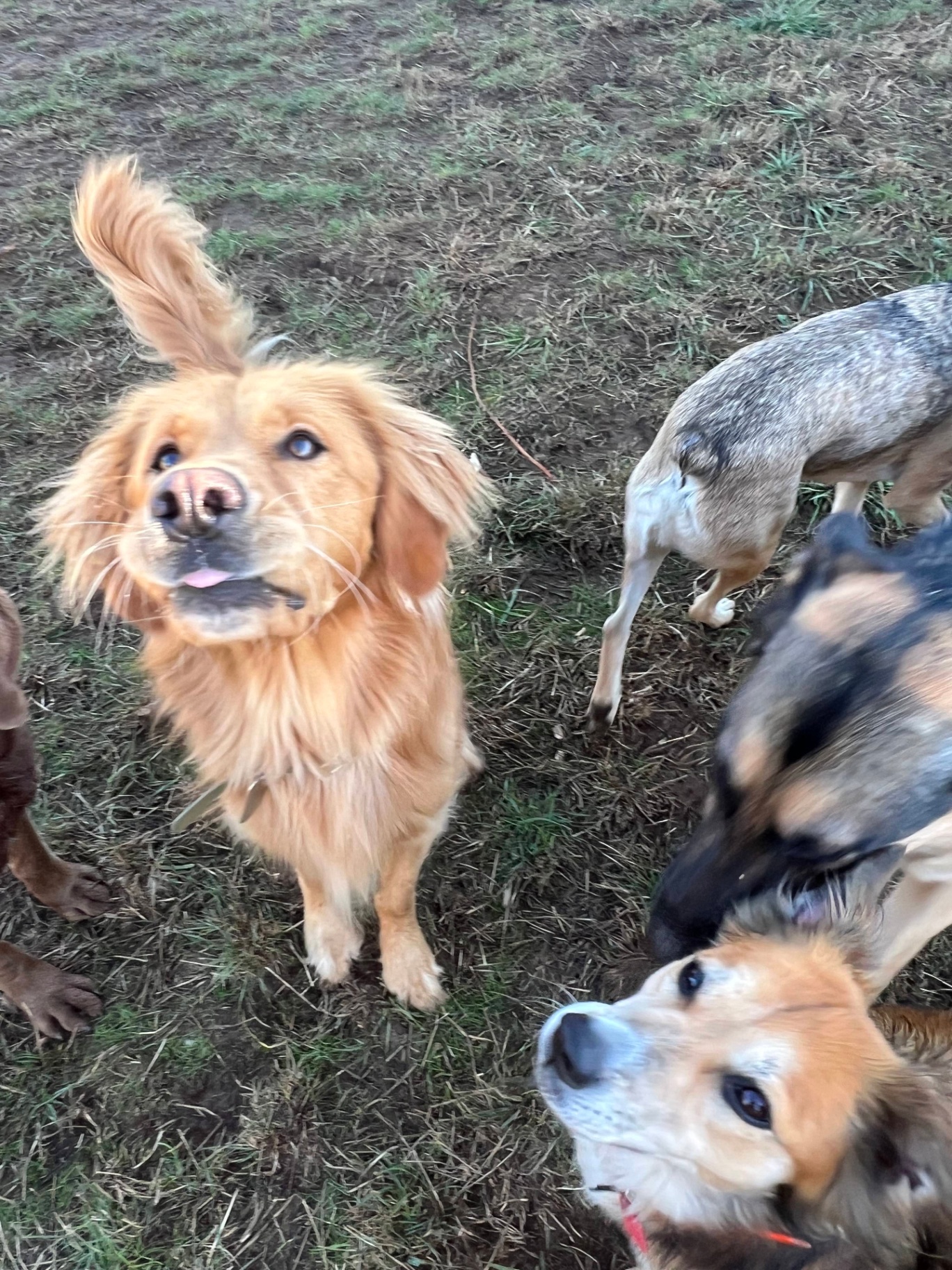
We love seeing the "friendships" that form here. It’s not uncommon to see a pair of regulars who have developed their own unique "language" of play. This healthy interaction is the core of puppy socialization 101. When a dog is socially fulfilled, they are significantly less likely to show aggression or fear-based behaviors at home.
The Framework in Action: Our Daily Rotation
We strive to create a rhythm that mimics a dog’s natural biological needs. Here’s a peek into how we apply this framework daily for our Boring and Gresham neighbors:
Morning (Health focus): High energy. We get the "zoomies" out and engage in physical play while the air is cool.
Midday (Care focus): This is for decompression. Sensory exploration in the gardens, individual attention from our team, and scheduled rest.
Afternoon (Socialization focus): Group interactions and structured play, focusing on communication and social cues.
We believe this rotation is why dogs go home from Green Acres "dog tired" in the best way possible: not just physically exhausted, but mentally satisfied. You can see many of these happy moments captured live on our Green Acres K-9 Resort Facebook page.
Home Integration Tip: The "Rule of Three" Rotation
You don't have to be at the resort to use the Daily Dog Wisdom Framework! You can integrate this into your life in Gresham or Boring easily. We recommend the "Rule of Three" for your evening routine:
10 Minutes of Care: Spend ten minutes grooming or giving a focused "body check" (checking paws, ears, and coat). This builds trust and provides the physical touch dogs crave.
10 Minutes of Health: Instead of a standard walk, try a "Sniffari." Let your dog lead the way and sniff whatever they want. It’s a massive workout for their brain!
10 Minutes of Socialization: If you have a multi-dog household, engage them in a group training session with treats. If you have one dog, work on "social" commands like "look at me" or "settle" while people walk by the window.
Doing this consistently helps your dog understand that their needs: physical, social, and emotional: will always be met. For more tips on building these routines, check out our guide on how to create a holistic dog care routine at home.
Our Promise to You
We know that your K-9 pet is a member of your family. They aren't just "dogs" to us; they are individuals with their own quirks, fears, and joys. That’s why we take the unglamorous jobs: like cleaning up after a puppy who’s still learning or spending an hour sitting on the floor with a shy rescue: just as seriously as the "fun" parts of our job.
We are personally invested in the science of their happiness. We believe that by applying the Daily Dog Wisdom Framework, we aren't just providing a service; we are helping you build a better life with your best friend. Whether you need boarding, daycare, or just some advice on the fascinating science behind how dogs learn, we are here for you and your pup.
Bibliography & Peer-Reviewed Sources
Miklósi, Á. (2014). Dog Behaviour, Evolution, and Cognition. Oxford University Press. (Focus on social learning and cognitive development).
Wells, D. L. (2004). "A review of environmental enrichment for canine species in detention." Applied Animal Behaviour Science, 85(3-4), 307-317. (Science of sensory gardens and environment).
Bekoff, M. (2018). Canine Confidential: Why Dogs Do What They Do. University of Chicago Press. (On the importance of sniffing and mental health).
Overall, K. L. (2013). Manual of Clinical Behavioral Medicine for Dogs and Cats. Elsevier Health Sciences. (The impact of routine and rotation on canine anxiety).
Comments